


Historic Masonry Restoration & Preservation
Historic masonry does not fail the way modern masonry fails, and it cannot be repaired the way modern masonry is repaired. A 1900s load-bearing brick wall was built with soft, lime-based mortar that was designed to be sacrificial, meaning the joint gives before the brick does. Repoint that wall with modern Portland mortar and you have inverted the system. The mortar is now harder than the brick around it, so when the building moves, and every building moves, the brick face spalls instead of the joint. We are called in to undo that repair more often than we are called in to make the original one.
TNT Tuckpointing & Building Restoration has been restoring Iowa's historic buildings since 1993. County courthouses, churches, downtown historic districts, campus buildings, and National Park Service properties. We match mortar to the original in strength, composition, and appearance. We repair stone rather than replacing it wherever repair is possible. And we investigate the cause of a failure before we scope the repair, because a historic building that keeps getting patched is a building nobody has actually diagnosed.

Industry Affiliations
ICRI — International Concrete Repair Institute

Preservation Iowa
.avif)
SWR Institute — Sealant, Waterproofing & Restoration Institute

TMS - The Masonry Society

MBI - Master Builders of Iowa

MCAA - Mason Contractors Association of America

BBB - Better Business Bureau
ICRI — International Concrete Repair Institute
Preservation Iowa
SWR Institute — Sealant, Waterproofing & Restoration Institute
TMS - The Masonry Society
MBI - Master Builders of Iowa
MCAA - Mason Contractors Association of America
BBB - Better Business Bureau
ICRI — International Concrete Repair Institute
Preservation Iowa
SWR Institute — Sealant, Waterproofing & Restoration Institute
TMS - The Masonry Society
MBI - Master Builders of Iowa
MCAA - Mason Contractors Association of America
BBB - Better Business Bureau
Historic Masonry Needs a Specialist
Mortar has to match, and matching is not about color
Every historic wall has a mortar that was mixed for the masonry units around it. Softer brick got softer mortar. That relationship is what lets the wall handle thermal movement, settlement, and moisture without cracking the units themselves. When a repair uses a harder modern mix, the wall loses its sacrificial layer and the damage moves into the brick or stone, where it is far more expensive to fix.
Matching means matching compressive strength, permeability, and composition, not just tinting a modern mix to the right shade. On significant buildings that can mean mortar analysis before a joint is touched. The visible color match is the easy part and the least important part.
Stone fails differently than brick, and it fails slowly
Limestone, the material under most of Iowa's civic architecture, does not spall the way brick does. It sugars at the surface, delaminates along bedding planes, and cracks where water has been sitting in a joint or a failed sealant line for years. The correct repair depends on which of those is happening. Consolidation, Dutchman repairs where a sound piece is let into the damaged area, or fabricated replacement in matching stone when a unit is past saving.
Replacing a stone that could have been repaired is the expensive mistake. Patching a stone that needed replacement is the one that comes back. See our stone rebuilding and stone patching and replacement work.
Cleaning a historic building can destroy it
Aggressive pressure washing and the wrong chemicals will strip the fired surface off historic brick, open the pores, and leave a wall that absorbs water faster than it did before it was cleaned. The building looks better for one season and deteriorates faster for the next fifty.
Historic cleaning means the gentlest effective method, tested on an inconspicuous area first, with the chemistry matched to both the soiling and the substrate. See our approach to building cleaning.
We Find the Cause Before We Scope the Repair
Masonry does not fail without a reason. Water is getting in somewhere, a lintel or shelf angle is rusting and expanding, a previous repair is incompatible, a roof or flashing detail is failing, or the structure is moving. Repair the symptom without finding the cause and the building owner pays for the same repair twice.
A masonry investigation documents the actual condition of the building and identifies the mechanism behind the failure. That may involve close-up inspection at height, selective probe openings, mortar analysis, moisture assessment, and photographic documentation. What comes out of it is a scope tied to what is genuinely wrong, along with a budget the owner can plan against and take to a board or a council.
For historic and civic buildings this is not optional. It is the difference between a restoration and a series of expensive guesses. It is also how a maintenance conversation becomes a funded capital project, because a documented investigation is what a facilities director or a county board can actually approve.
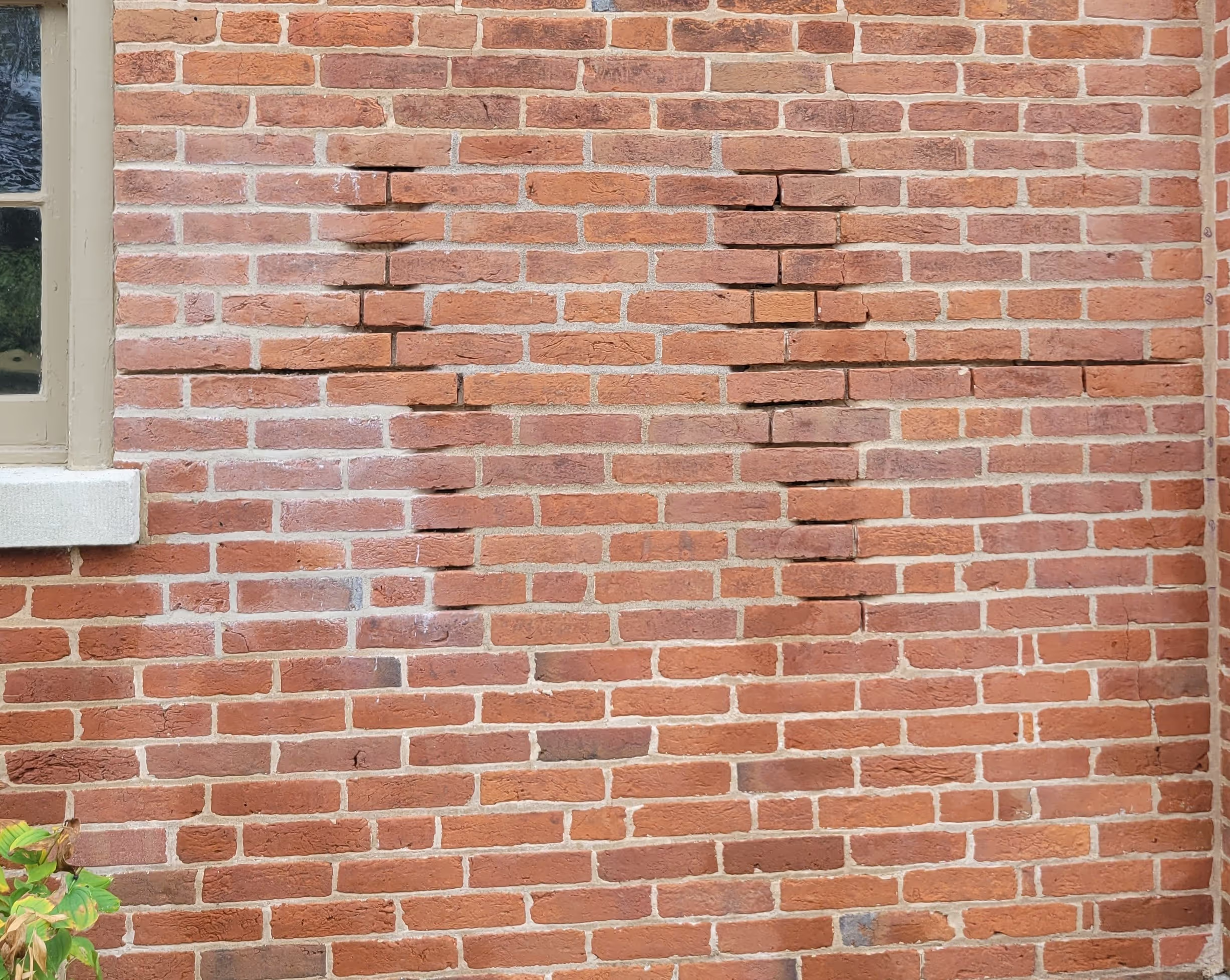
Historic Buildings We Have Restored
See the full portfolio for historic restoration projects across Iowa and the upper Midwest.

Ely Stone Bridge Masonry Investigation
Iowa's last three-arch stone bridge, and the assessment that found what's destroying it.
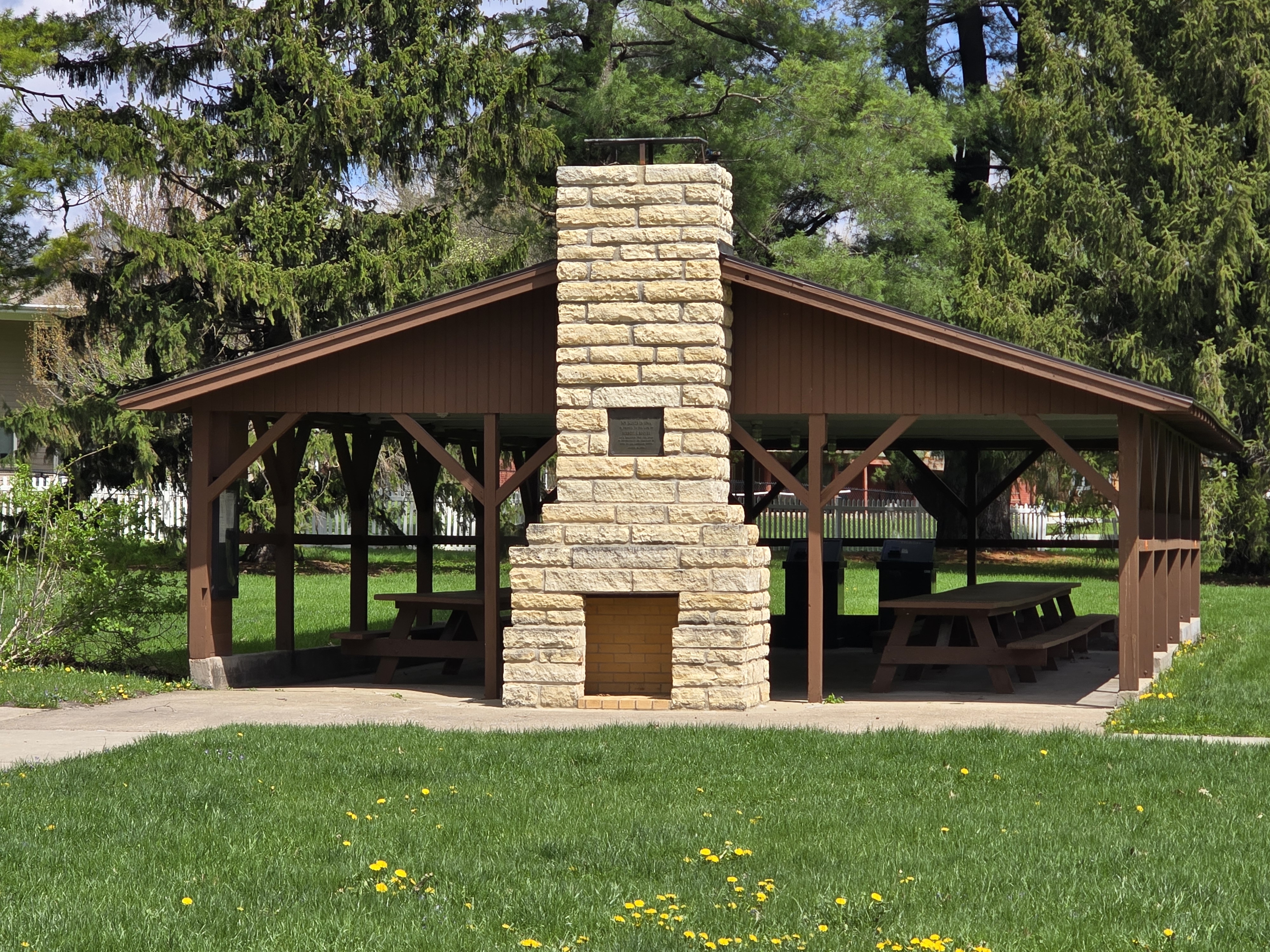
Herbert Hoover National Historic Site
TNT Tuckpointing's restoration of three historic masonry features at Herbert Hoover NHS.
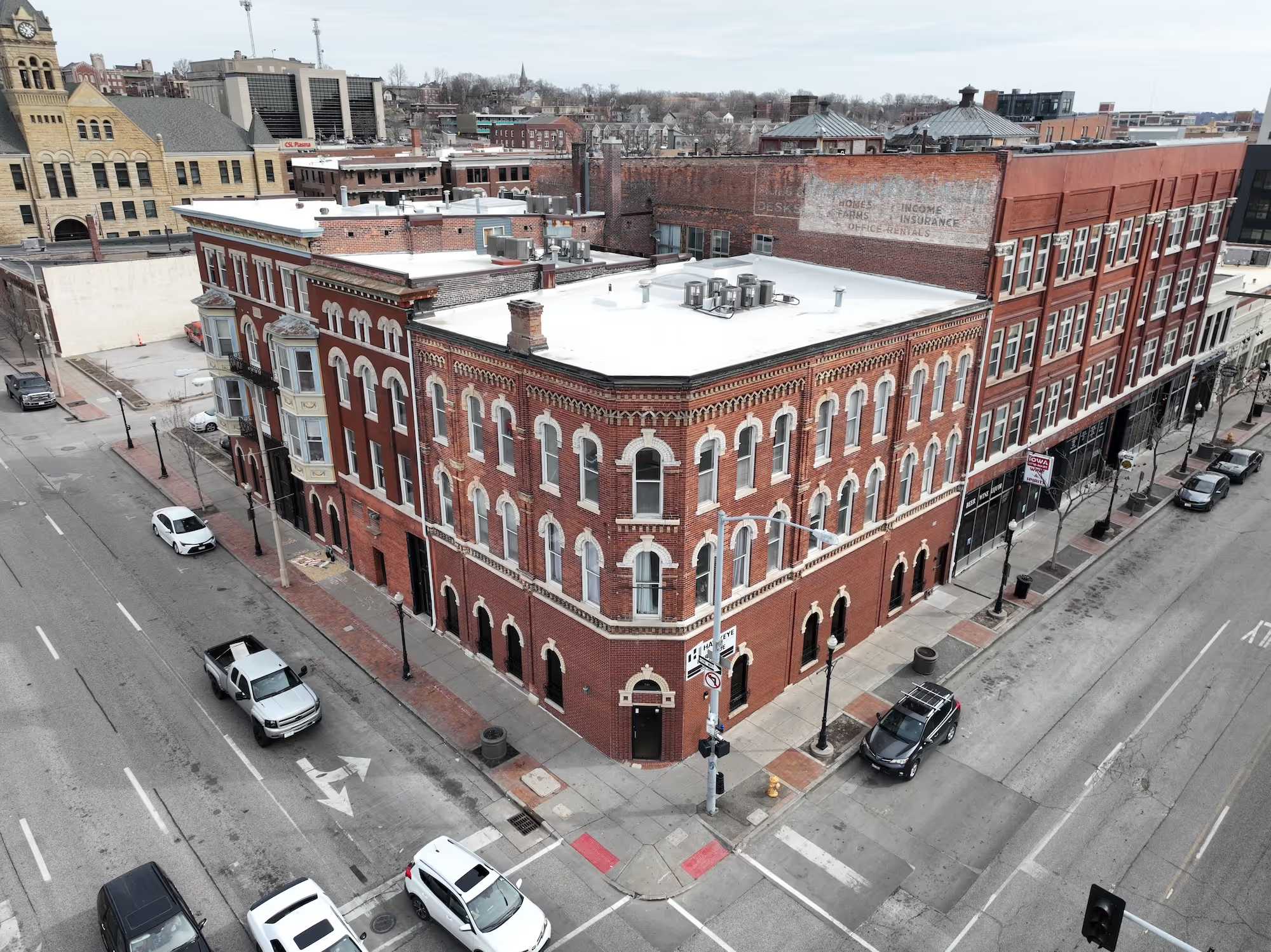
246 W 3rd Street – Historic Masonry Restoration
Three-phase historic brick restoration on a downtown Davenport landmark.
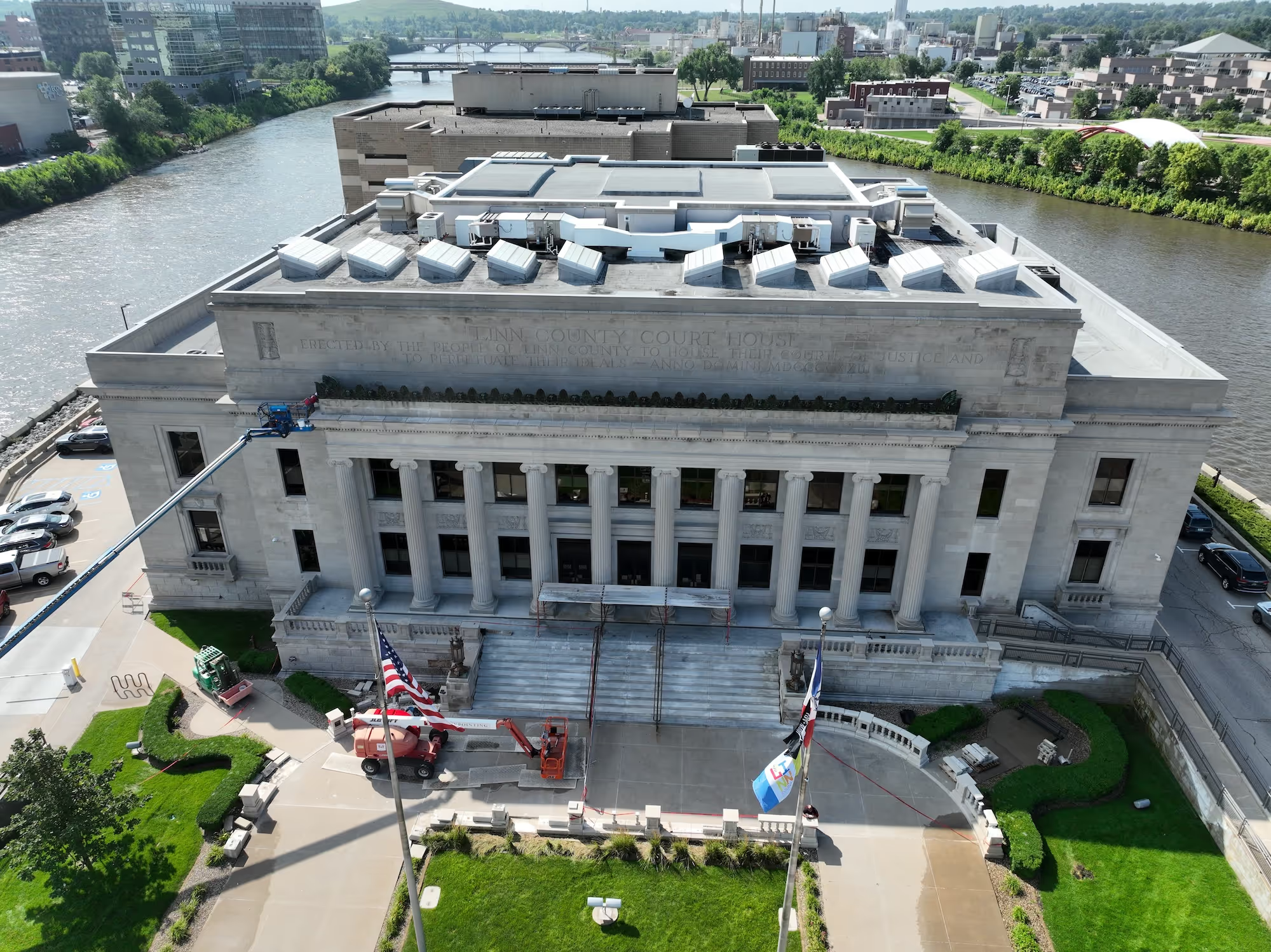
Linn County Courthouse Exterior Restoration
Limestone balustrade rebuild at the 1925 Beaux-Arts courthouse on May's Island.
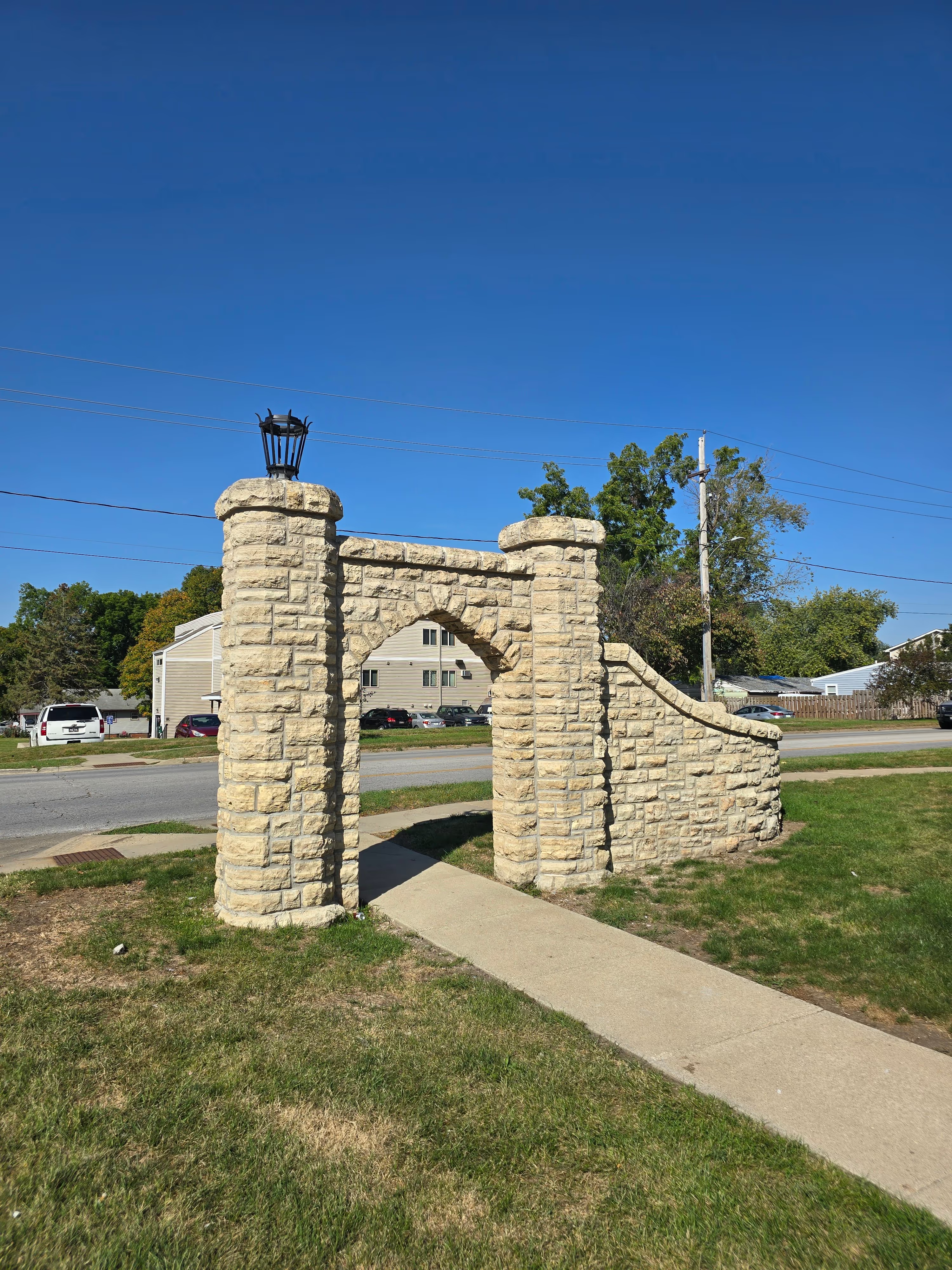
Fort Des Moines Monument
Restoration of two damaged historical entrance monuments.
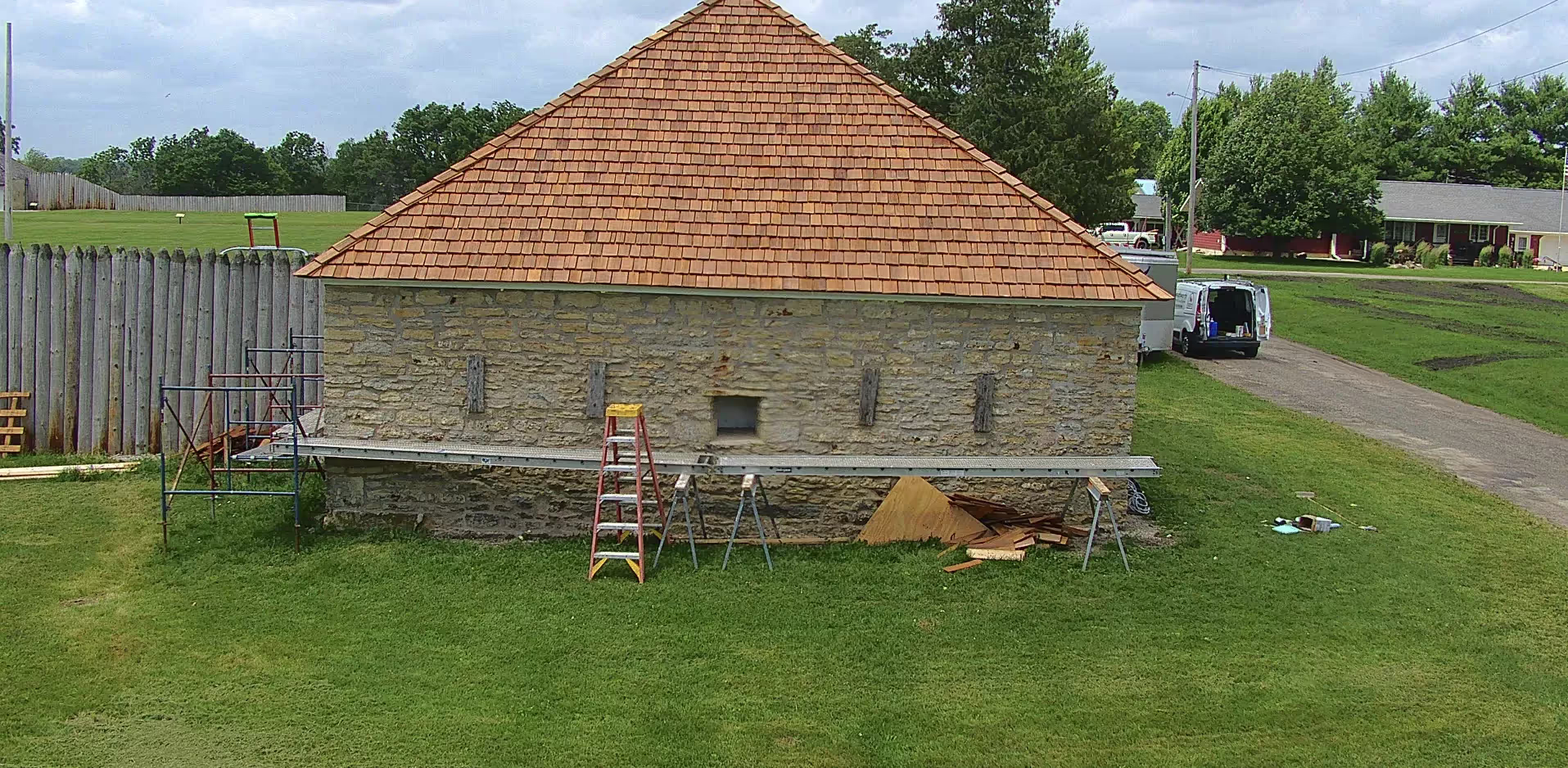
Fort Atkinson in Iowa
Preservation and masonry repair of the historic Fort Atkinson site by TNT Tuckpointing.
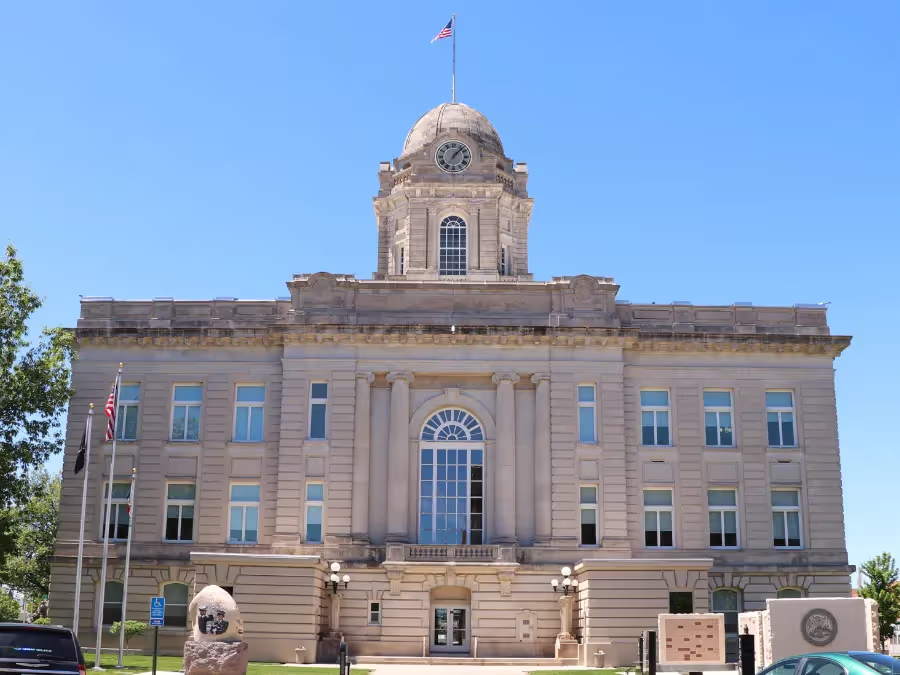
Jasper County Courthouse
Professional exterior masonry and historical restoration for Jasper County Courthouse.
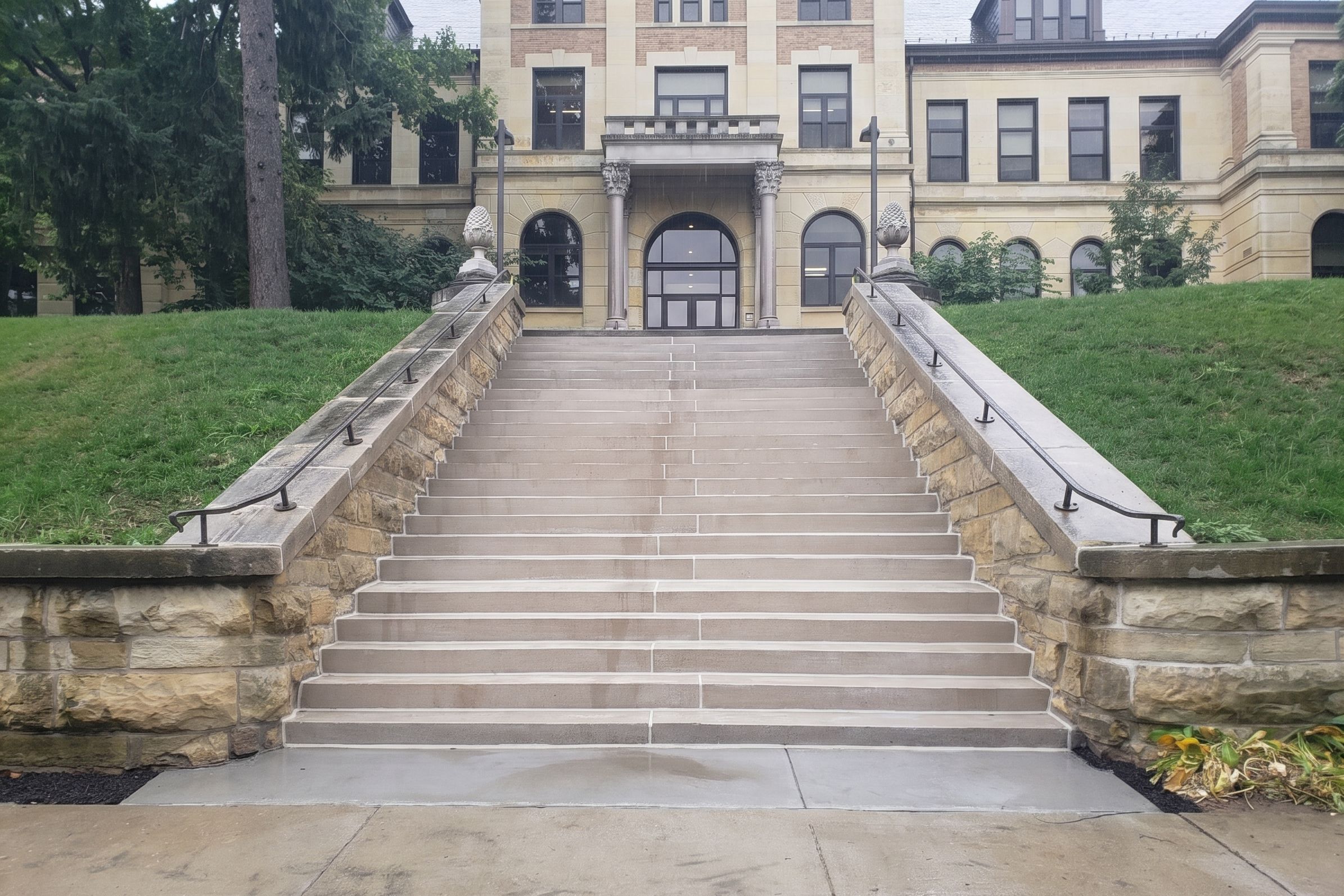
Augustana College
Augustana College Stair Replacement, Rock Island, Illinois

4.9 Star On Google
Rated by the building owners and facility managers we serve.
FAQs
How does TNT work with State Historic Preservation Offices and preservation consultants?
We collaborate directly with SHPOs, preservation consultants, and architects throughout the project, providing documentation, mock-ups, and test panels as required. About half of our work is historic preservation, so these working relationships are well established.
Can modern repair materials be used on historic buildings?
It depends on the material and the building. Some modern products perform well and are appropriate, while others can cause damage to historic masonry. We select repair materials based on compatibility with the original construction, not simply what is newest on the market.
What is the typical timeline for a historic restoration project?
Timelines depend on the building's size, condition, and the scope of work. Our active field season runs from mid-February through the end of November, and larger historic projects are often phased across multiple seasons to align with budgets and preservation review timelines.
How does TNT balance structural repairs with preservation requirements?
Structural integrity and historic character are not mutually exclusive. We use repair methods and materials that meet structural requirements while respecting the building's original fabric, ensuring the work satisfies both engineering standards and preservation guidelines.
Does TNT have experience with churches, courthouses, and civic buildings?
These are among the most common building types we restore. Churches and government buildings make up a large share of our historic preservation work, with courthouses typically our largest projects by dollar value.
What grants are available for historic masonry restoration in Iowa and the Midwest?
Iowa, Wisconsin, Minnesota, and Illinois each offer state-level historic preservation tax credits, and many communities have local grant programs for historic buildings. Federal historic tax credits are also available for income-producing properties. We can help you understand what documentation your project will need.
How does TNT handle ornamental and decorative masonry on historic buildings?
We repair, replicate, and restore ornamental terra cotta, carved stone, corbelled brickwork, and other decorative elements using techniques and materials appropriate to the building's period. Where original elements are too deteriorated to save, we fabricate accurate replacements.
Can TNT restore buildings listed on the National Register of Historic Places?
Yes. We have extensive experience restoring National Register-listed buildings including churches, courthouses, and civic landmarks. We understand the review processes and documentation requirements these projects demand.
What documentation does TNT provide for historic preservation projects?
Every project receives a closeout package with photography, warranty, and product data sheets. On historic projects, we provide additional documentation as needed to support tax credit applications, grant requirements, and State Historic Preservation Office reviews.
Is masonry restoration eligible for historic tax credits?
In many cases, yes. Federal and state historic tax credit programs can offset a significant portion of qualified rehabilitation costs on eligible buildings. We provide the project documentation these programs require, though building owners should consult a tax professional for eligibility specifics.
How does TNT match mortar and brick on a building that's 100+ years old?
We analyze the existing mortar composition, color, texture, and joint profile, then develop custom mortar mixes to match. For brick, we source salvage material or work with suppliers who produce historically accurate replacements to maintain the building's original character.
Does TNT follow the Secretary of the Interior's Standards for Historic Preservation?
Yes. Our historic restoration work follows the Secretary of the Interior's Standards for the Treatment of Historic Properties. Roughly half of our total project volume is historic preservation, so these standards guide our daily work, not just occasional projects.
Contact Us
Our skilled team is here to bring your building to life. Contact us today to discuss your project!