


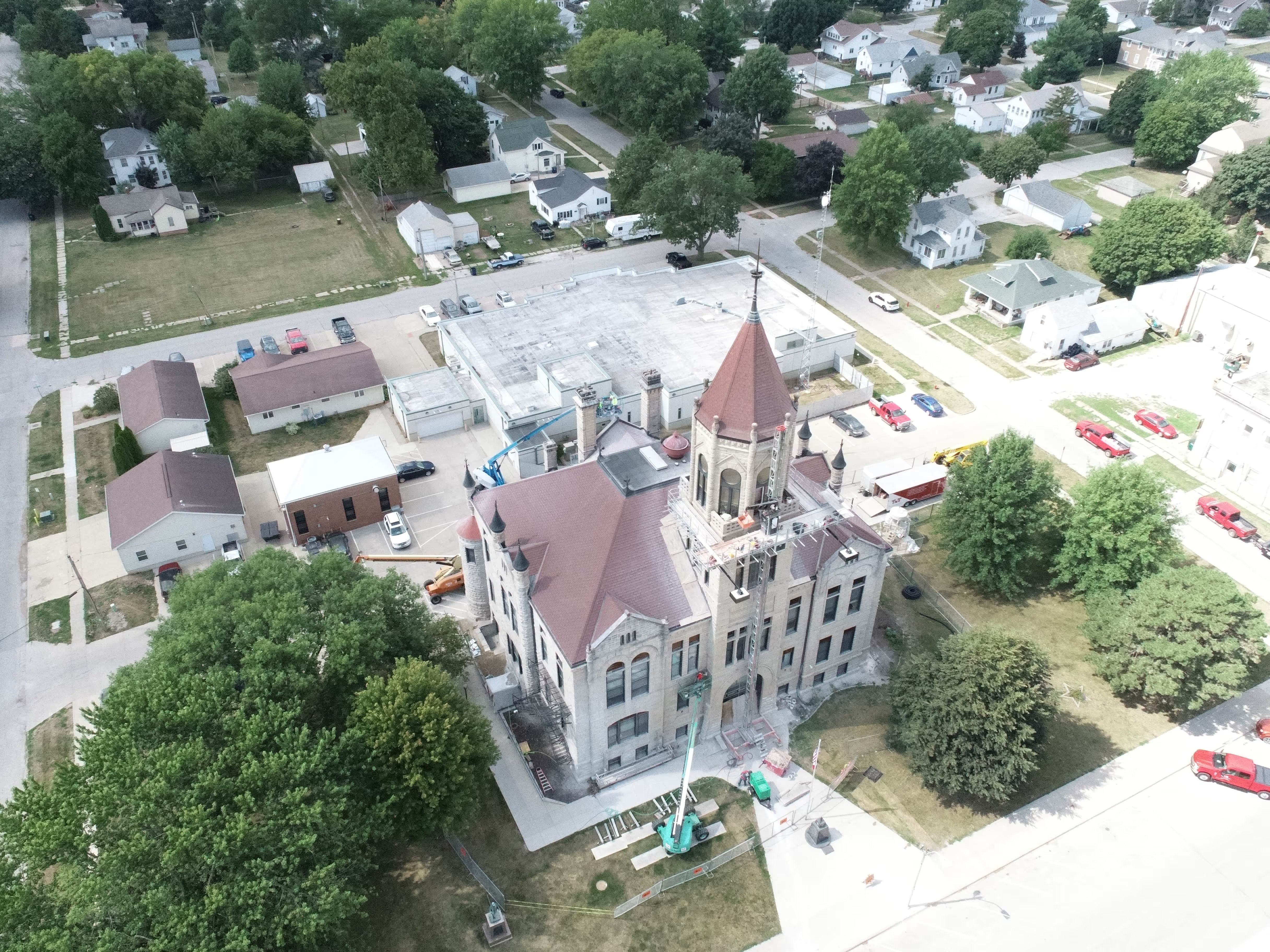

Relationships, Safety and On-Time Production
We’ve developed many positive relationships within government, state and local agencies through the efforts of applying our core beliefs of superb customer service, quality craftsmanship and safety to every project and relationship we encounter. Actively tracking the progress on every job has helped us expand our reputation for consistently delivering on-time production.
What We Do Best
Government buildings serve the public and are held to high standards for safety, accessibility, and appearance. We work with general contractors, state agencies, and local municipalities to deliver restoration projects that meet prevailing wage requirements, tight timelines, and the documentation standards public projects demand.


4.9 Star On Google
Rated by the building owners and facility managers we serve.
Download Our Civic Landmarks Services Overview
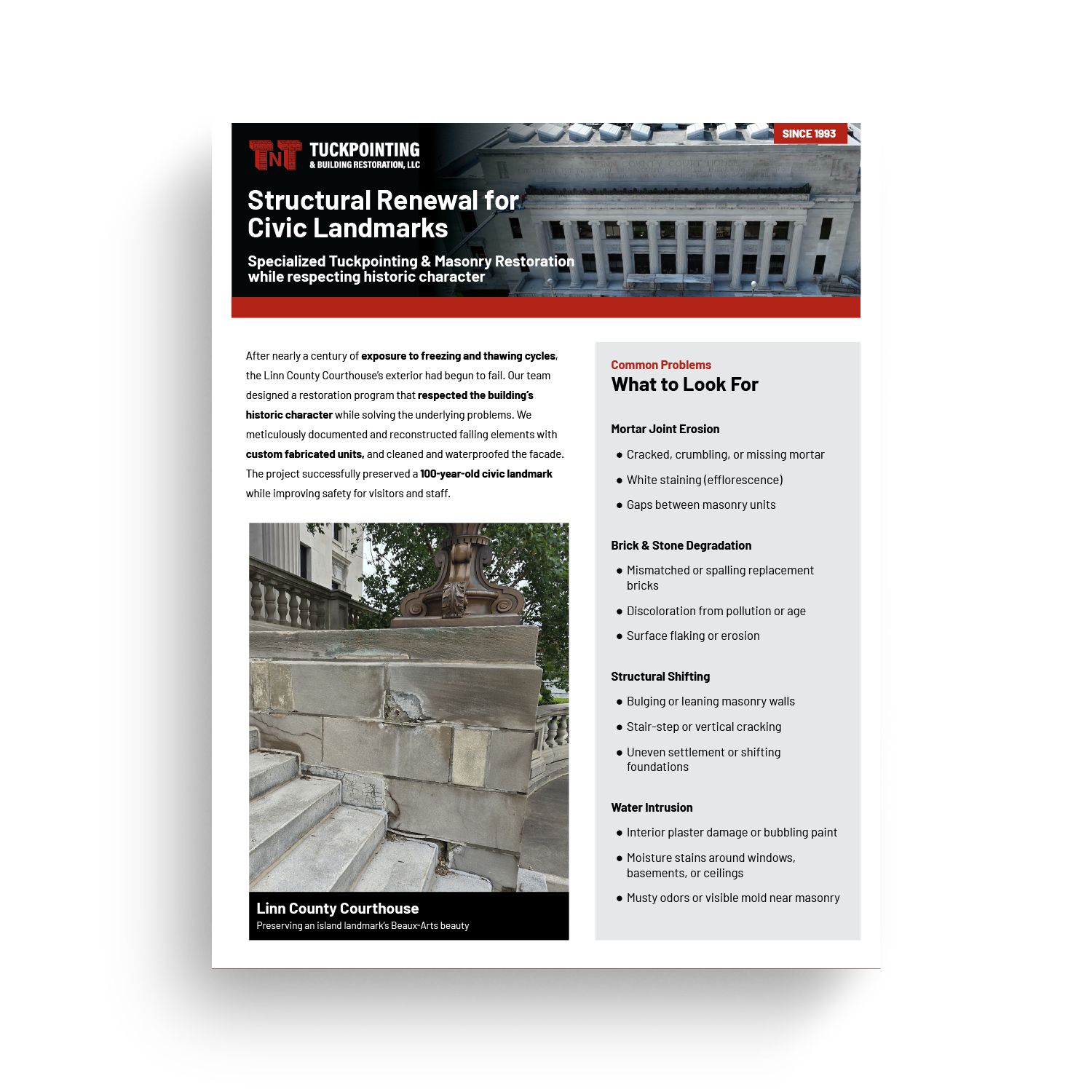
Looking to preserve a Civic Landmark? Download our quick guide to TNT’s restoration services tailored for industrial facilities. Inside, you’ll find...
Preserving the past. Restoring with precision. Serving since 1993.
Our Projects Speak for Themselves
Browse our portfolio of completed projects to see the quality, scope, and craftsmanship we bring to every job.
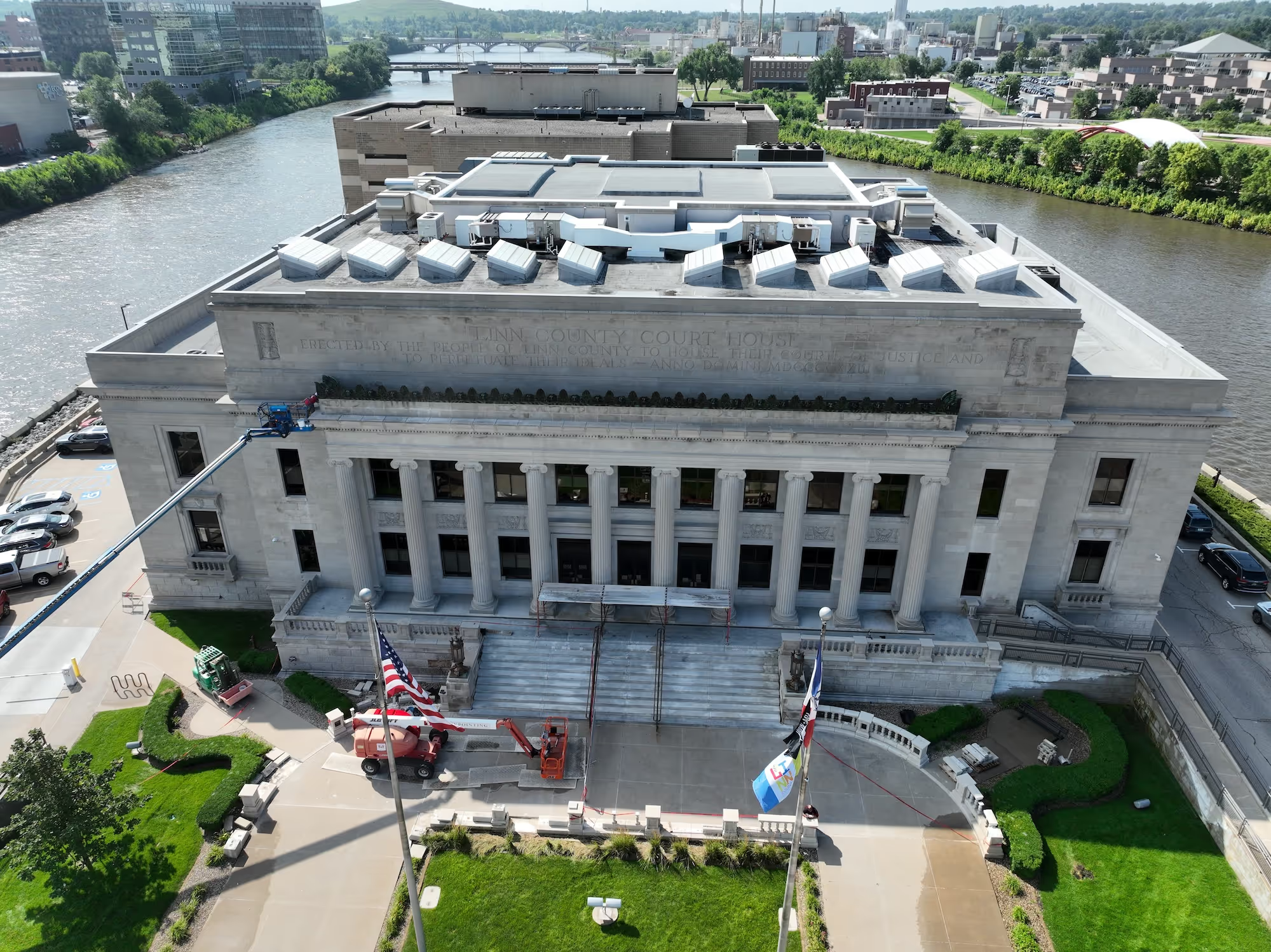
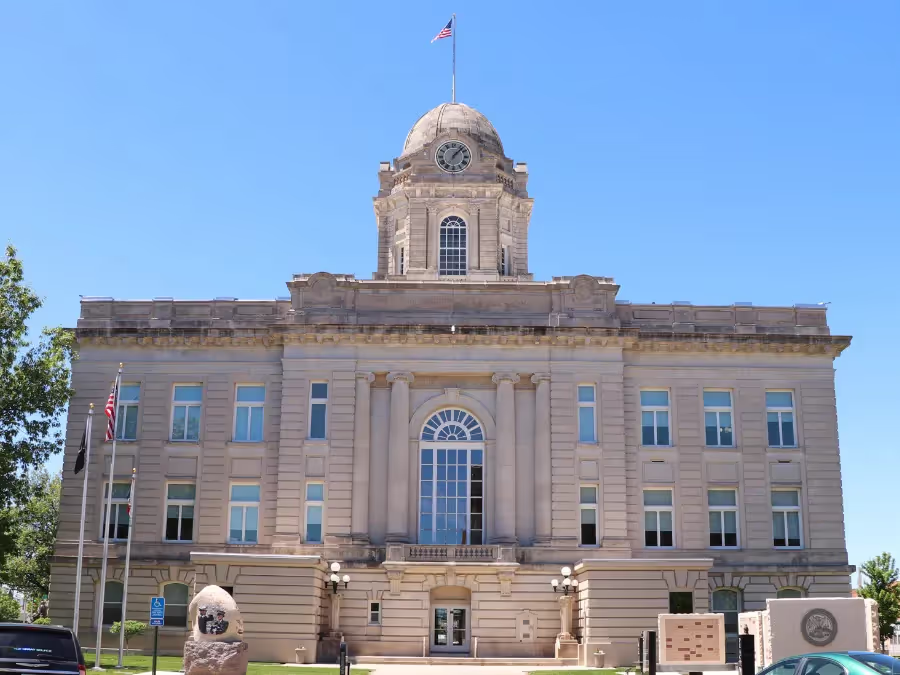
Linn County Courthouse Exterior Restoration
Limestone balustrade rebuild at the 1925 Beaux-Arts courthouse on May's Island.
-min.webp)
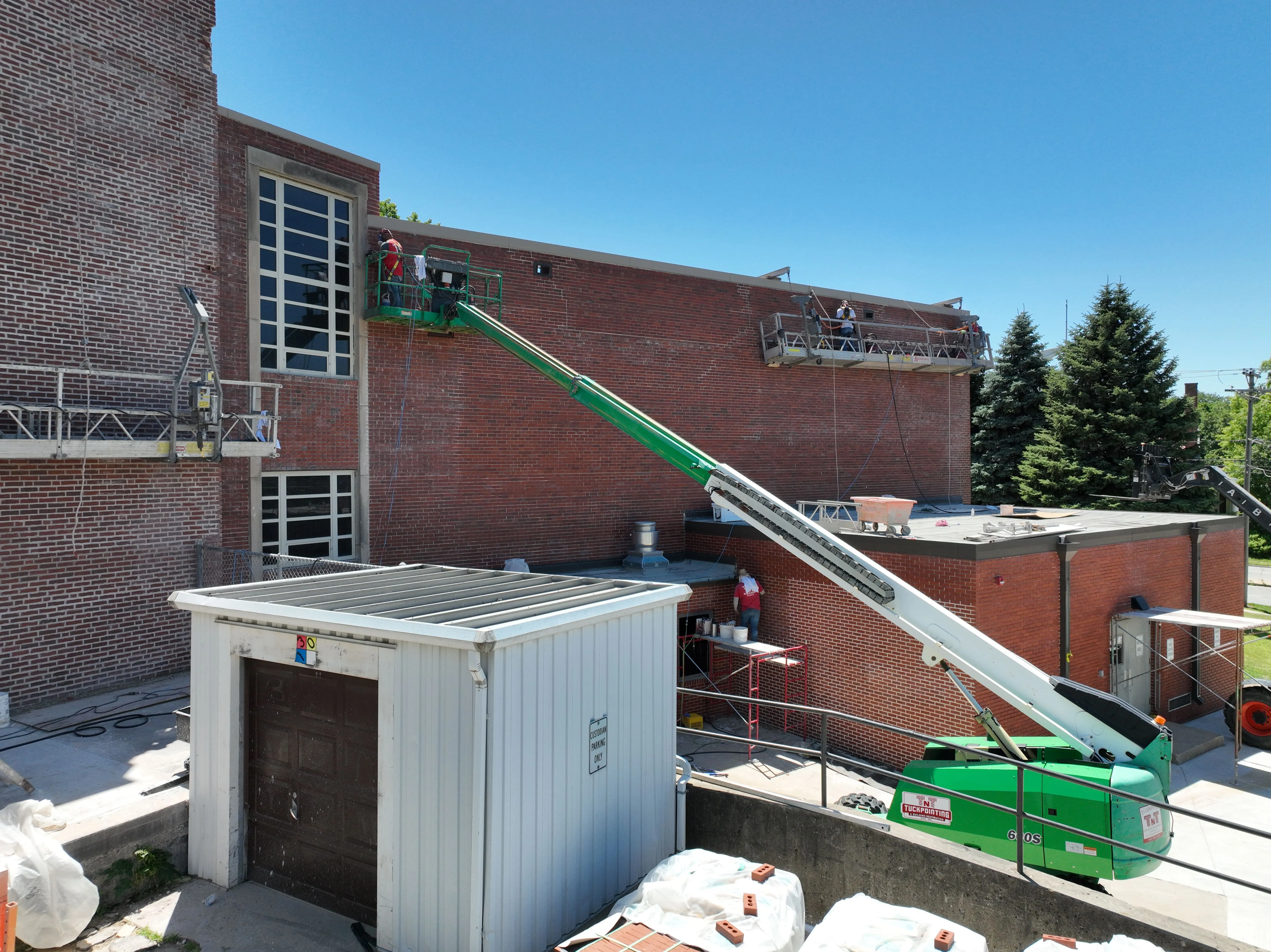
Iowa City Senior Center
Professional masonry restoration and brick repair for the Iowa City Senior Center.
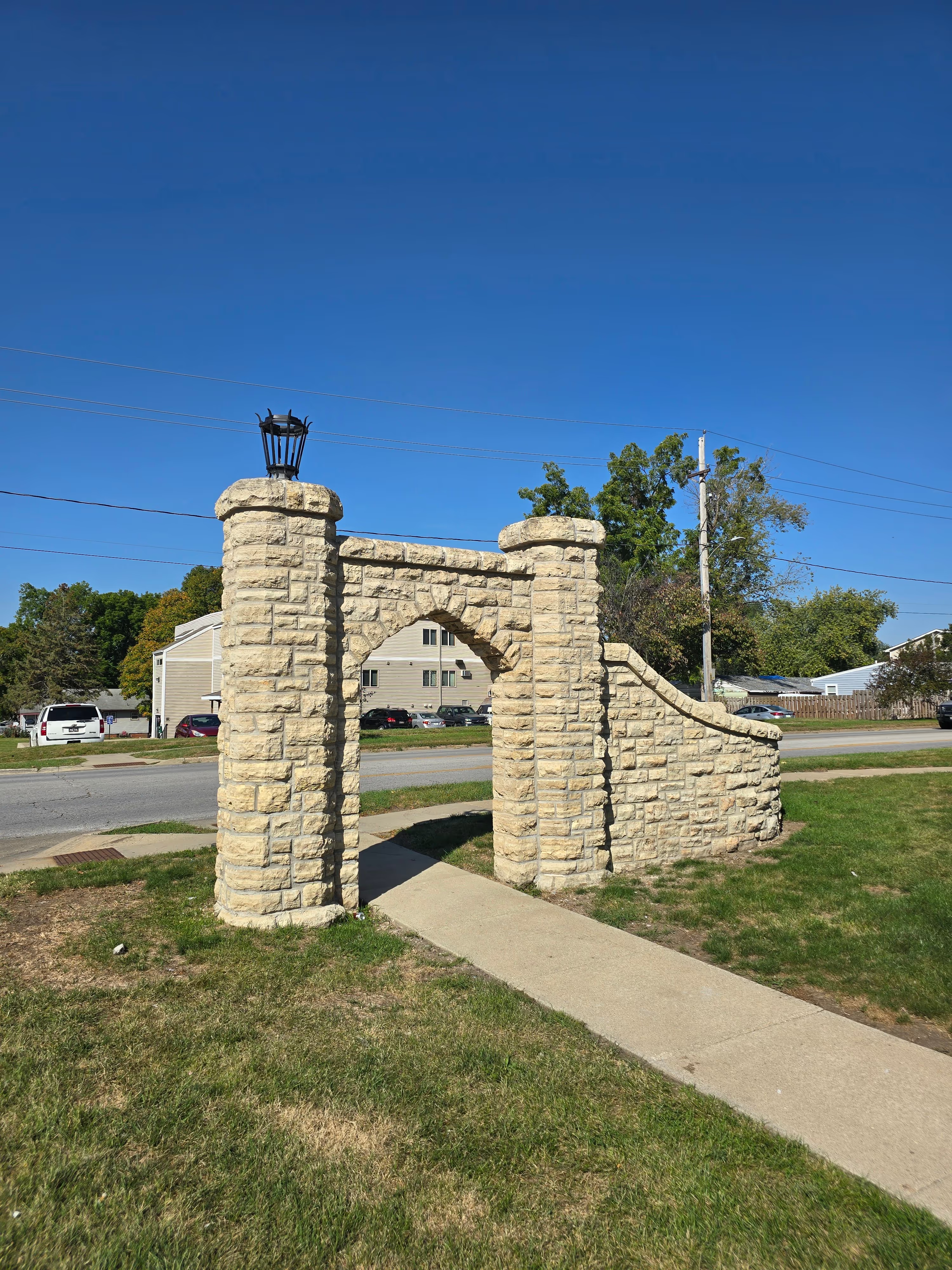
Fort Des Moines Monument
Restoration of two damaged historical entrance monuments.
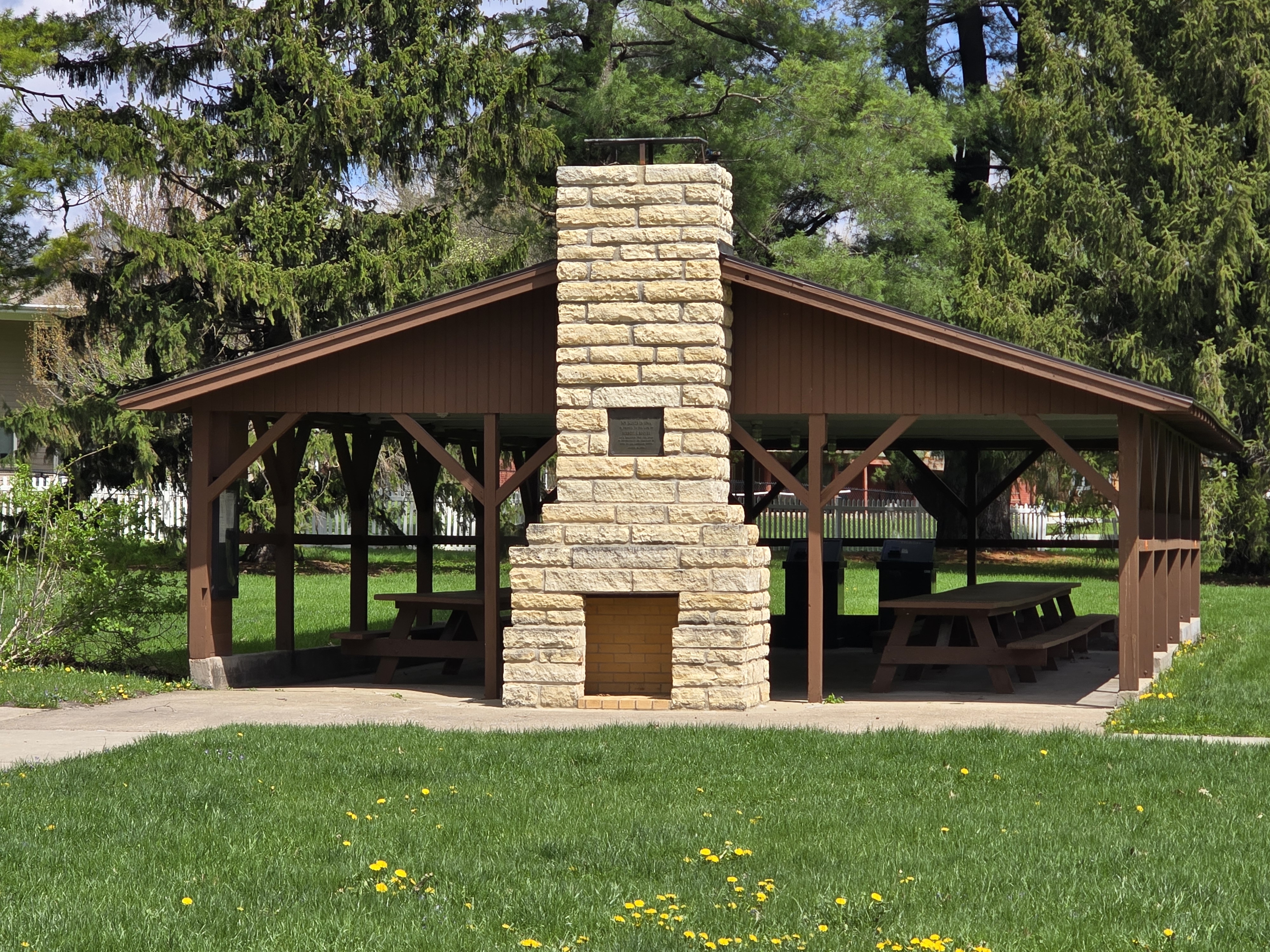
Herbert Hoover National Historic Site
TNT Tuckpointing's restoration of three historic masonry features at Herbert Hoover NHS.
Learn More and See What’s Going On
Contact Us
Our skilled team is here to bring your building to life. Contact us today to discuss your project!
FAQs
What is the typical process for starting an institutional masonry project?
It begins with a building assessment to document current conditions, followed by a scope and budget discussion. We then provide a detailed proposal, and once approved, develop a project schedule that accounts for the building's operational needs and any procurement requirements.
How does TNT coordinate with architects and engineers on institutional projects?
We work directly with project architects and engineers throughout design and construction, providing field observations, submittals, and technical input. On institutional projects, this coordination ensures the work meets both design intent and regulatory requirements.
Are institutional masonry projects eligible for grants or historic tax credits?
Many institutional buildings qualify for state and federal historic tax credits, and various grant programs support the preservation of public and civic buildings. We provide the project documentation these programs require, though eligibility should be confirmed with the relevant authorities.
Can TNT help government entities plan and prioritize masonry work across multiple buildings?
Yes. We work with facility managers and public works directors to assess conditions across building portfolios, rank repair priorities, and develop phased plans that align with available funding and fiscal year budgets.
How does deferred masonry maintenance increase long-term costs for public buildings?
Water that enters through failed mortar joints and caulking damages the wall system from the inside out, affecting insulation, structural steel, interior finishes, and building systems. What starts as routine repointing can become a full envelope reconstruction if deferred too long.
Does TNT handle both the historic and structural aspects of institutional buildings?
Yes. Many institutional buildings are both historically significant and in need of structural masonry repair. We self-perform all masonry restoration work and have deep experience balancing preservation requirements with structural needs on the same project.
What documentation does TNT provide for government project closeout?
Every project includes a closeout package with photography, a 2-year written workmanship warranty, and product data sheets. When specifications require formal submittals, progress documentation, or compliance records, we provide those as well.
How does TNT minimize disruption to public buildings during restoration?
We plan access, scaffolding, and work sequencing around building operations, public access points, and event schedules. Pre-construction coordination with facility managers ensures the building remains functional and accessible throughout the project.
Can masonry restoration be phased across multiple budget cycles or fiscal years?
Yes. We regularly work with government entities to phase large restoration projects across multiple fiscal years, prioritizing the most critical repairs first and planning subsequent phases around approved budgets and funding availability.
How does TNT work within government procurement and bidding processes?
We are experienced with competitive bidding, public procurement requirements, and the documentation standards government projects demand. We provide detailed proposals, meet bonding requirements, and deliver the formal submittals and closeout packages public entities expect.
Does TNT have experience with courthouses, city halls, and public buildings?
Yes. Courthouses and government buildings are among our largest projects by dollar value and represent a significant share of our work. We have been restoring institutional buildings across Iowa, Wisconsin, Minnesota, and Illinois for over 30 years.
What masonry issues are most common on government and institutional buildings?
Deteriorated mortar joints, failed caulking, water infiltration, and cracked or spalling masonry are the most frequent problems. Many institutional buildings also suffer from deferred maintenance cycles that allow minor issues to compound into major structural concerns.