


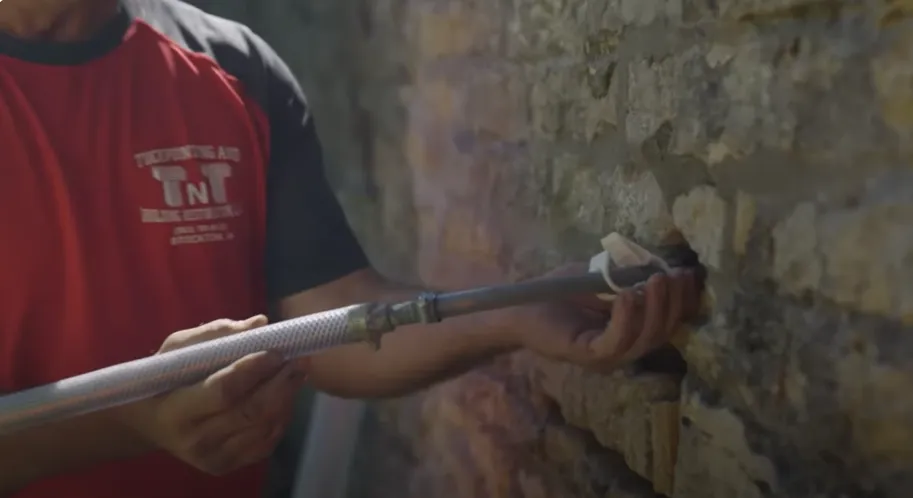
Reinforcing Structural Integrity
Secure shifting, bowing, or separating exterior masonry facades back to the structural backup system using heavy-duty, invisible anchoring solutions.
- Precision structural pinning and helical tie installations.
- Mitigates the risk of catastrophic masonry displacement or falling debris.
- Non-destructive methods that preserve the building's exterior aesthetics.
Why Facade Stabilization Matters
A bowing or separating facade is a structural and life-safety concern, because displaced veneer can fail suddenly and is a falling hazard over occupied areas. Stabilization addresses the movement directly and is frequently far less costly than the full reconstruction required if the facade is allowed to fail.
- Ensures building safety
- Preserves building integrity
- Improves building appearance
- Prevents partial or full facade collapse.
- Eliminates falling-masonry hazards.
- Re-anchors veneer to the structure where ties have failed.
- Often avoids the cost of full reconstruction.
How TNT Approaches Facade Stabilization
We assess the nature and cause of the movement, whether failed ties, water-driven deterioration, or structural distress, and design a stabilization approach using appropriate anchoring systems, coordinating with structural engineers where the situation requires their analysis. The objective is to secure the facade and address the cause so the movement does not resume.
Signs a Facade Needs Stabilization
Active or accelerating movement warrants prompt evaluation.
- Visible bowing or bulging of the wall
- The veneer pulling away or separating from the building
- Wide or growing cracks following the displacement
- Masonry that has shifted out of plane
- Evidence of failed or corroded wall ties
FAQs
How is facade stabilization performed?
How long does facade stabilization take?
Are commercial facade inspections required by code in Iowa?
How much does facade stabilization cost?
Can a stabilized facade be fully restored later?
What are the warning signs of facade instability?
Is facade stabilization considered emergency work?
What is facade stabilization and when is it needed?
What happens if an unstable facade is not addressed?
What causes a commercial building facade to become unstable?
Does TNT perform facade condition surveys?
Does facade work require sidewalk closures or pedestrian protection?
Contact Us
Our skilled team is here to bring your building to life. Contact us today to discuss your project!