.webp)

What is Water Repellant Application?
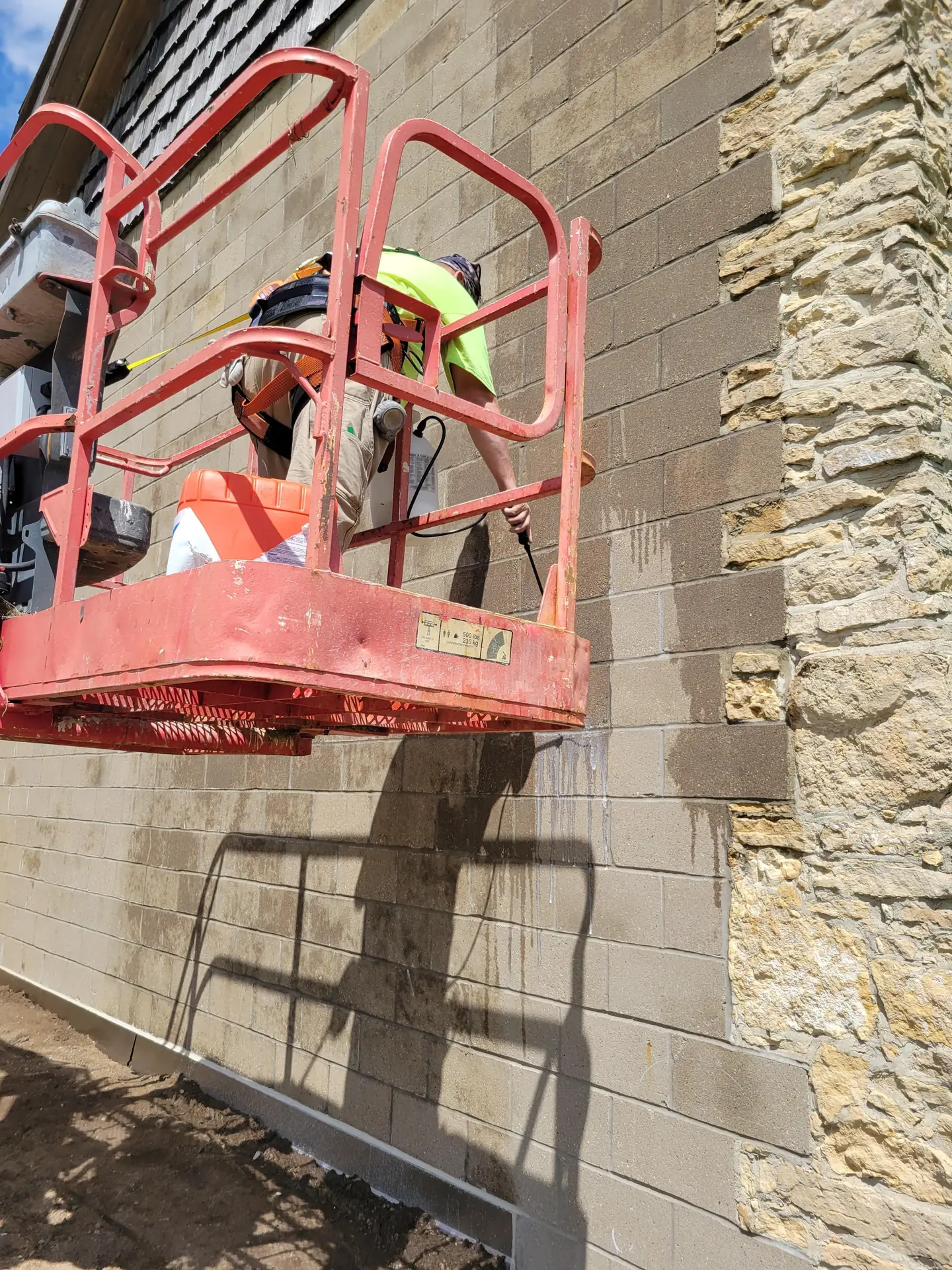
Water repellent application involves applying a breathable water repellant that is matched to the underlying substrate. The water repellant protects the building from water infiltration damage, as well as keeping them cleaner by preventing biological growth.
Why is Water Repellant Application important?
- Prevents water damage
- Provides redundancy in maintaining a watertight building envelope
- Protects building materials
- Enhances building appearance
Contact Us
Our skilled team is here to bring your building to life. Contact us today to discuss your project!
FAQs
What types of water repellents does TNT use?
We use silane, siloxane, and silane/siloxane blend repellents from manufacturers including Prosoco, selected based on the substrate type and exposure conditions. Product certifications from these manufacturers ensure proper selection and application.
Can water repellent be applied to historic masonry?
Yes, but product selection is critical. The repellent must be breathable, must not alter the appearance of the masonry, and must be compatible with the existing mortar and stone. With roughly half of our work involving historic preservation, our team has extensive experience selecting and applying repellents on historically significant buildings.
How does water repellent prevent freeze-thaw damage?
By reducing the amount of water that saturates the masonry, a repellent limits the volume of water available to freeze and expand within the pore structure. This significantly slows the spalling, cracking, and mortar joint deterioration caused by Midwest freeze-thaw cycles.
How often does water repellent need to be reapplied?
Reapplication frequency depends on the product used, the masonry type, exposure conditions, and the orientation of the wall. We can assess existing repellent performance during a site visit and recommend whether reapplication is needed.
When is the best time of year to apply water repellent?
Application requires dry masonry and temperatures within the product manufacturer's specifications. Our primary work season runs mid-February through end of November, which encompasses the best conditions for repellent application in Iowa, Wisconsin, Minnesota, and Illinois.
How is water repellent applied to a commercial building?
The masonry surface is cleaned, any necessary repairs are completed, and the repellent is applied by low-pressure spray to achieve full saturation of the substrate. We self-perform all work with our own crew and use FRACO-certified operators for safe access on multi-story buildings.
What is a water repellent for masonry and how does it work?
A water repellent is a penetrating treatment applied to masonry that lines the pores of the material, causing water to bead on the surface rather than absorb into the wall. It reduces moisture infiltration while allowing the masonry to breathe and release trapped water vapor, which is critical for long-term durability.
Can water repellent fix existing water infiltration problems?
A water repellent reduces moisture absorption through the face of the masonry, but it will not correct water entry caused by failed flashings, open mortar joints, cracked lintels, or deteriorated sealant. Our estimators identify the actual sources of infiltration during a site visit so the root causes are addressed, not just masked.
What is the difference between a water repellent and a sealer?
The terms are often used interchangeably, but a water repellent typically refers to a breathable, penetrating treatment that does not form a surface film, while a sealer may form a film that blocks both liquid water and vapor transmission. Breathable products are generally preferred for masonry to avoid trapping moisture inside the wall.
Does water repellent change the color or appearance of masonry?
Quality penetrating repellents are designed to be invisible once cured, with no change to the color or texture of the masonry. We test the selected product on an inconspicuous area before full application to confirm acceptable appearance, which is especially important on historic buildings.
When does a building need a wall coating vs. a water repellent?
A water repellent is typically sufficient for sound masonry that simply needs moisture protection, while a wall coating is better suited when the surface has hairline cracks, needs a uniform appearance, or requires a thicker barrier against wind-driven rain. Our estimators assess the building on-site and recommend the appropriate solution.
What is the difference between a water repellent and a wall coating?
A water repellent is a breathable treatment that penetrates the masonry surface and reduces water absorption without changing the building's appearance. An exterior wall coating forms a film on the surface that provides a more robust moisture barrier but may alter the look and texture of the masonry.
How much does water repellent application cost on a commercial building?
Cost is influenced by building height, total wall area, the type of repellent specified, access requirements, and surface preparation needs. We work with building owners to scope the work and can phase application across multiple budget periods if needed. Contact us for a site visit and proposal.


