


Herbert Hoover National Historic Site
TNT Tuckpointing's restoration of three historic masonry features at Herbert Hoover NHS.
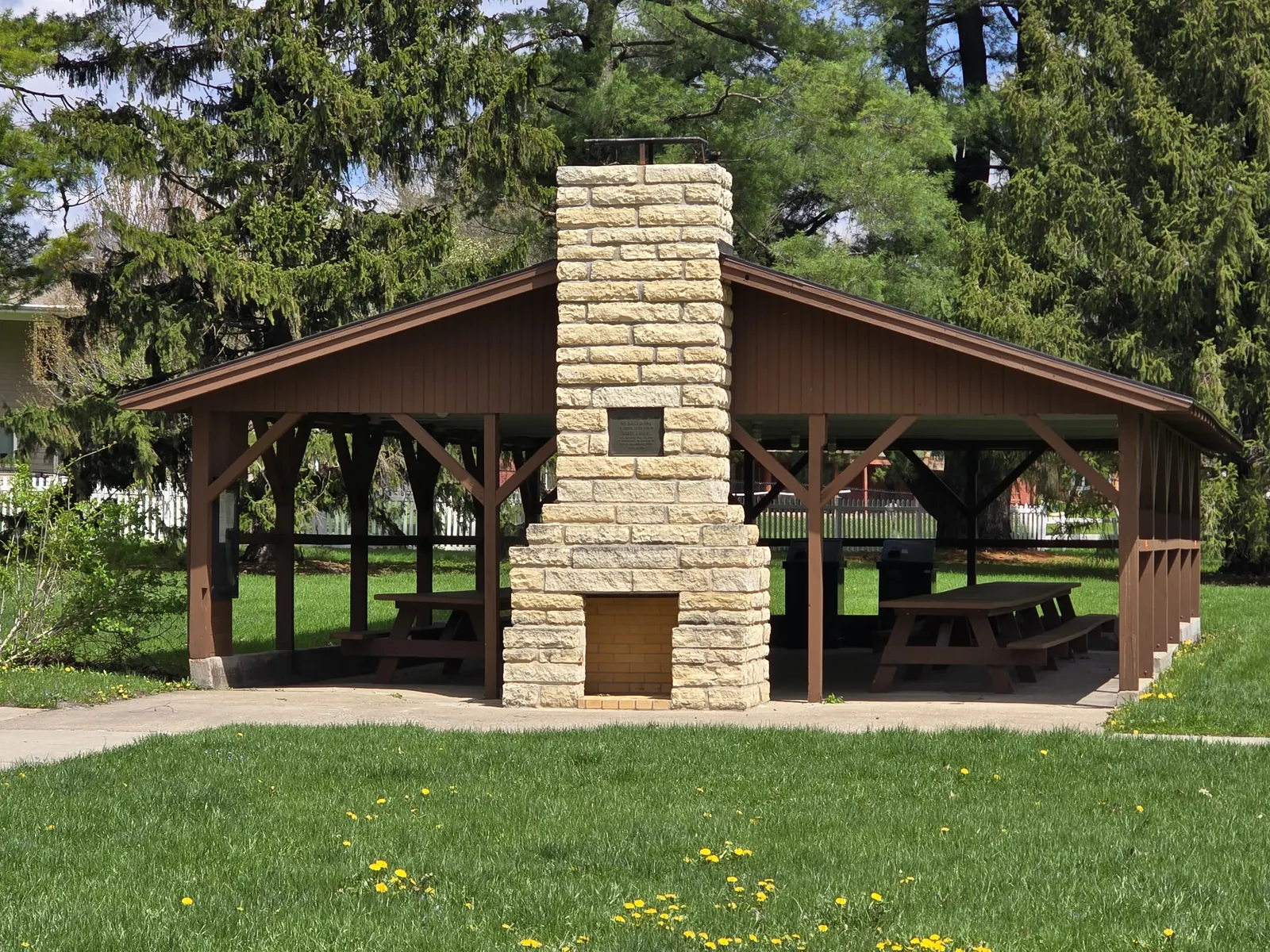
TNT rebuilt three historic masonry features at the Herbert Hoover National Historic Site
Overview
The Herbert Hoover National Historic Site in West Branch, Iowa preserves the birthplace and boyhood home of the 31st President. It is federal land, managed by the National Park Service, and every masonry element on the site is considered historic fabric. When a windstorm knocked a tree into the historic stone entry wall, the fireplace at the Boy Scout Picnic Shelter showed serious settlement cracks, and the stone base of the park entrance sign started losing mortar from freeze-thaw, the park issued PMIS 228580 - a single contract to rebuild all three features.
TNT Tuckpointing bid the project in May 2020 and executed the work in the fall of 2020, with a post-winter follow-up in June 2021. Each of the three features had different damage and a different rebuild methodology - but all three were governed by the same federal standards and the same documentation requirements.
Market:
The Site and the Stakes
Herbert Hoover NHS sits on 186 acres in West Branch, 15 minutes east of Iowa City. The park includes the two-room cottage where President Hoover was born in 1874, his grave and that of First Lady Lou Henry Hoover, the Herbert Hoover Presidential Library-Museum, a one-room schoolhouse, a blacksmith shop, the Friends Meetinghouse, and a reconstructed prairie.
The three features on this project are not the buildings visitors travel for. They are the quiet masonry elements - the fireplace at the picnic shelter, the stone wall along a walking path, the sign visitors drive past on the way in. They are also the elements most exposed to Iowa weather and everyday public use, and when they fail, they fail in ways the public sees.
The park does not close for contractors. Herbert Hoover NHS stays open 362 days a year. That shaped the whole project - crew size, work hours, fencing, staging, and the order of operations were all built around keeping the site safe and presentable for visitors while the work happened.
Three Features, Three Methodologies
Stone Feature No. 1 - Fireplace at the Boy Scout Picnic Shelter
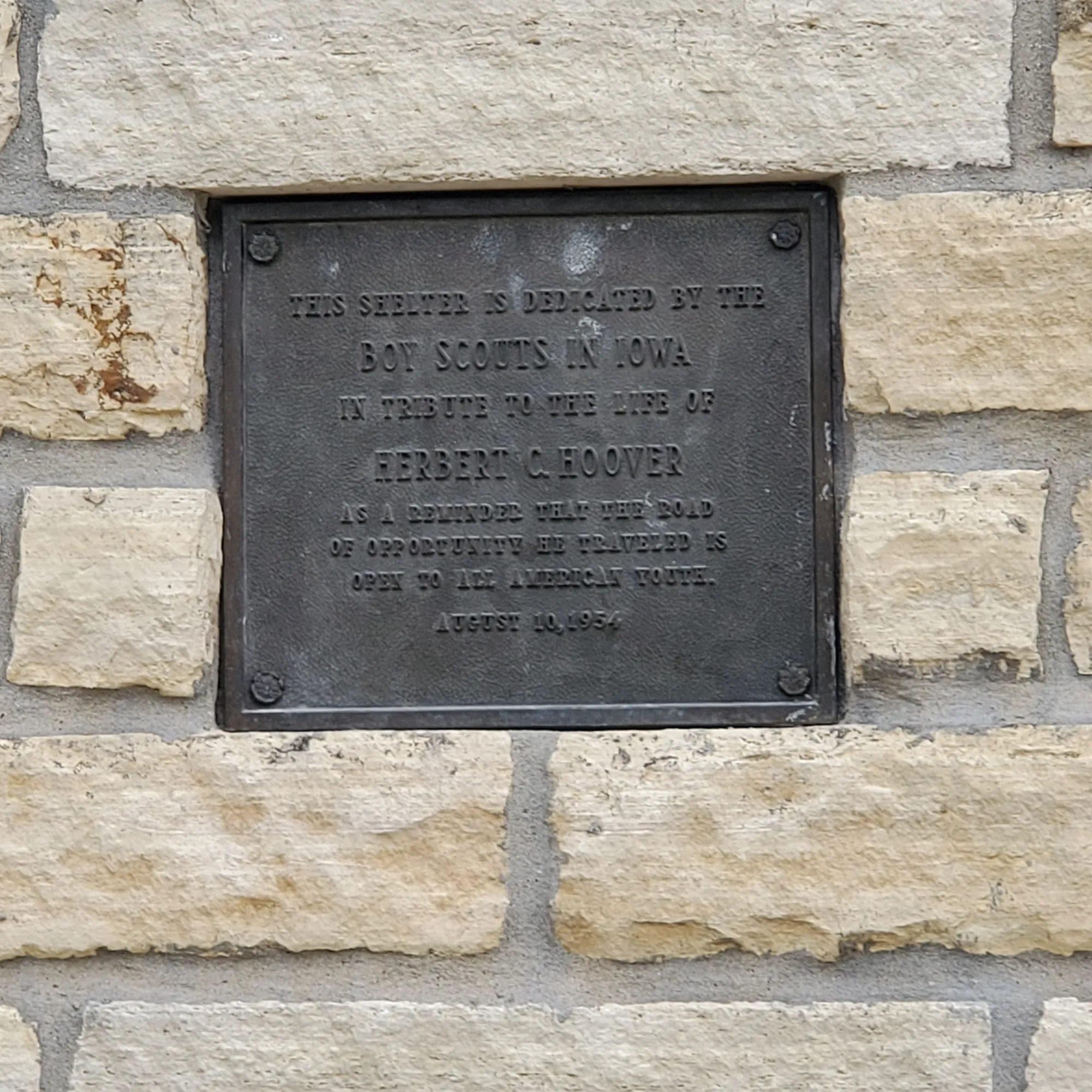
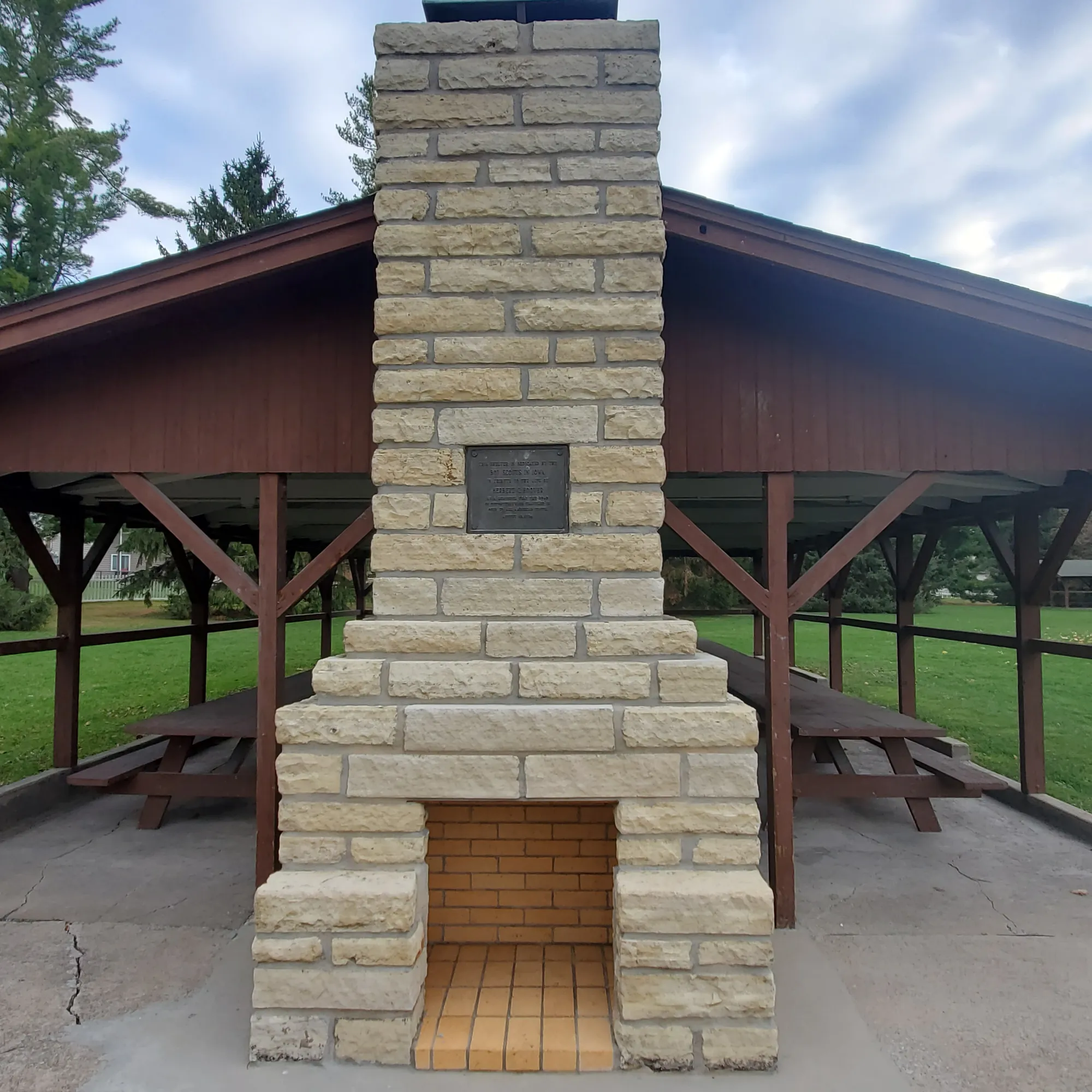
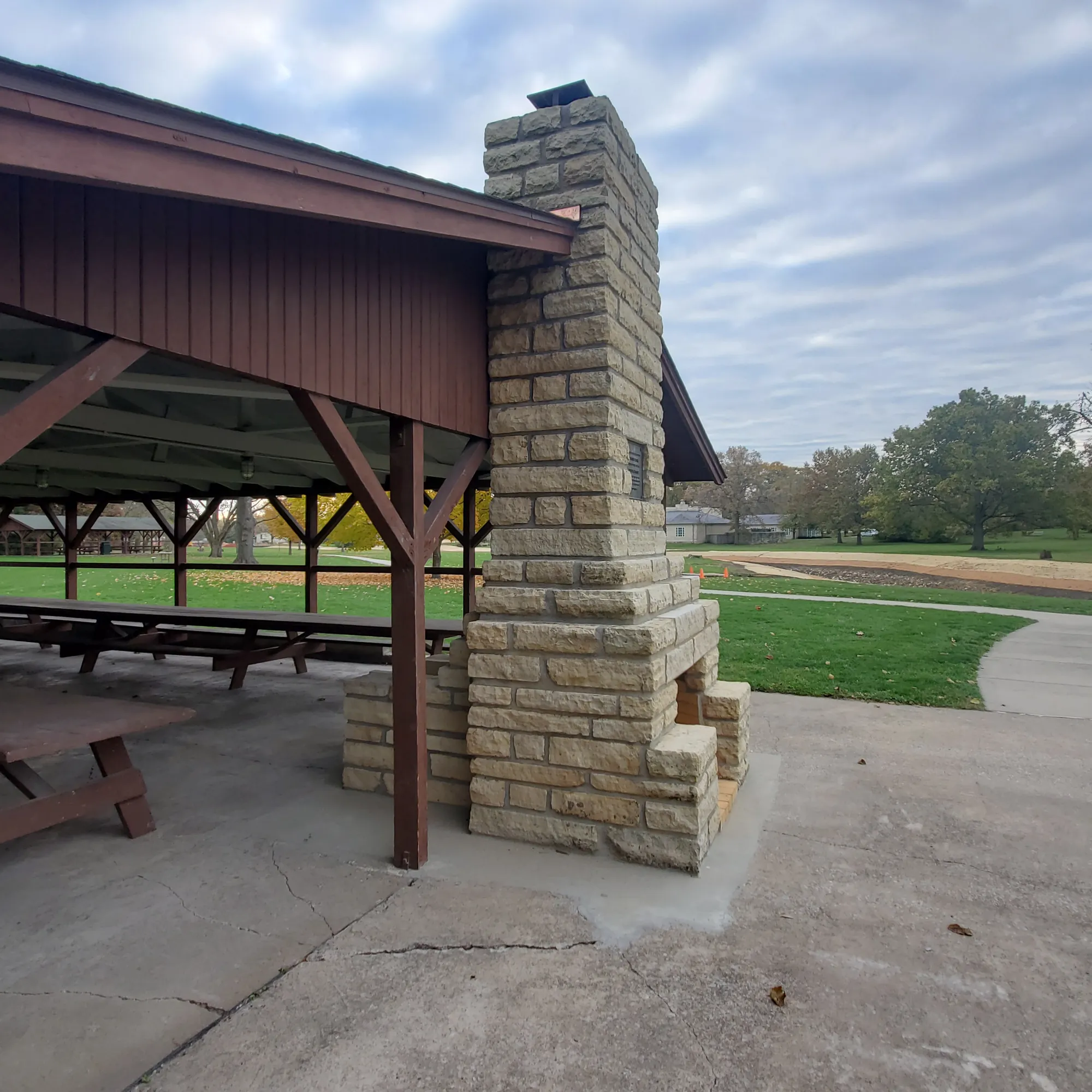
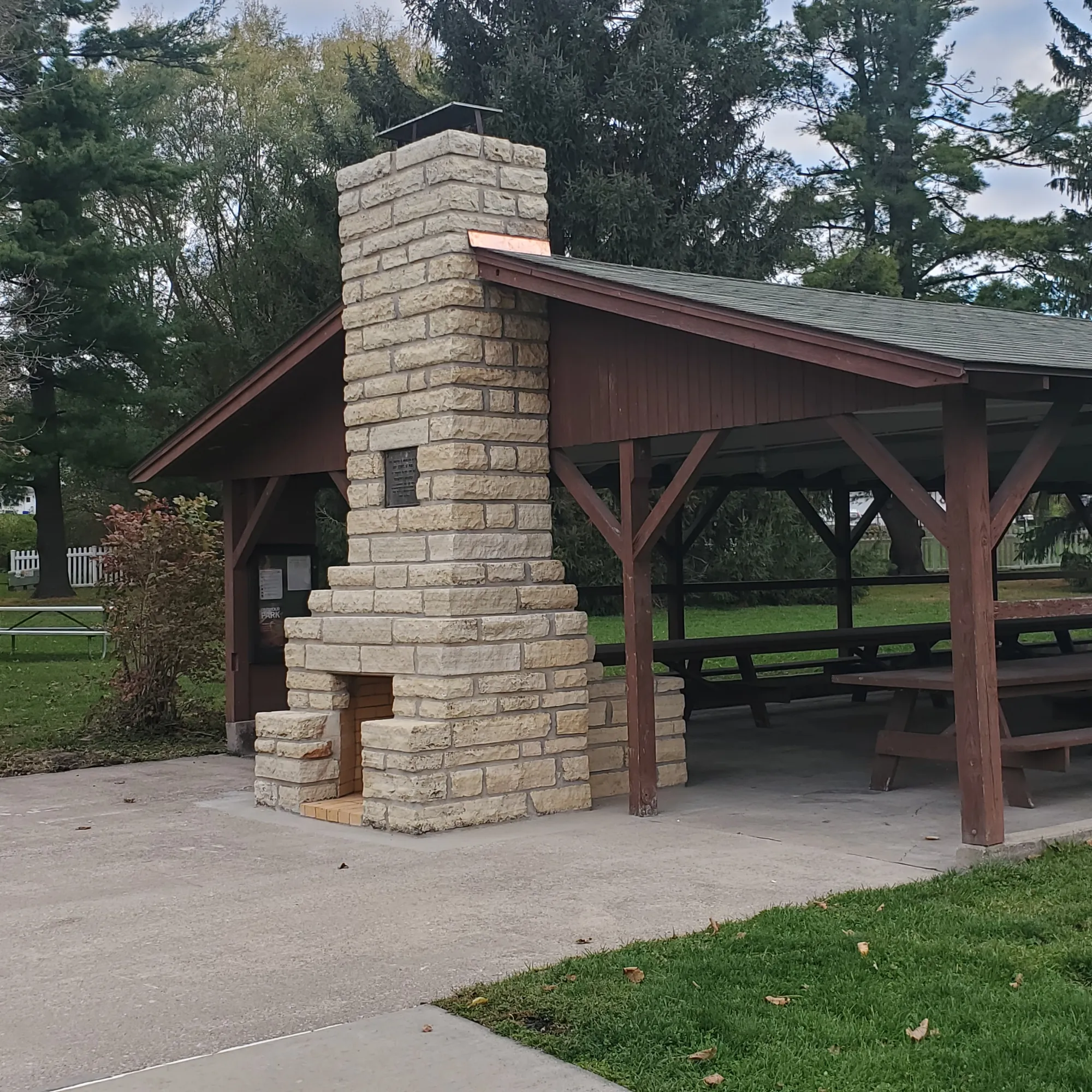
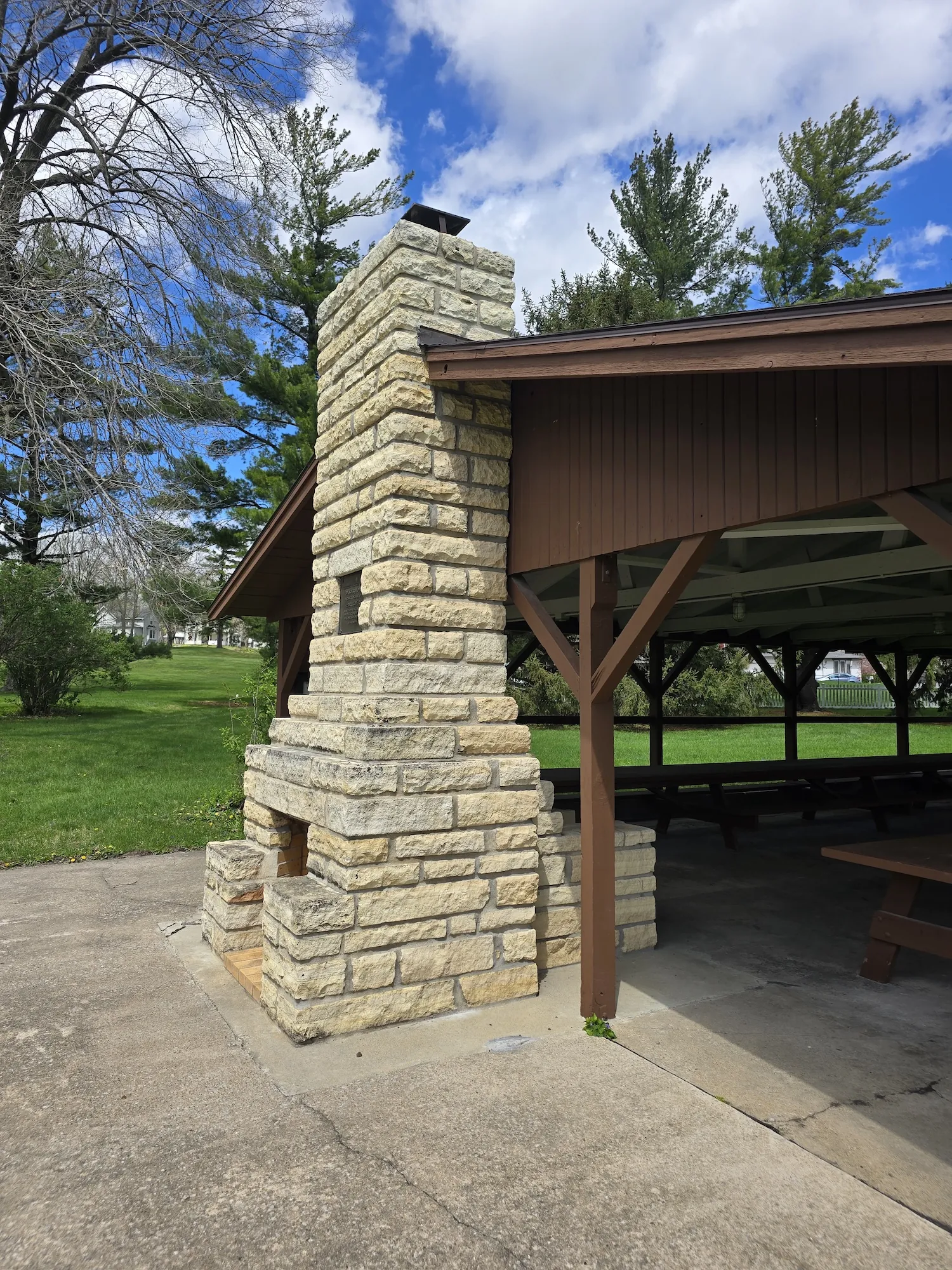
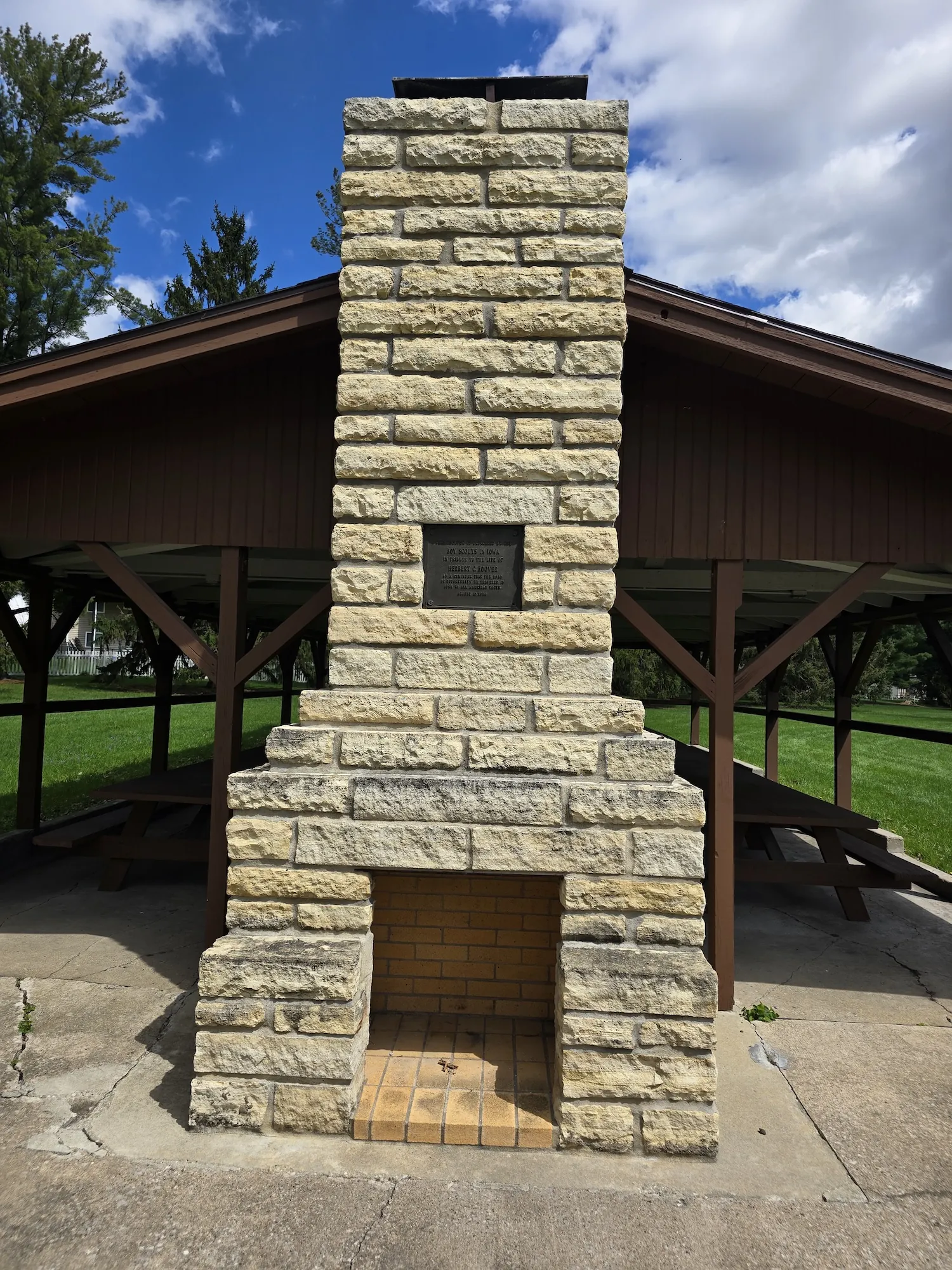
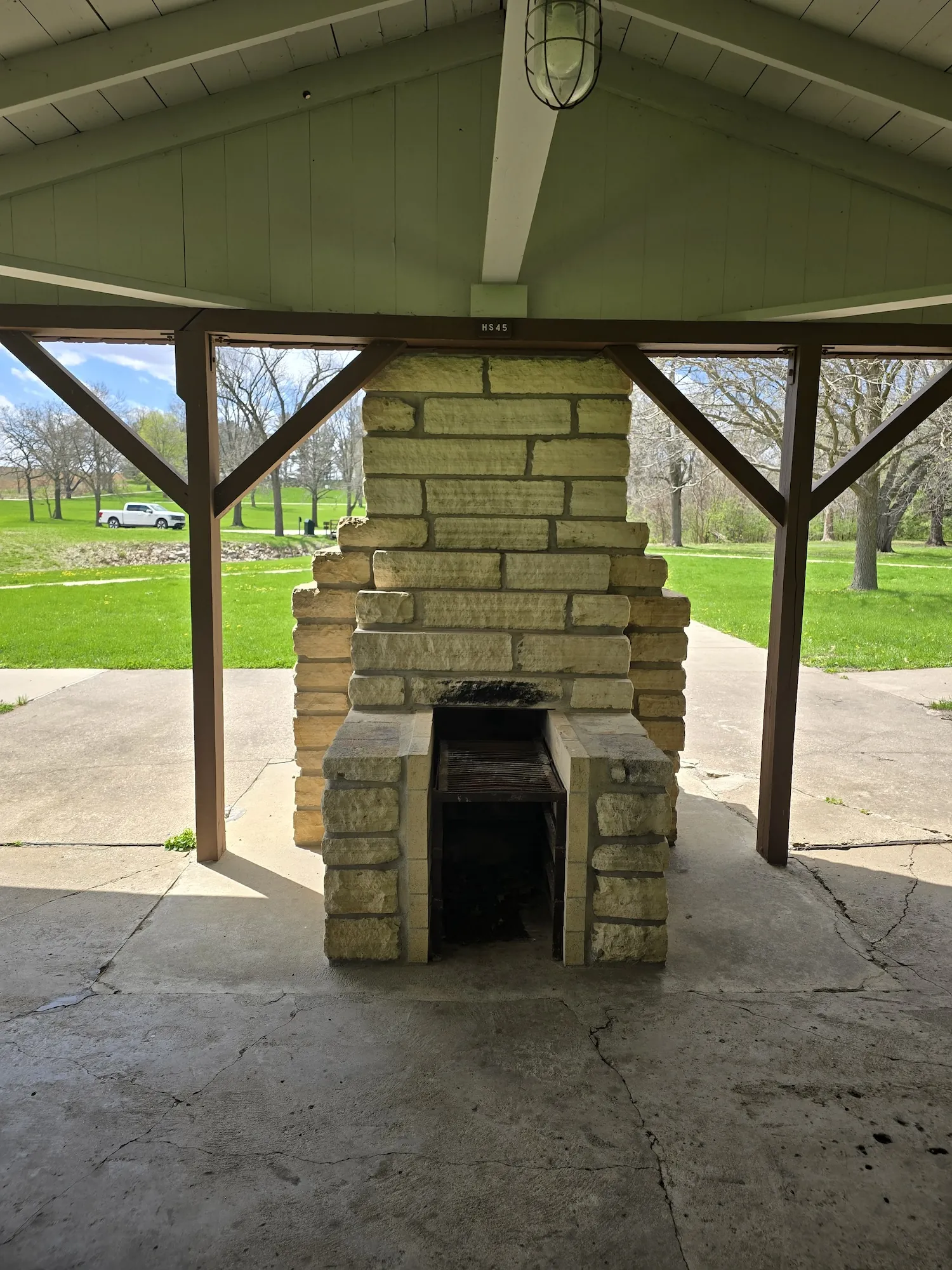
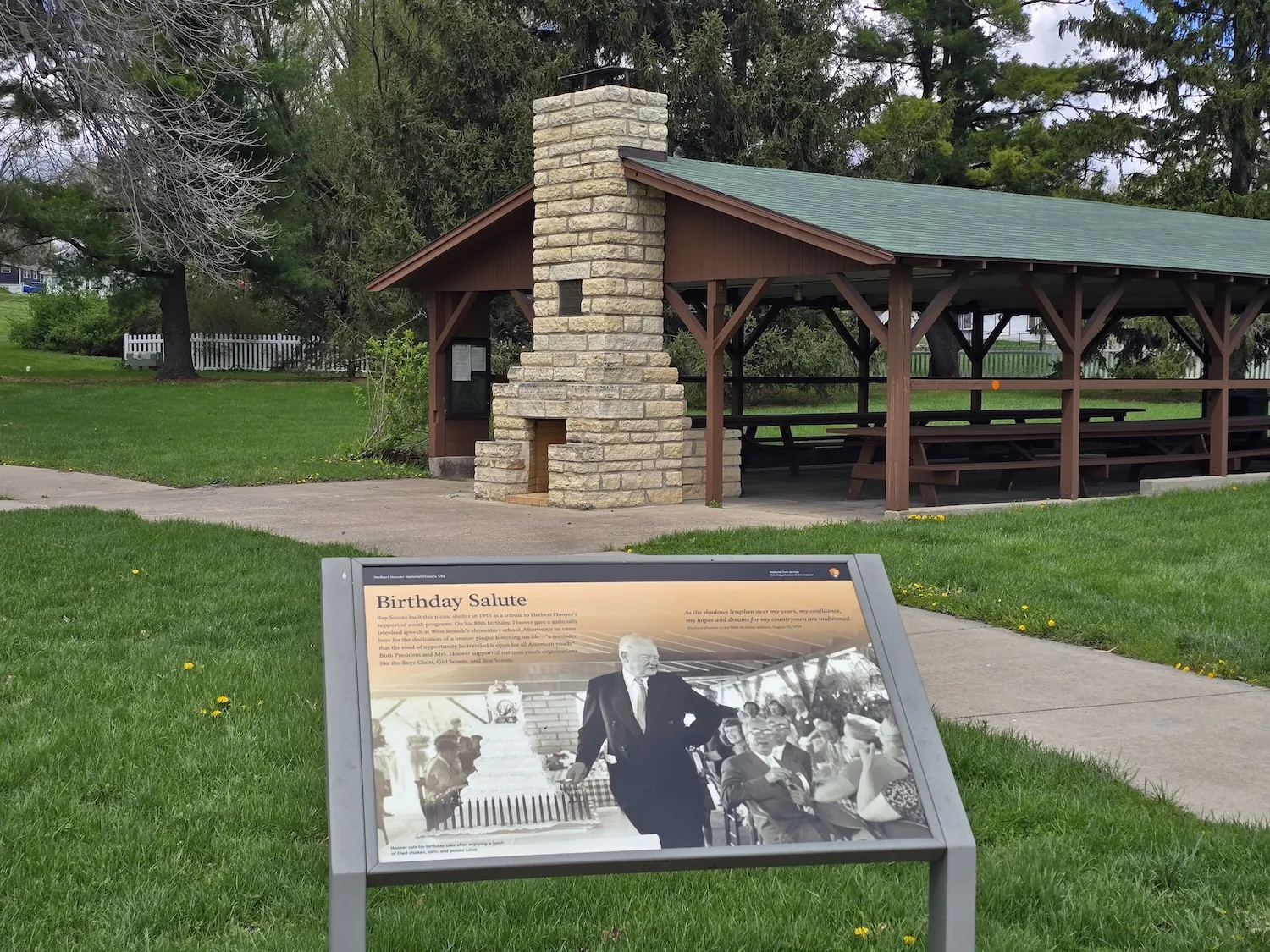
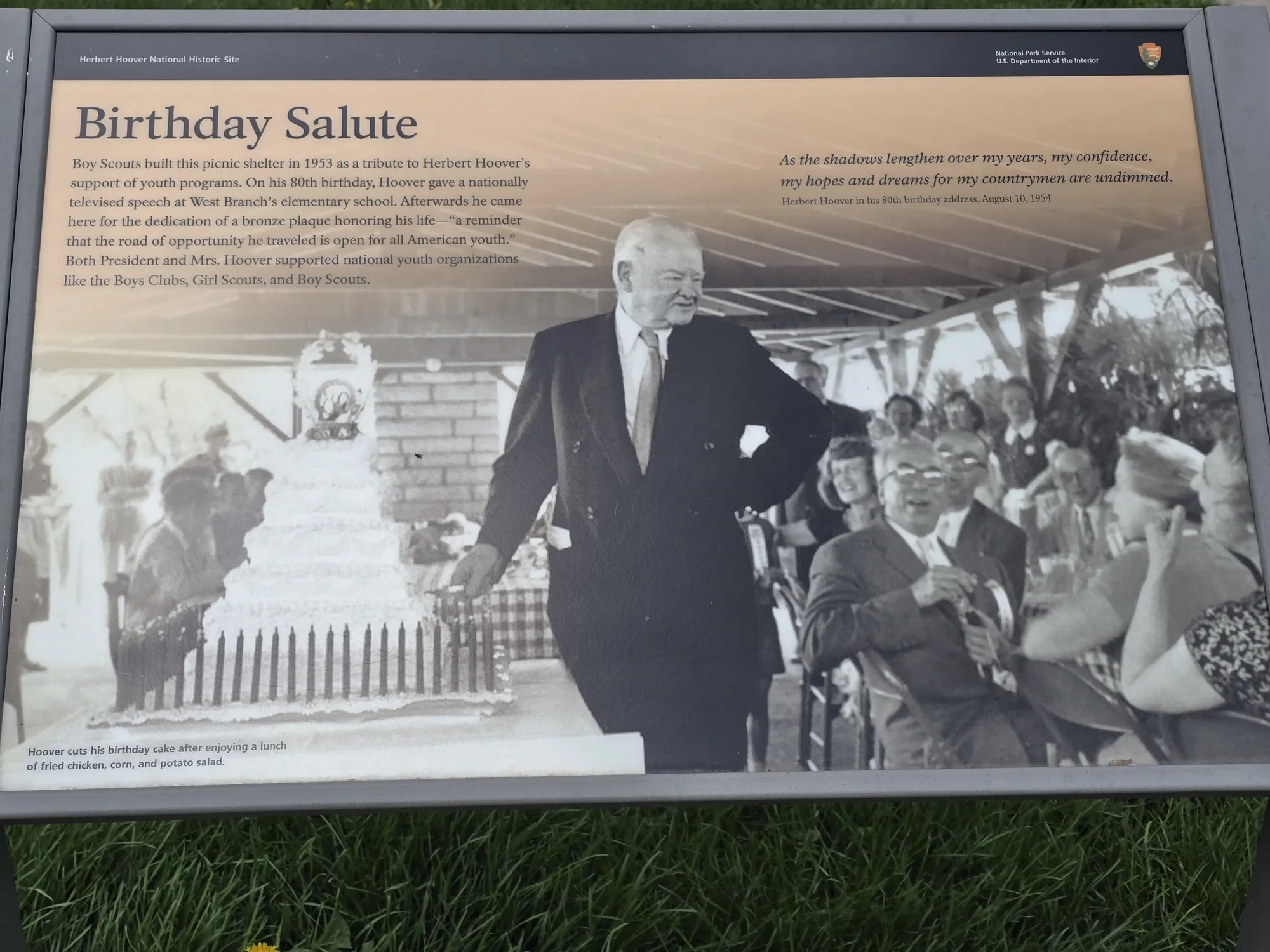
The fireplace sits on the southwest side of a 24-foot by 40-foot picnic shelter and runs up through the roof as a full chimney. The stone box at the base is roughly 6 feet by 5 feet with a smaller hearth. The original fireplace was built from fieldstone.
The foundation under the fireplace had failed. Visual evidence showed the whole structure had settled, which cracked the stone courses and loosened the joints. The NPS scope called for complete deconstruction, a new engineered concrete foundation, and a full rebuild.
Stone Feature No. 2 - Historic Stone Entry Wall
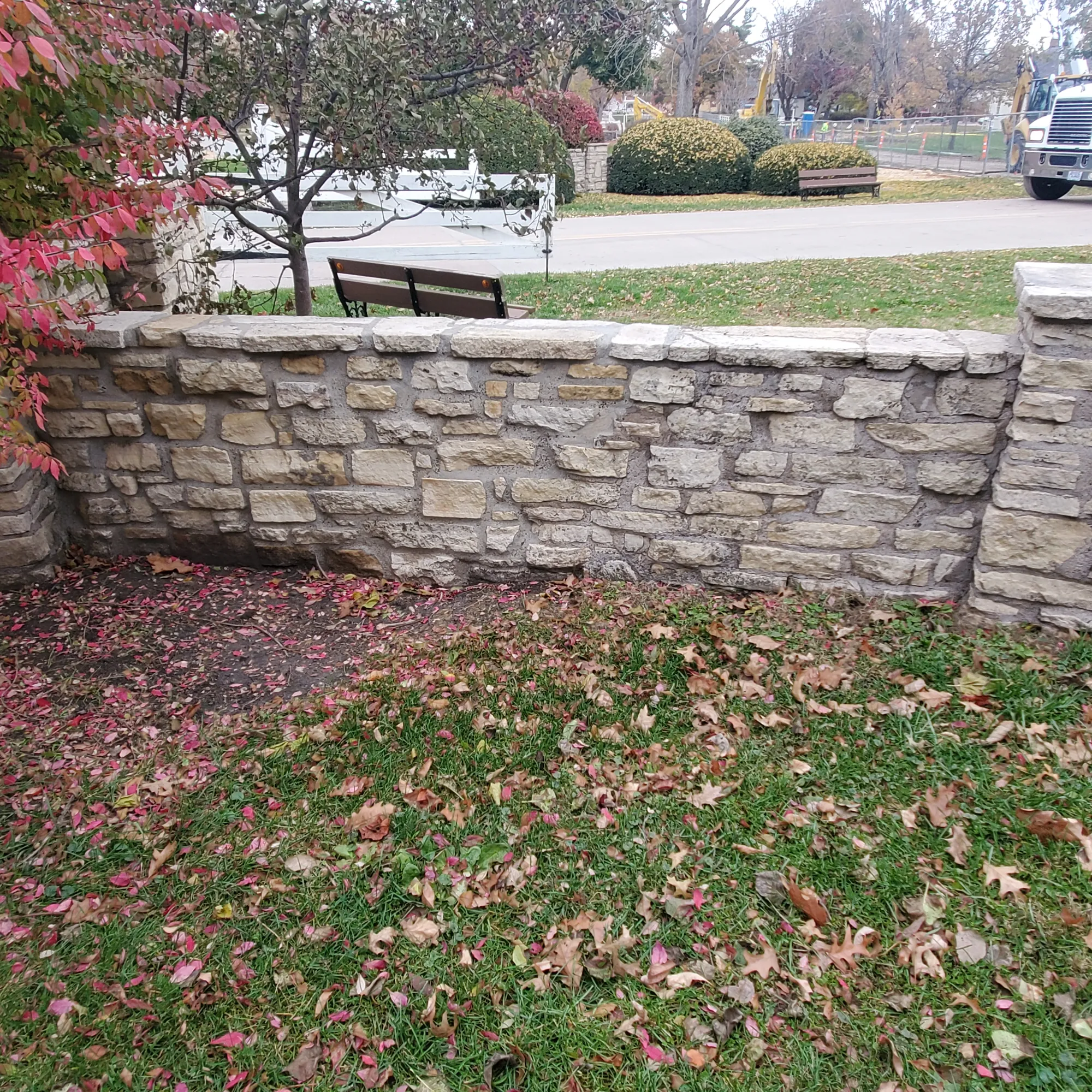
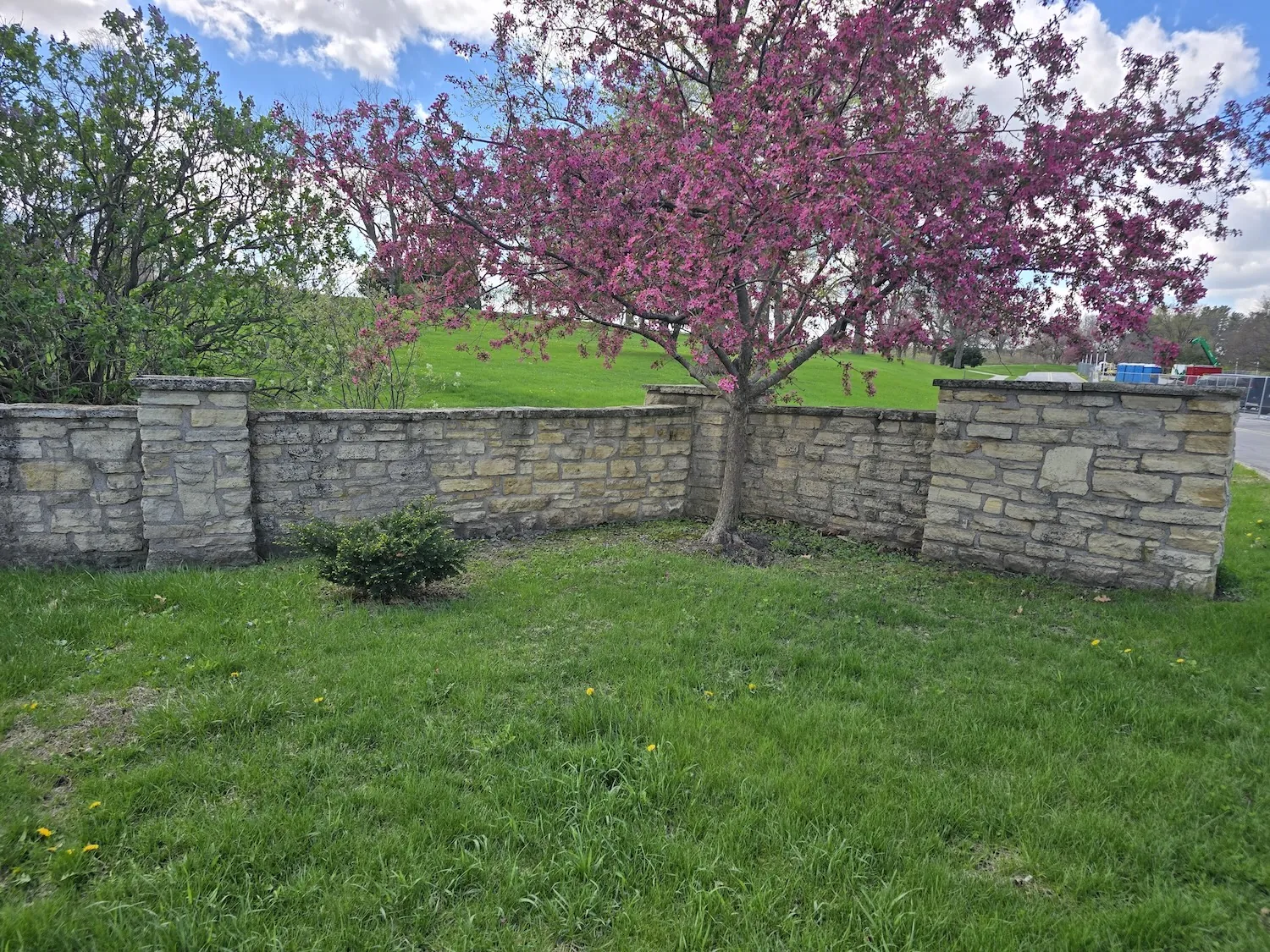
The historic stone entry wall is approximately 50 feet long, 5 feet high, and 16 inches thick, built of mortared fieldstone. Roughly ten years before this project, a tree fell on one section of the wall. The impact caused a mortar crack that ran down the full height of the damaged section and into the wall foundation.
The NPS scope identified an 8-foot damaged section for deconstruction and rebuild.
Stone Feature No. 3 - Park Entrance Sign
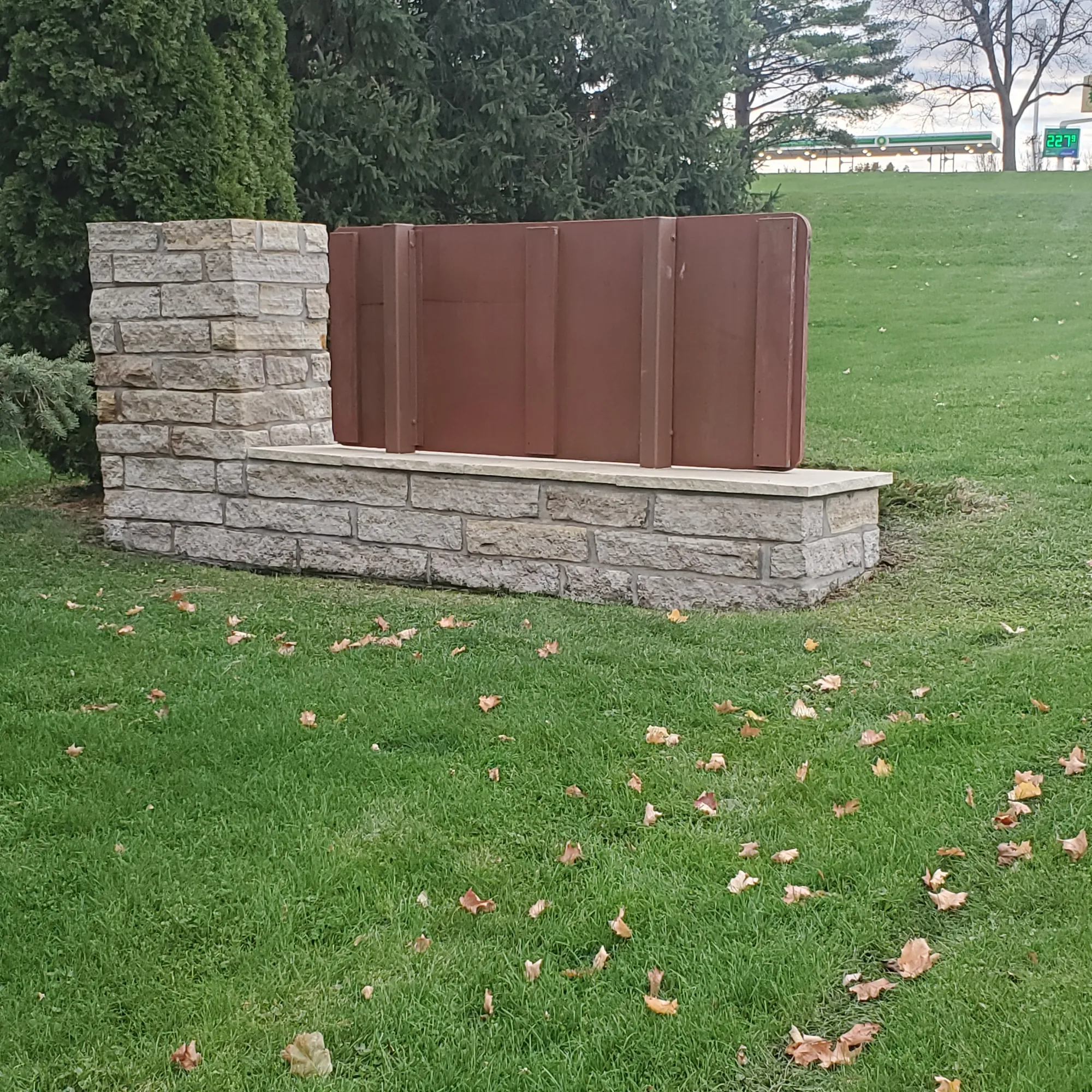
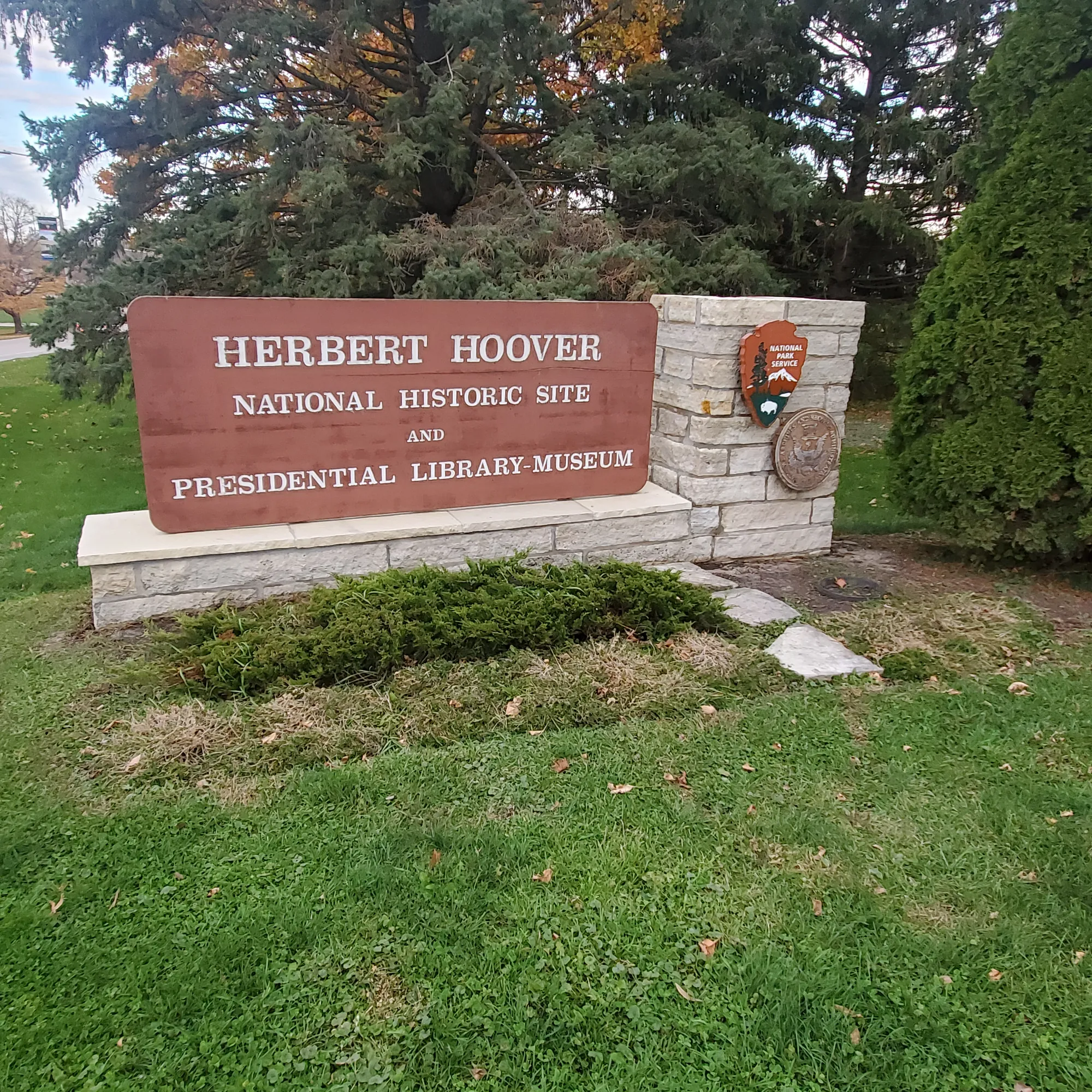
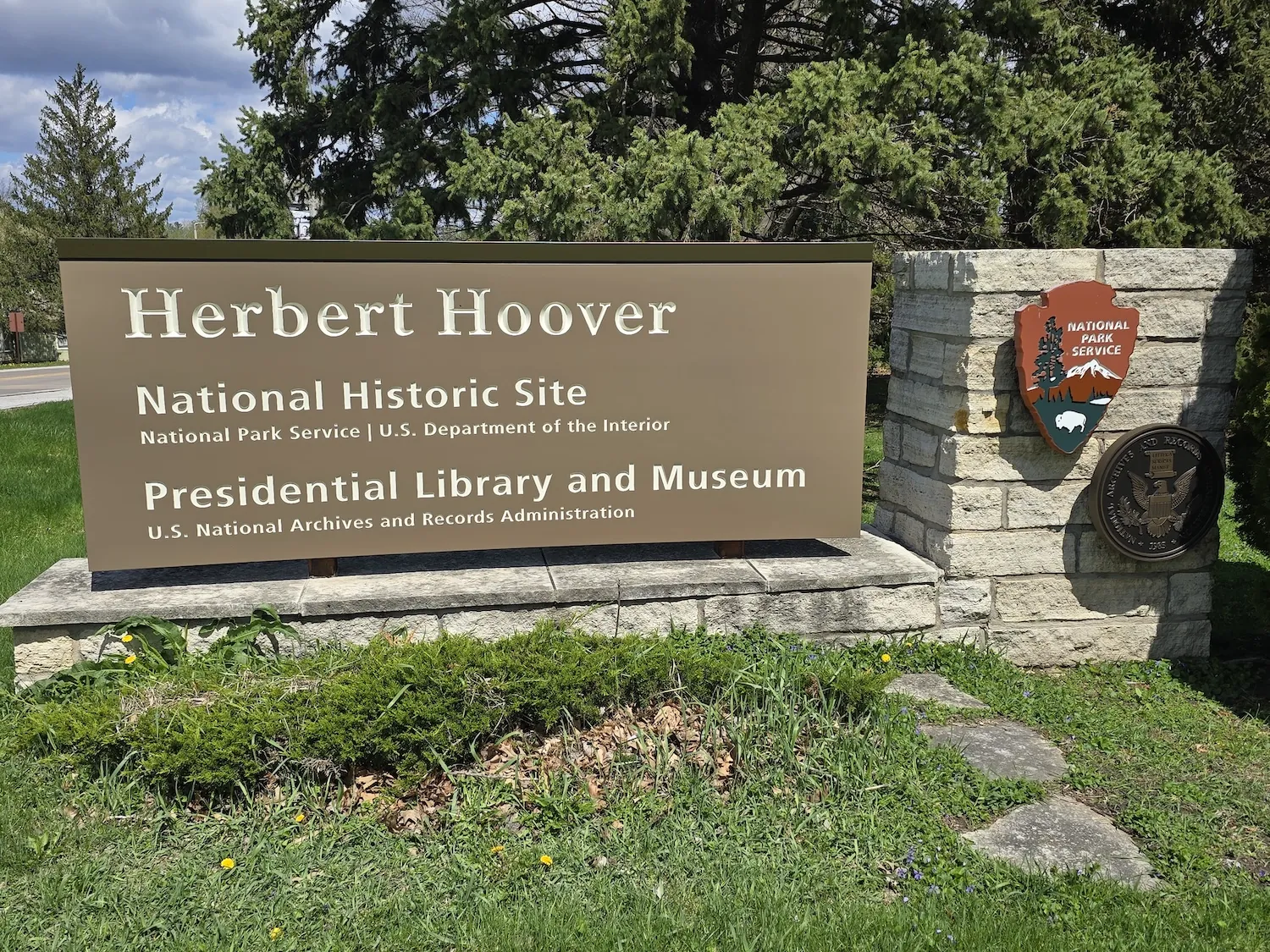
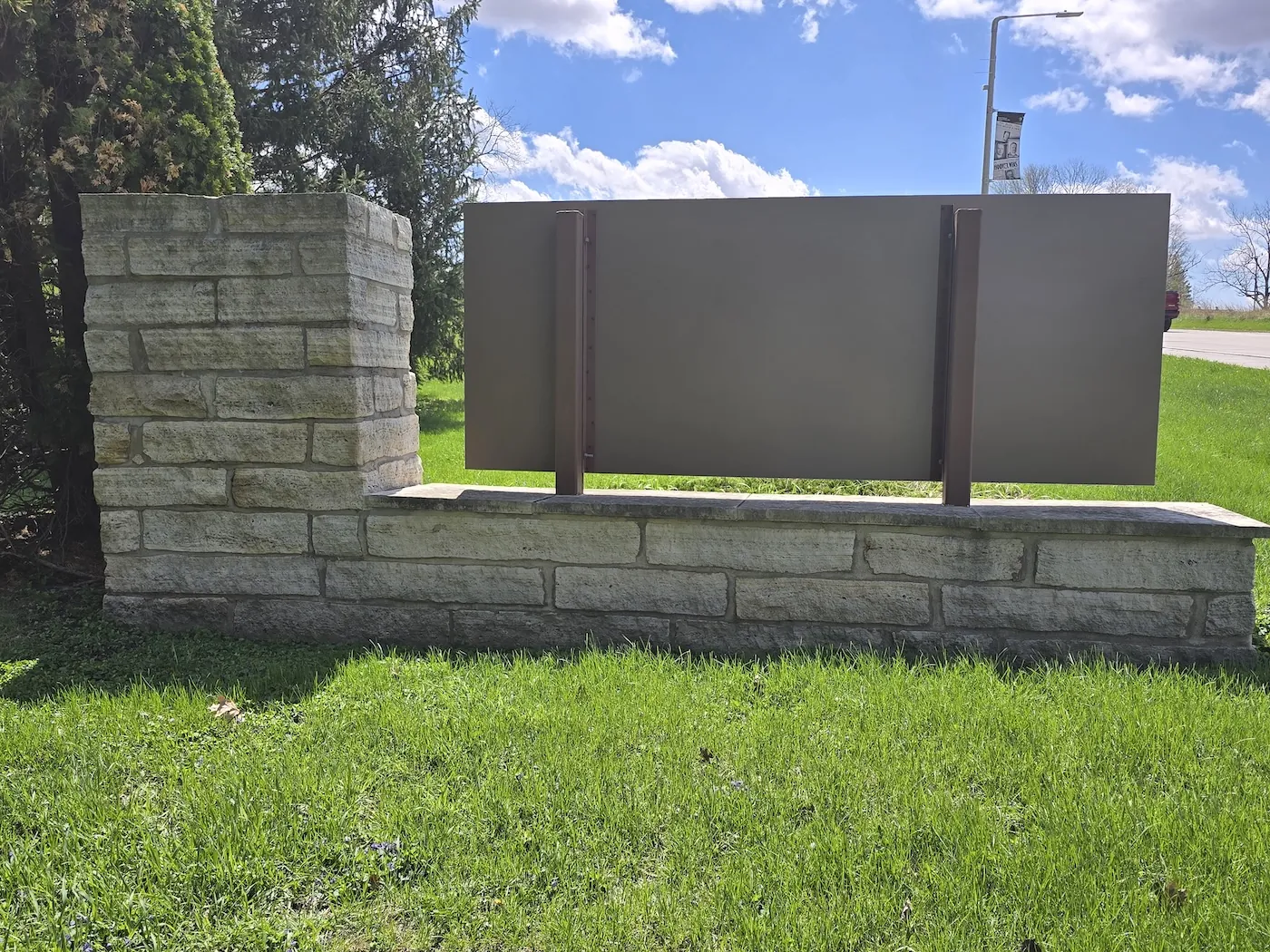
The entrance sign that greets visitors on Parkside Drive is a two-level mortared fieldstone base with a painted wooden Herbert Hoover National Historic Site / Presidential Library sign mounted on top. The lower section of the base measures 12 feet long by 2 feet 8 inches wide by 2 feet high, with tube steel columns carrying the wooden sign above.
Ponding water on top of the base, combined with freeze-thaw cycling, had failed the mortar in the top courses of the lower stone section. The top of the base no longer shed water properly, the sign was starting to move, and the tube steel supports needed to come out for access to the failed stone.

Working to NPS and Secretary of the Interior Standards
Every decision on this project tied back to two documents:
- The Secretary of the Interior's Standards for the Treatment of Historic Properties, which govern how historic fabric is preserved, rehabilitated, restored, or reconstructed
- The relevant NPS Preservation Briefs - Brief #1 for cleaning historic masonry and Brief #2 for repointing
In practical terms:
- Stone salvage was the default. NPS spec requires reusing existing stone to the greatest extent possible. New stone was only introduced where the original was unusable, and every new stone had to match the existing fabric in color, texture, and size.
- Mortar mix was specified by the owner, not chosen by the contractor. The NPS required a 1 part white portland cement, 1 part hydrated lime (ASTM C 207 Type S), 6 parts natural sand (ASTM C 144) mortar, tinted with approved natural or synthetic iron oxide pigments to match the original mortar color.
- Stone connectors had to be non-rust stainless steel (Construction Tie Products, Hohmann and Barnard, Mason Pro, or approved equal), used only as approved by the COR.
- Photo documentation was continuous: pre-construction existing conditions, sub-surface work prior to backfill, progress photos, and closeout photos - all submitted on NPS form CM-16 at 8 megapixels minimum.
- Tooling profile had to match the original - a flush joint stayed flush, a concave joint stayed concave, and the texture of the fresh mortar matched the aged original as closely as possible.
TNT's historic-preservation certifications supported this scope. At the time of bid, TNT was certified in Lime Putty Mortar installation through US Heritage and in Stone Repair Mortar through both US Heritage and Cathedral Stone's Jahn system - the three certification systems that cover the majority of historic masonry repair work in the United States. Those certifications are the reason TNT makes the cut on federal historic projects.
Keeping the Park Open During Construction
The Boy Scout Picnic Shelter sits in an active part of the park. The stone entry wall runs along a visitor walking path. The entrance sign is the first thing every visitor sees. Public access was part of the contract - the NPS scope limits the contractor to the three project areas plus 30 feet of buffer, and nothing outside those zones can be disturbed.
TNT ran the site with:
- Portable chain link fencing around each of the three work areas, sized to give the crew room to work without giving visitors a reason to cross into the zone
- Vehicle gates positioned away from public thoroughfares; pedestrian gates sized for controlled personnel entry
- Lockable enclosures around partially completed work at the end of every work day and at the end of every work week
- Standard work hours of 8 a.m. to 5 p.m., Monday through Friday, per NPS requirements - no after-hours or weekend work without 48-hour advance approval from the Contracting Officer
- Equipment pressure-washed off-site and inspected for soil, seeds, and vegetative matter before ever rolling onto park grounds, per NPS invasive-species protocol
- Daily housekeeping - the park did not look like a construction site on nights or weekends
- Weekly 15-minute toolbox safety meetings, documented and submitted to the Contracting Officer
Timeline and Outcome
The project ran through the fall of 2020. TNT's construction schedule broke the work into photo documentation and submittals up front, then the three features in sequence, with punch list and closeout at the end.
Photo documentation spans September 15, 2020 (rebar cage fabrication at the TNT yard before delivery) through October 30, 2020 (final photos of all three completed features). A post-winter site visit on June 8, 2021 verified that the first full freeze-thaw cycle had not revealed any mortar issues.
Why This Project Matters
National Park Service work is the same craft as TNT's commercial, institutional, and religious work. It is that craft held to a higher documentation bar. The mortar still has to match the substrate. The stones still have to be reset plumb and level. The cap still has to shed water. The difference on a federal historic site is that every one of those decisions is documented, reviewed, and judged against published federal standards.
That is the same standard TNT brings to every historic project - whether the building is a governor's mansion, an Opera House, a Frank Lloyd Wright boathouse, a county courthouse, or a church that has been on the National Register since the 1970s. The paperwork is heavier on federal work. The craft is identical.
If your property is on the National Register, under State Historic Preservation Office (SHPO) jurisdiction, or owned by a public agency with preservation standards, the first question is always the same: can the contractor meet the standards, document the work, and hand back a clean closeout package? For a three-decade masonry restoration contractor with Lime Putty Mortar, Stone Repair Mortar, and Jahn certifications, the answer is yes.
What Our Client Said About Our Work
.jpg)
Contact Us
Our skilled team is here to bring your building to life. Contact us today to discuss your project!