


Building a Foundation for Educational Excellence
Our team has extensive experience in preserving historic charm, creating modern learning environments, minimizing disruptions to classes and student activities, and ensuring safety and accessibility. By choosing TNT, you can trust that your educational facility will be treated with the care and attention it deserves, while minimizing disruptions to your students' learning experience.
What We Do Best
Schools, universities, and campus buildings require restoration work that minimizes disruption to students, faculty, and daily operations. We plan around academic calendars, coordinate with facility managers, and execute efficiently so that learning continues uninterrupted while we restore the building envelope to peak condition.


Download Our Educational Services Overview
Looking to preserve an Educational building? Download our quick guide to TNT’s restoration services tailored for educational facilities. Inside, you’ll find...
Preserving the past. Restoring with precision. Serving since 1993.

4.9 Star On Google
Rated by the building owners and facility managers we serve.
Our Projects Speak for Themselves
Browse our portfolio of completed projects to see the quality, scope, and craftsmanship we bring to every job.
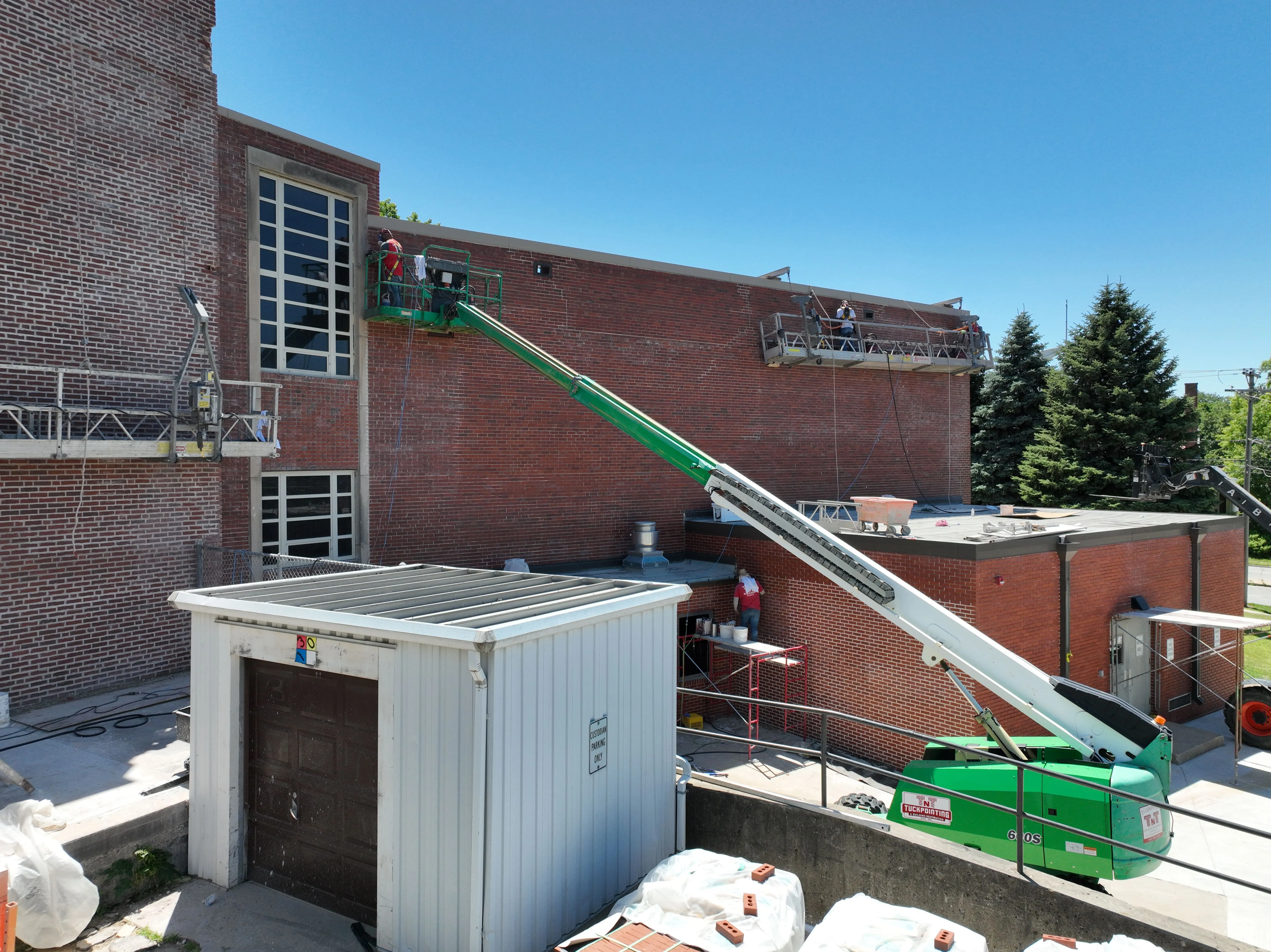
Park Avenue Elementary School
Tuckpointing, Caulking and Lintel Restoration of an Elementary School Building
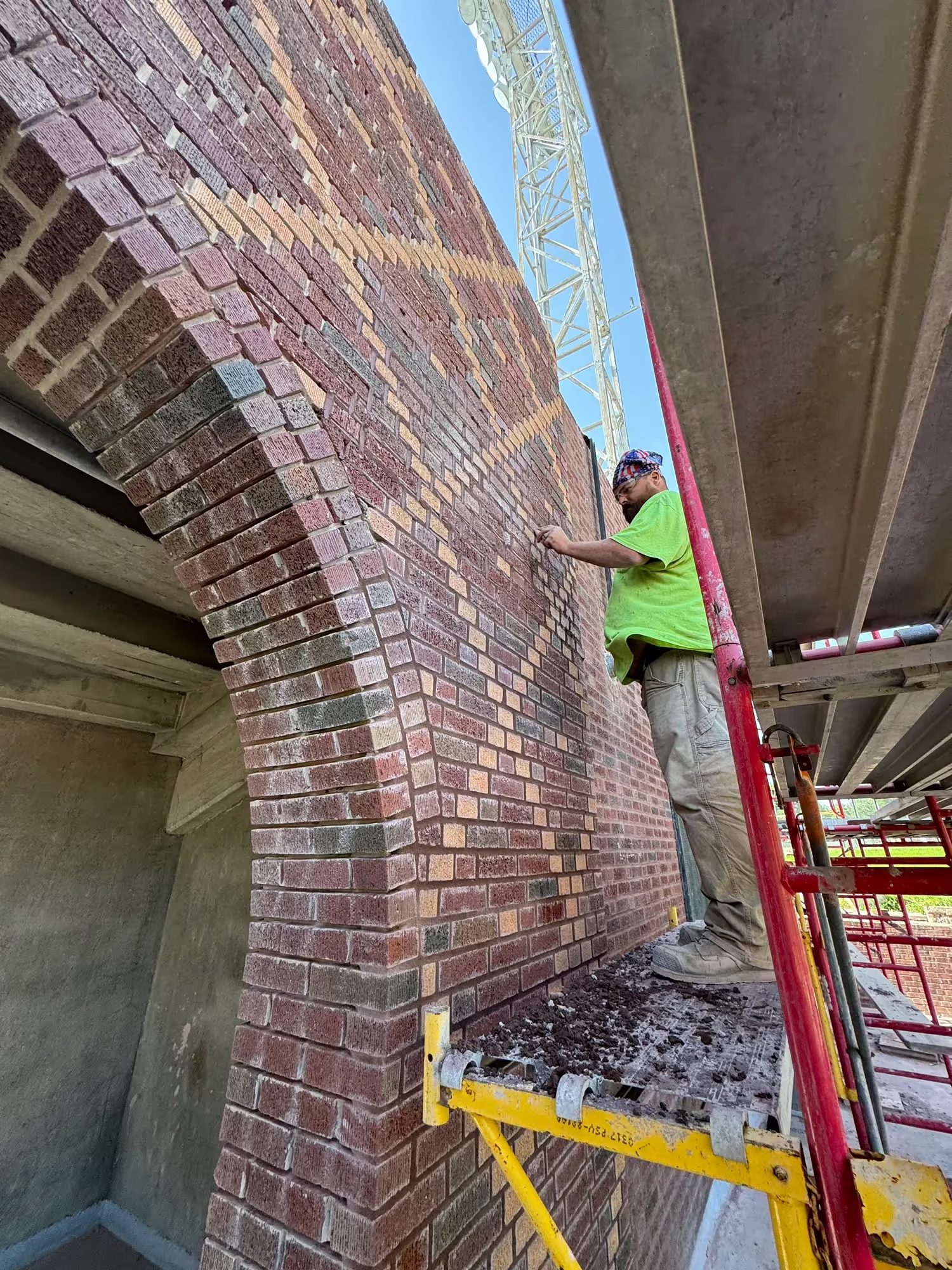
Rock Island Stadium
Expert masonry restoration and structural repairs for the Rock Island Stadium.
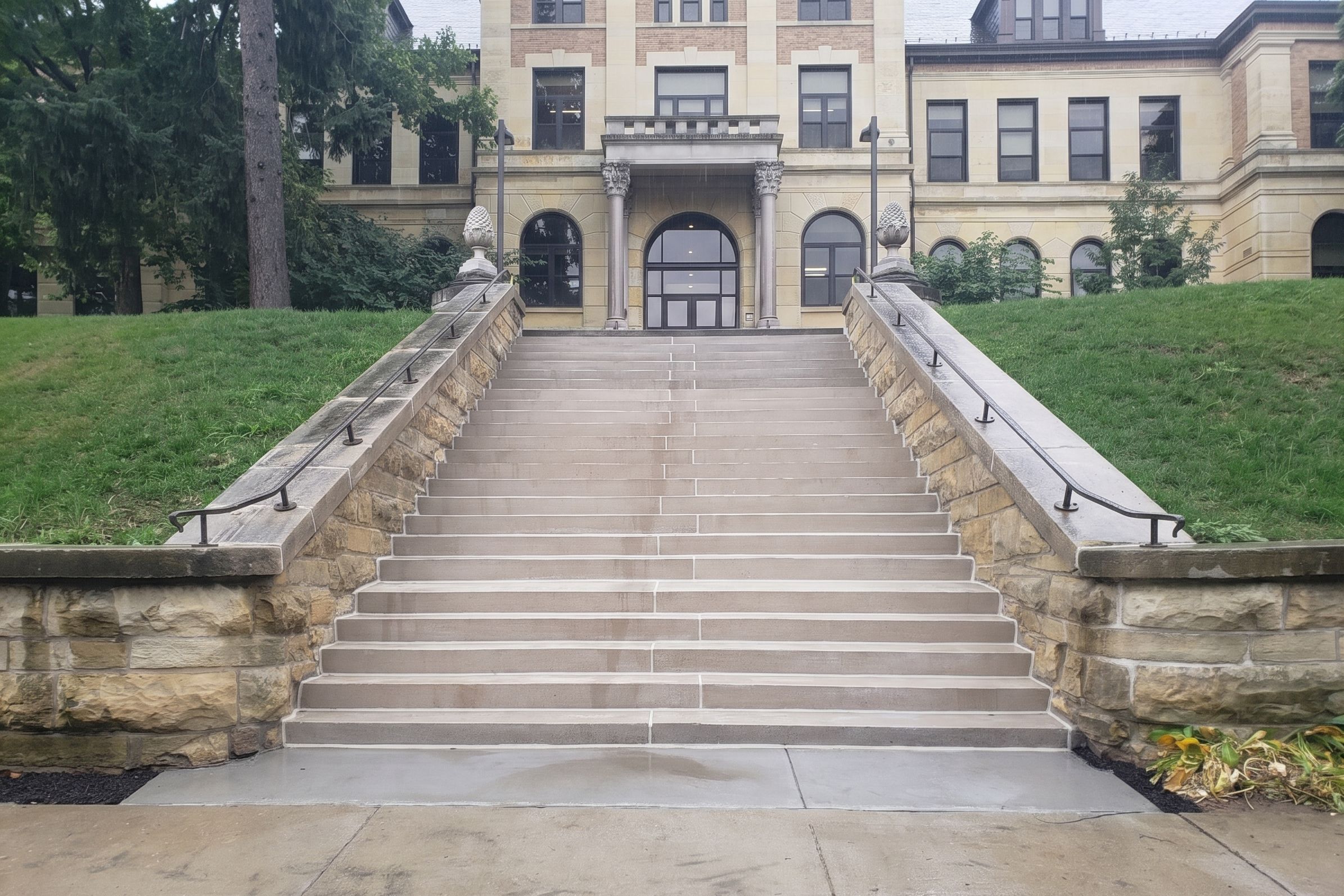
Augustana College
Augustana College Stair Replacement, Rock Island, Illinois
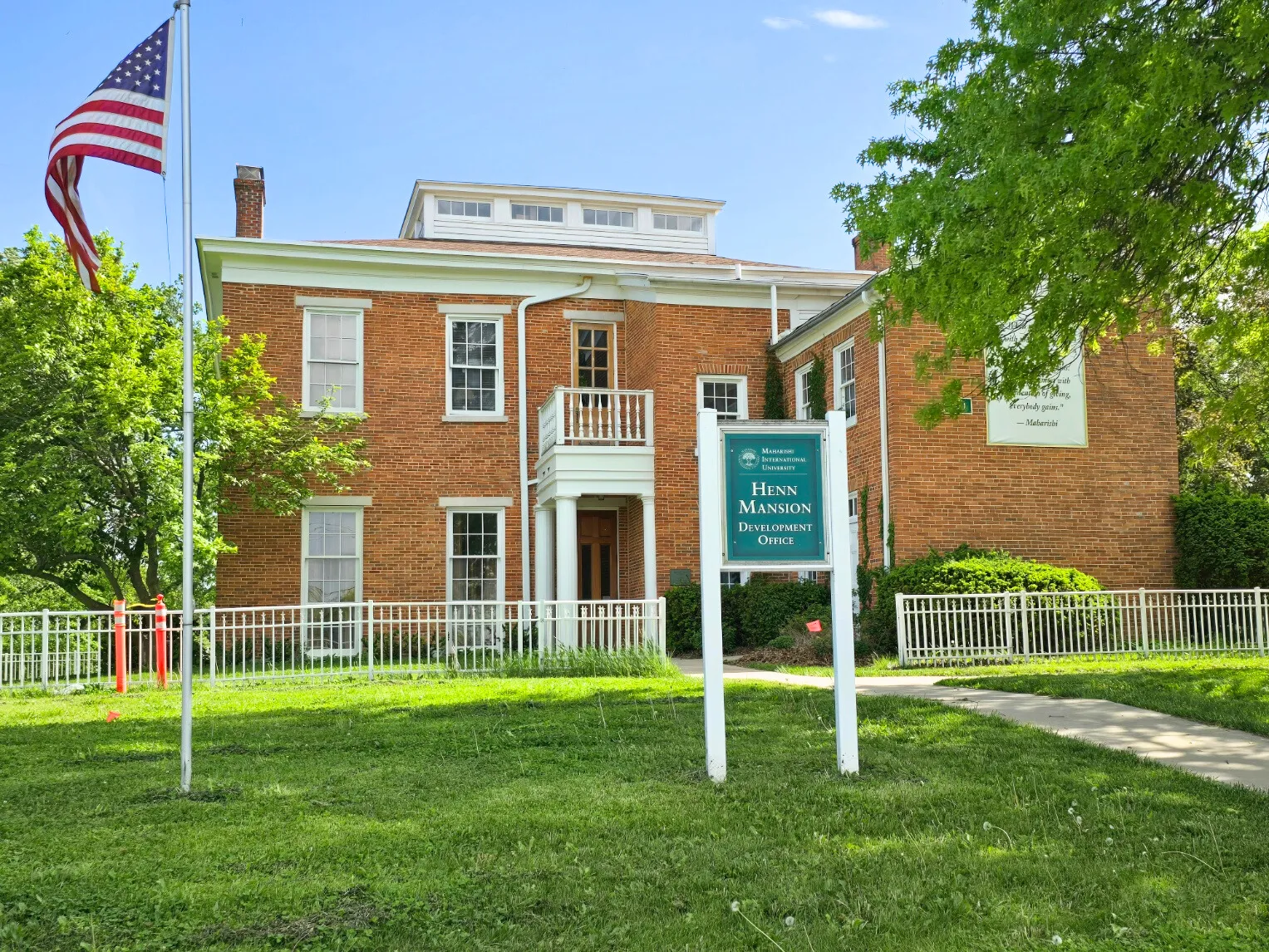
Learn More and See What’s Going On
Contact Us
Our skilled team is here to bring your building to life. Contact us today to discuss your project!
FAQs
What is the typical process for starting a school masonry project?
It starts with a building assessment to document conditions and prioritize repairs. We then develop a scope and budget aligned with the district's funding, and schedule the work around the academic calendar, typically targeting summer breaks for field work.
How do aging masonry buildings affect energy costs for schools?
Failed mortar joints and deteriorated caulking allow air and moisture infiltration, increasing heating and cooling loads. Restoring the masonry envelope improves the building's thermal performance and can contribute to measurable energy savings over time.
Does TNT work on residence halls, dormitories, and athletic facilities?
Yes. We restore masonry on all types of campus buildings including residence halls, student centers, athletic facilities, and administrative buildings. Each building type has its own access and scheduling constraints, which we plan for upfront.
Can masonry work be phased across multiple summer breaks?
Yes. Phasing is common on campus projects, especially when budgets are limited or the scope covers multiple buildings. We plan each phase as a complete, weather-tight scope so the building is protected between seasons.
How does TNT help school districts budget for masonry work?
We work with facility directors to assess conditions, identify critical priorities, and develop phased scopes that align with available funding. Phasing work across multiple summers spreads costs, and giving us scheduling flexibility helps districts get the best pricing.
What is a long-term masonry maintenance plan for a school campus?
A good plan starts with a condition assessment of every masonry building, prioritizes repairs by urgency and consequence of failure, and schedules work in phases that align with budgets and the academic calendar. We work with districts and universities to develop these plans.
How does TNT maintain campus aesthetics during restoration work?
Scaffolding, equipment, and material staging are planned to minimize visual impact on the campus. We keep work areas organized, protect landscaping and hardscape, and coordinate with facilities teams on appearances during high-visibility events like commencement.
Does TNT work on historic campus buildings?
Yes. Many university and college campuses have buildings with historic significance, and roughly half of our total work is historic preservation. We follow the Secretary of the Interior's Standards and provide the documentation historic campus buildings require.
How does TNT protect students and staff near active work zones?
We install barriers, maintain clear and safe pedestrian routes, and follow strict site safety protocols around occupied buildings. Work zones are separated from student and staff areas, and we coordinate daily with facility managers on access and scheduling.
Can masonry restoration be done while school is in session?
Yes, when necessary. We coordinate with school administrators to manage noise, dust, and access around class schedules and building operations. However, summer breaks remain the preferred window for the most disruptive work.
What masonry problems are most common on school and university buildings?
Deteriorated mortar joints, failed caulking at windows and expansion joints, water infiltration, and spalling brick or stone. Many campus buildings are decades old and have accumulated deferred maintenance that worsens with each freeze-thaw cycle.
How does TNT schedule masonry work around the academic calendar?
Most school masonry projects are scheduled during summer breaks to minimize disruption. Our field season runs mid-February through the end of November, and we prioritize education projects during the summer window when access is easiest and buildings are least occupied.