.webp)

What is Lintel Repair and Replacement?
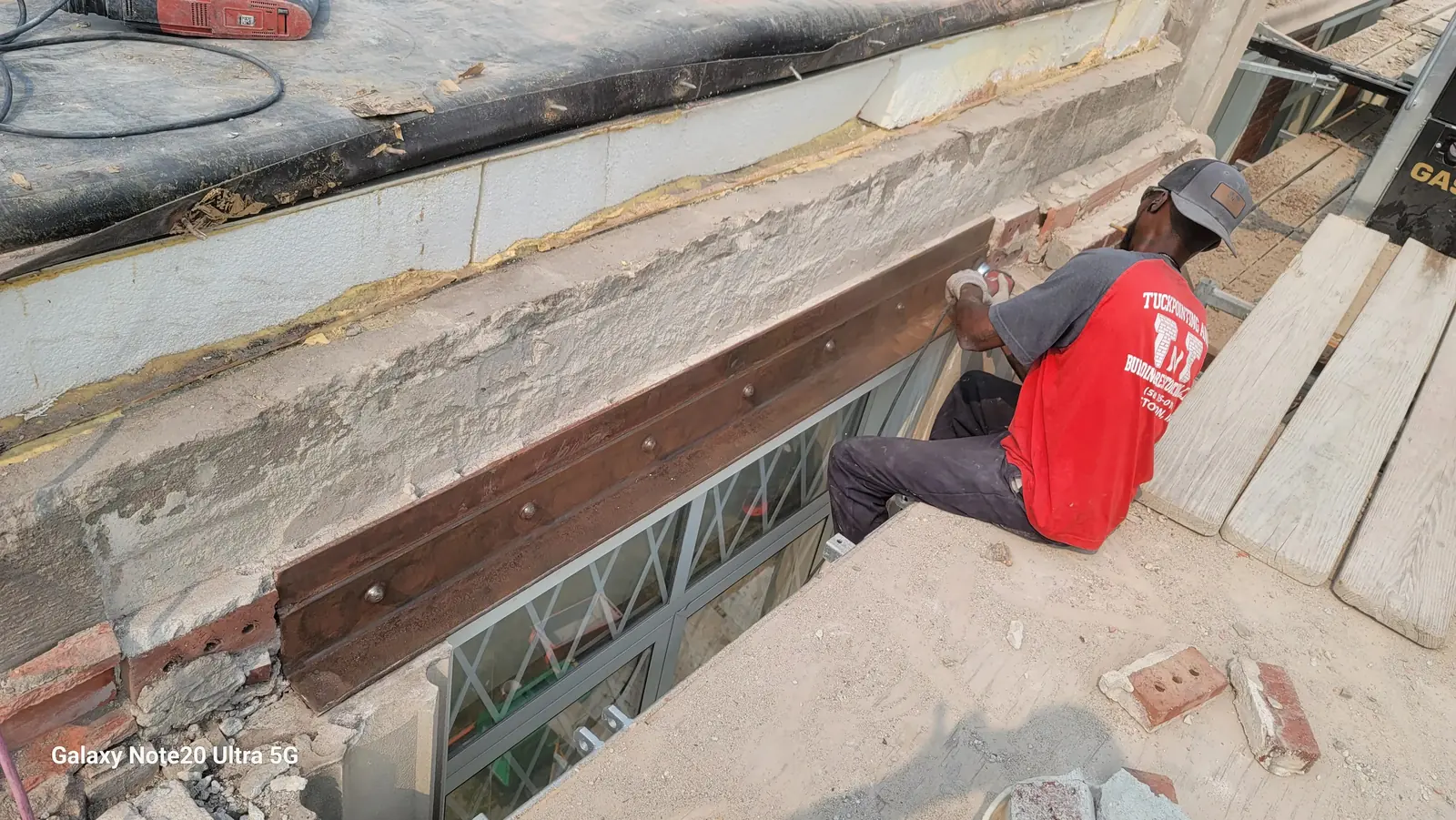
Lintel repair and replacement involves fixing or replacing the horizontal support beams that are located above windows and doors. These beams are crucial for supporting the weight of the structure above them.
Why is Lintel Repair and Replacement Important?
- Ensures structural integrity
- Prevents water damage
- Assures safety for the building occupants and general public
Contact Us
Our skilled team is here to bring your building to life. Contact us today to discuss your project!
FAQs
How long does lintel replacement take?
A single lintel replacement on an accessible opening may take one to two days; a building-wide lintel replacement program on a multi-story commercial building may extend over several weeks. Duration depends on the number of lintels, building access, shoring requirements, and the extent of masonry rebuild at each opening.
What is a lintel and why does it fail?
A lintel is the structural element — typically steel, stone, or reinforced masonry — that spans above a window, door, or other opening to support the masonry wall above it. Steel lintels fail when moisture penetrates the surrounding masonry and causes the steel to corrode; as rust expands, it cracks and displaces the brick or stone above the opening. Stone lintels can crack under load or from freeze-thaw cycling.
What types of lintels does TNT work on?
We repair and replace steel angle lintels, steel I-beam lintels, stone lintels, precast concrete lintels, and reinforced masonry arches on commercial buildings. Roughly half of our work involves historic preservation, so our team routinely handles ornamental and architecturally significant lintels that require careful matching and craftsmanship.
What happens if a failing lintel is ignored?
A failing lintel allows the masonry above the opening to shift and crack progressively. Over time, this can cause brick to dislodge and fall — a serious safety hazard on commercial buildings — and create pathways for water infiltration that damage interior finishes, structural framing, and insulation. Lintel failure is a structural issue that worsens with every freeze-thaw cycle.
Does TNT replace lintels on historic buildings?
Yes. We replace lintels on historic commercial buildings throughout Iowa, Wisconsin, Minnesota, and Illinois, carefully matching replacement masonry and maintaining the building's architectural character. On projects involving historic tax credits or landmark designations, we follow the required documentation and material standards.
How do I know if my building's lintels are failing?
The most reliable method is a professional facade assessment, where an experienced estimator examines every opening for signs of lintel distress — cracking, displacement, rust staining, and deflection. We assign a dedicated estimator to every inquiry who conducts an on-site visit, typically within one to two weeks of initial contact.
Is lintel failure a structural or cosmetic concern?
Lintel failure is a structural concern. Lintels carry the dead load of the masonry wall above each opening, and when they lose capacity, that masonry becomes unsupported. Cracked and displaced brick above openings is not cosmetic — it indicates active structural movement that will continue to worsen until the lintel is replaced and the masonry is rebuilt.
How does Midwest weather contribute to lintel failure?
Iowa, Wisconsin, Minnesota, and Illinois experience severe freeze-thaw cycling, driving rain, and ice damming — all of which push moisture into masonry walls and accelerate steel corrosion. Failed caulking joints around windows compound the problem by directing water directly onto lintel bearing surfaces. Midwest commercial buildings are especially vulnerable to lintel failure compared to buildings in drier or milder climates.
What are the signs a lintel needs repair or replacement?
Look for cracked or displaced brick in a stair-step pattern above windows and doors, rust staining on the masonry face, sagging or bowed steel visible at the opening, and mortar joints that have opened up in a fan pattern above the lintel. These symptoms indicate the lintel has lost structural capacity and the masonry it supports is moving.
Can a lintel be repaired or does it always need replacement?
It depends on the extent of deterioration. A steel lintel with surface corrosion and no structural deformation can sometimes be cleaned, treated, and re-protected. However, once a lintel has lost significant cross-section to corrosion or has deflected under load, full replacement is the only reliable repair. We evaluate each lintel on-site and recommend the most cost-effective approach.
Does lintel replacement require shoring or temporary support?
Yes. Before removing a failed lintel, the masonry above the opening must be temporarily shored to prevent collapse or further displacement. Our crews are trained in safe shoring and bracing procedures as part of every lintel replacement. The temporary support remains in place until the new lintel is installed and the surrounding masonry is fully rebuilt and cured.
How much does lintel replacement cost on a commercial building?
Lintel replacement costs are driven by the number of lintels, the size of the openings, the building height and access method, the extent of masonry displacement that must be corrected, and whether the project involves historic materials requiring special matching. We work with building owners to prioritize the most critical lintels first and can phase replacements across budget periods. Contact us for a site visit and proposal.


