


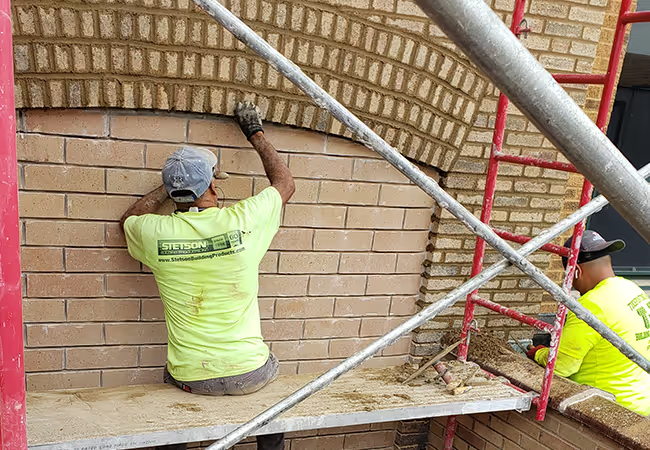
Commercial Tuckpointing, Done to Last
Restore the structural integrity and water resistance of your masonry by carefully grinding out failing mortar and applying fresh, expertly finished joints.
- Dust-controlled grinding techniques to protect property and the environment.
- Use of lime-matched, historically accurate, or high-strength mortar mixes.
- Prevents water infiltration while sharpening the building's overall aesthetic.
Why Tuckpointing Matters
Open and eroded mortar joints are the most common entry point for water in a masonry wall, and once water gets in it drives freeze-thaw spalling, efflorescence, and corrosion of embedded steel. Timely tuckpointing closes that pathway and protects the far more expensive masonry units around it.
- Prevent water damage
- Improves building appearance
- Extends the building's lifespan
- Stops water infiltration at its most common source.
- Extends the service life of brick, block, and stone.
- Prevents small joint failures from becoming structural repairs.
How TNT Approaches Tuckpointing
We cut out failed mortar to a sound depth, typically at least twice the joint width, using methods that protect the edges of the masonry units, then repoint with mortar matched to the wall's strength, color, and joint profile. On historic buildings that often means a softer, lime-based mortar compatible with original materials. TNT self-performs this work, and with roughly half our projects in historic preservation, mortar compatibility and joint matching are second nature.
Signs Your Building Needs Tuckpointing
Repointing is warranted when joints have eroded, cracked, or opened up.
- Mortar that is recessed, crumbling, or missing
- Hairline cracking running through the joints
- Gaps you can fit a key or fingernail into
- Efflorescence (white deposits) or damp interior walls
- Loose or shifting masonry units
Our Projects Speak for Themselves
-min.webp)

FAQs
What is tuckpointing?
Is tuckpointing structural or cosmetic?
Is tuckpointing the same as repointing?
Can tuckpointing be done in cold weather?
Does tuckpointing increase property value?
How long does a tuckpointing project take?
How much does commercial tuckpointing cost?
Does tuckpointing improve energy efficiency?
What are the signs a building needs tuckpointing?
How do I choose a commercial tuckpointing contractor?
How long does tuckpointing last on a commercial building?
What is the difference between tuckpointing, repointing, and pointing?
Contact Us
Our skilled team is here to bring your building to life. Contact us today to discuss your project!