


Why Iowa's Civic Buildings Need a Specialist, Not Just a Mason
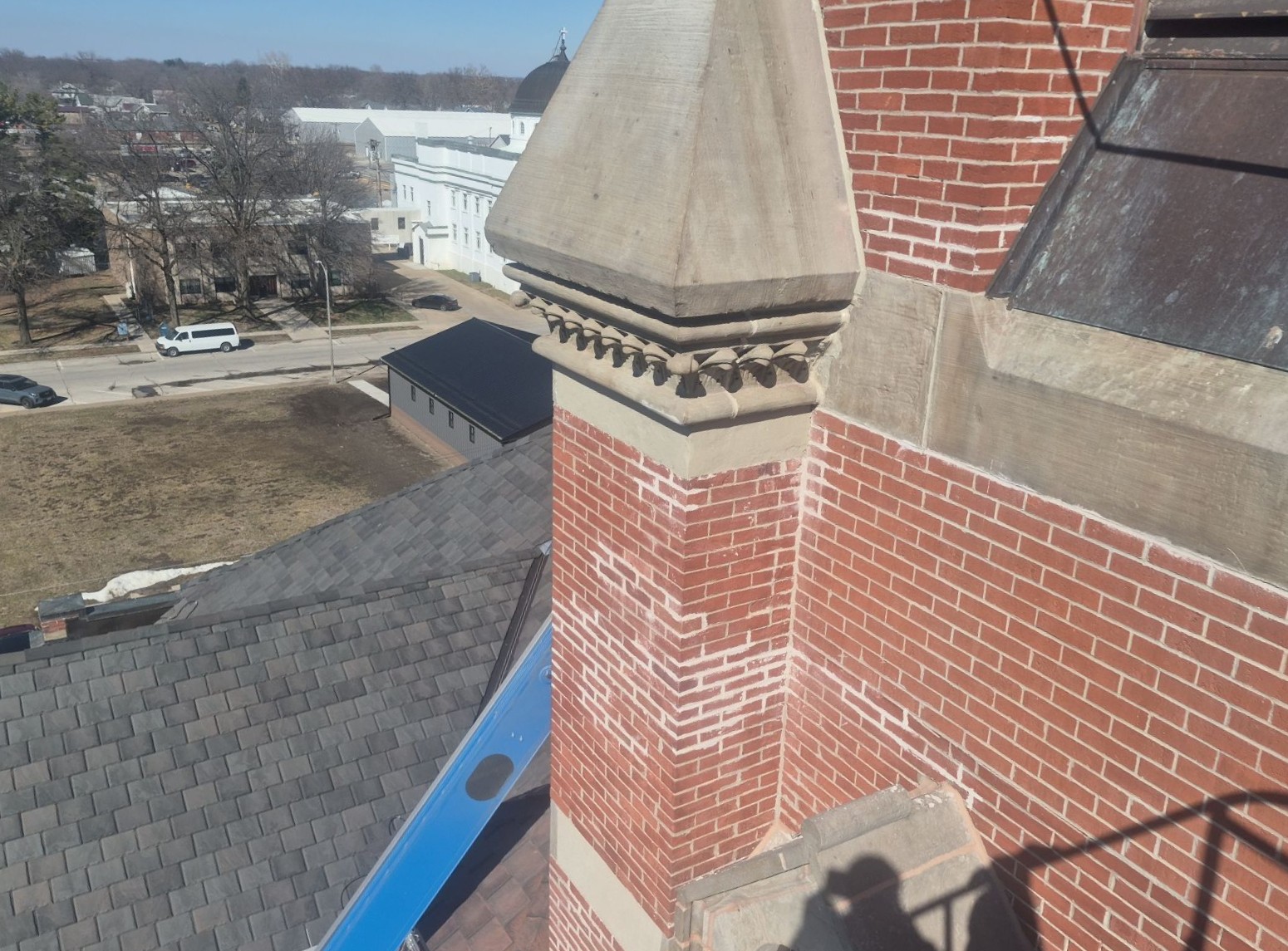
Iowa is full of buildings worth saving. County courthouses, churches, schoolhouses, libraries, and downtown commercial blocks, many of them a century or more old, give our communities their character. Most are made of brick and stone. And almost all of them will, at some point, need masonry restoration to keep standing.
Here's the part building owners often learn too late: historic masonry restoration is not the same as ordinary masonry repair. Using the wrong materials or methods on an old building doesn't just look off, it can actively accelerate the damage you were trying to stop. Preserving a historic or civic building takes a contractor who understands how these structures were built and how they're meant to age.
The single most important rule: the mortar must be softer than the masonry
This is where most well-intentioned repairs go wrong. Older buildings were built with soft, lime-based mortars meant to be the "sacrificial" element of the wall: soft enough to flex, breathe, and crumble before the brick or stone ever does. When a joint fails, you repoint the mortar, not replace the masonry. (For the full background on the terms, see our guide to tuckpointing vs. repointing, and our primer on what tuckpointing is.)
The problem comes when someone repoints a historic wall with modern, hard Portland-cement mortar. It feels stronger, so it seems better. But a hard mortar against soft historic brick traps moisture and stress, and forces the brick itself to do the moving and absorbing it was never meant to do. The result, especially through Iowa's freeze-thaw winters, is spalling brick faces, cracking, and damage far more expensive to fix than the joints ever were. We go deeper on this in why lime mortar and joint style matter more than you think.
Proper historic masonry restoration matches new mortar to the original in:
- Compressive strength, softer than the brick or stone around it
- Vapor permeability, so the wall can breathe
- Composition, compatible with the original lime or lime-cement blend
- Color, texture, and joint profile, so repairs disappear into the wall
Civic buildings raise the stakes
On a courthouse, church, or school, restoration carries added responsibility. These buildings are often publicly owned, historically significant, and in constant use. Good restoration follows recognized preservation standards, such as the Secretary of the Interior's Standards for the Treatment of Historic Properties and the National Park Service Preservation Briefs, which prioritize repairing and retaining original material over replacing it, and gentle cleaning methods over aggressive ones that erode irreplaceable stone and brick. This is the core of our historic preservation work.
It also means working cleanly around occupied space. A courthouse can't shut down for a season. The right contractor sequences the work, manages access and safety on tall and complicated facades, and keeps the building open and dignified while repairs happen.
The owner's best move: engineer and contractor, together, early
The strongest preservation outcomes happen when a preservation engineer and an experienced masonry restoration contractor are both at the table early. The engineer diagnoses why the building is failing and defines what it needs. The contractor confirms what will actually hold up in the field, with materials that match the original construction. Owners who bring both perspectives together early spend less, avoid false starts, and get a building preserved for the next generation, not just patched for the next few years. Our Investigation & Budgeting service is built for exactly this kind of early planning, and it pairs naturally with a realistic look at what commercial masonry work actually costs.
The Maquoketa Public Library is one example: a 1904 Carnegie building that had been patched for a century before it got its first full repointing.
If you steward a historic or civic building in Iowa and you're seeing crumbling mortar joints, white efflorescence, spalling brick, or water finding its way inside, those are signs it's time for an assessment. The earlier a specialist looks at it, the more of the original building you get to keep.
Steward a historic or civic building? Request a building assessment or call (563) 785-0120.
Learn More and See What’s Going On
Contact Us
Our skilled team is here to bring your building to life. Contact us today to discuss your project!