


5 Warning Signs of Lintel Failure (And Why You Can’t Wait to Address Them)
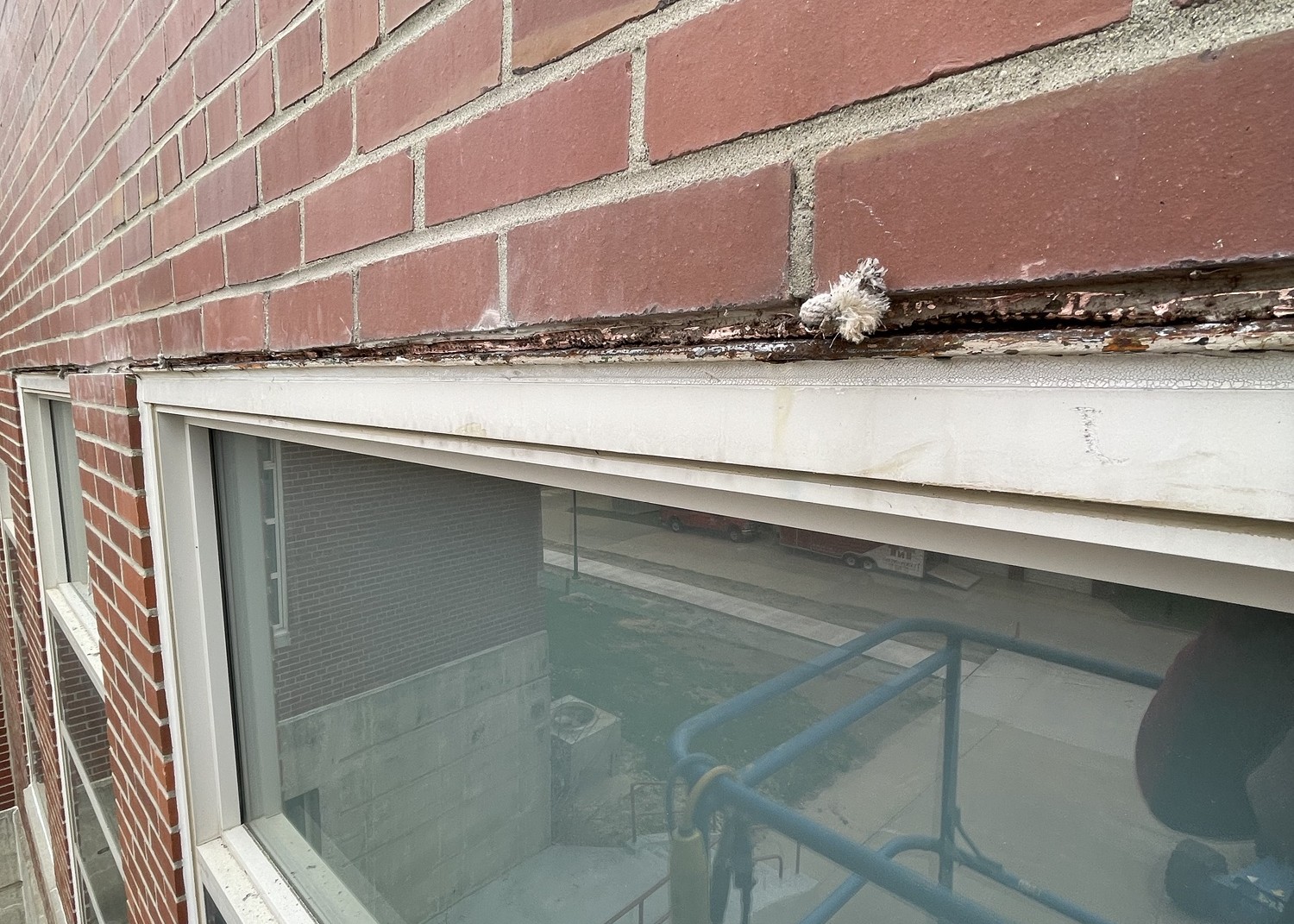
The Quick Answer
Lintel failure happens when the steel, stone, or concrete beam above a window or door starts to deteriorate, usually from corrosion, age, or water infiltration. The five signs to watch for: step cracks at the corners of openings, a visible sag or downward bow in the masonry, rust staining or flaking below the beam, bulging or displaced brick, and cracked mortar joints between the window or door frame and the surrounding wall. Doors and windows that suddenly stick or won’t latch are often the first symptom owners actually notice.
Catching it early can mean a tuckpointing and protective coating repair for a few thousand dollars. Waiting too long can mean full lintel replacement, scaffolding, brick rebuilding, and a five-figure invoice, sometimes per opening.
Why Lintels Fail in the First Place
Every window and door in a brick or stone building depends on a lintel, a horizontal beam, almost always steel on commercial buildings built after about 1900, that carries the weight of the masonry above the opening. When the lintel is healthy, the wall behaves like one connected system. When it fails, the wall starts to come apart at every opening, all at once.
The most common cause we see at TNT is rust jacking. When a steel lintel corrodes, the rust occupies up to ten times the volume of the original steel. That expansion physically lifts and cracks the brick above it. Once water gets in, the cycle accelerates. What started as a hairline crack becomes a structural problem in a matter of years, or, in a hard freeze-thaw climate like ours, sometimes in a single bad winter.
The good news: lintel failure is almost always visible from the ground if you know what to look for. Here are the five signs every owner, property manager, and facility director should be checking for at least once a year.
Sign #1, Step Cracking at the Corners of Windows and Doors
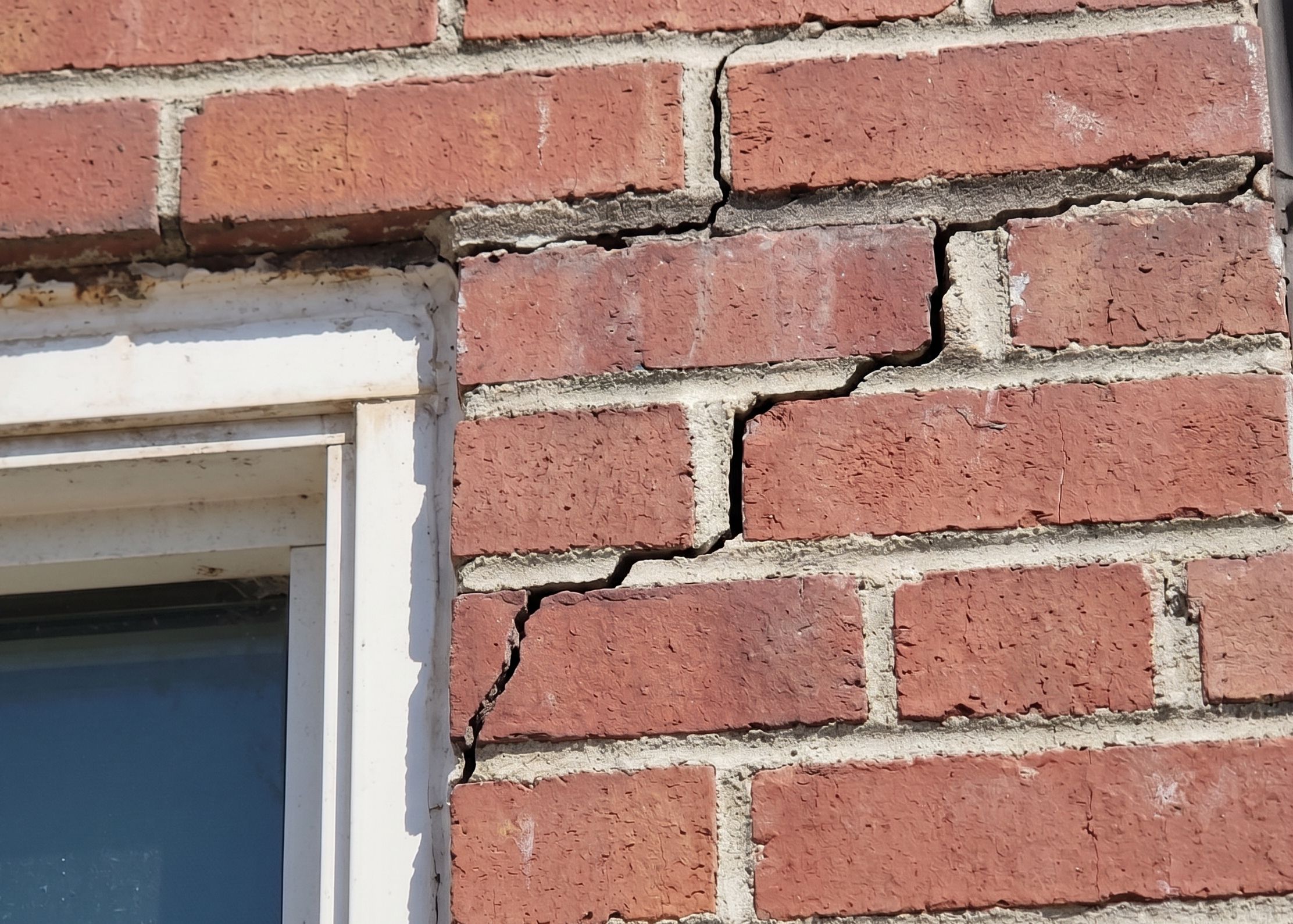
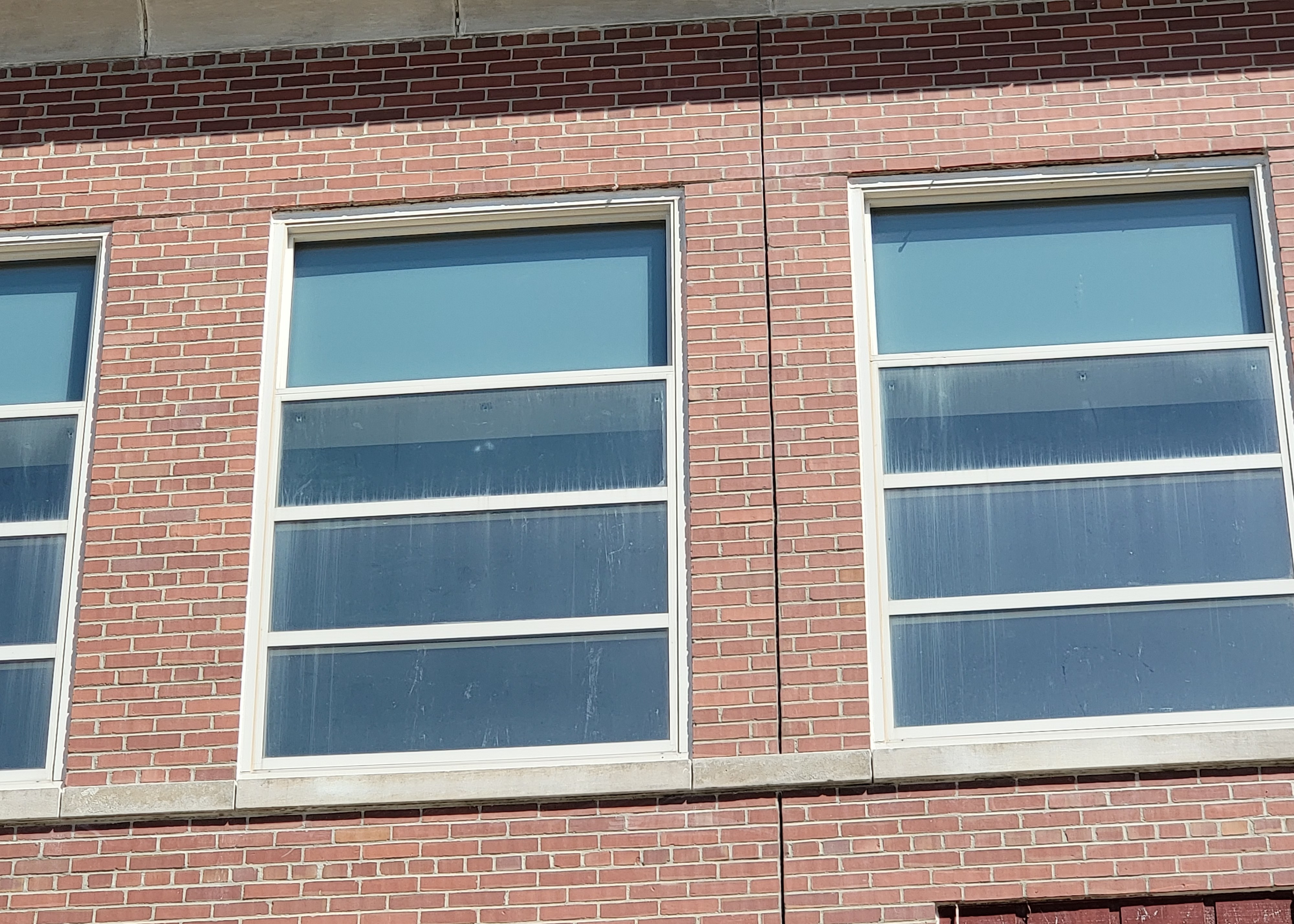
What it looks like: Cracks that run diagonally up and outward from the top corners of a window or door, following the staircase pattern of the mortar joints. Often called “step cracks” or “stair-step cracks.”
Why it happens: When a lintel can no longer support the wall above it, the load redistributes through the brick. The weakest path is through the mortar joints, which crack in a predictable diagonal pattern.
Urgency: Moderate to high. Step cracks are the building’s way of telling you the lintel has already started to fail. Left untreated, water enters the cracks, accelerates corrosion of the lintel, and the cracks widen.
Sign #2, A Visible Sag or “Smile” Above the Opening
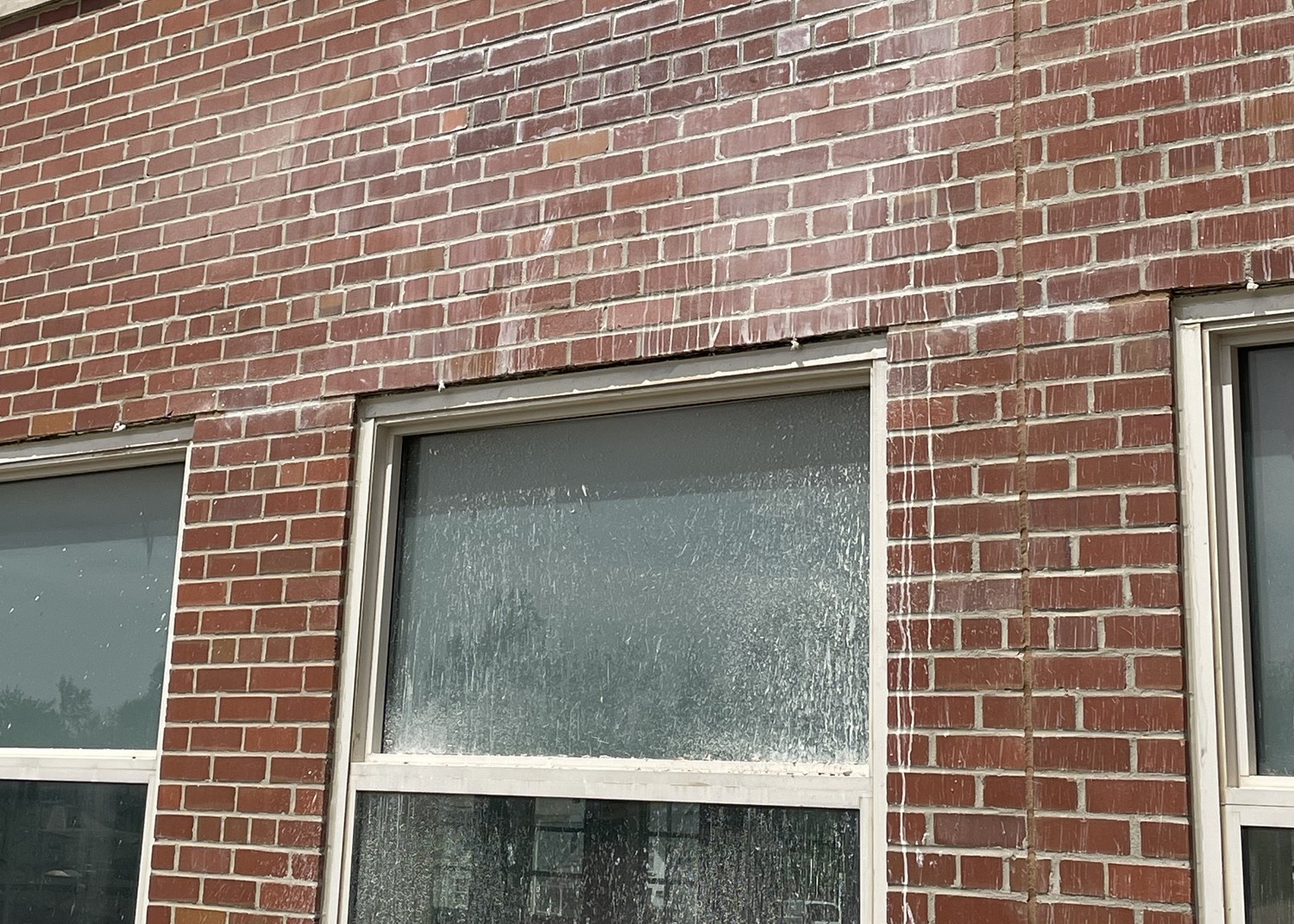
What it looks like: The line of brick directly above a window or door is no longer straight. It bows downward in the middle, creating what looks like a faint smile or frown across the top of the opening.
Why it happens: A failing lintel has lost the structural capacity to hold the wall above it level. Gravity wins. Even a quarter-inch of sag is significant on a structural beam.
Urgency: High. A visible sag means the lintel has lost meaningful structural capacity. At this point, repointing alone will not stop the progression.
Sign #3, Rust Staining or Flaking Below the Lintel
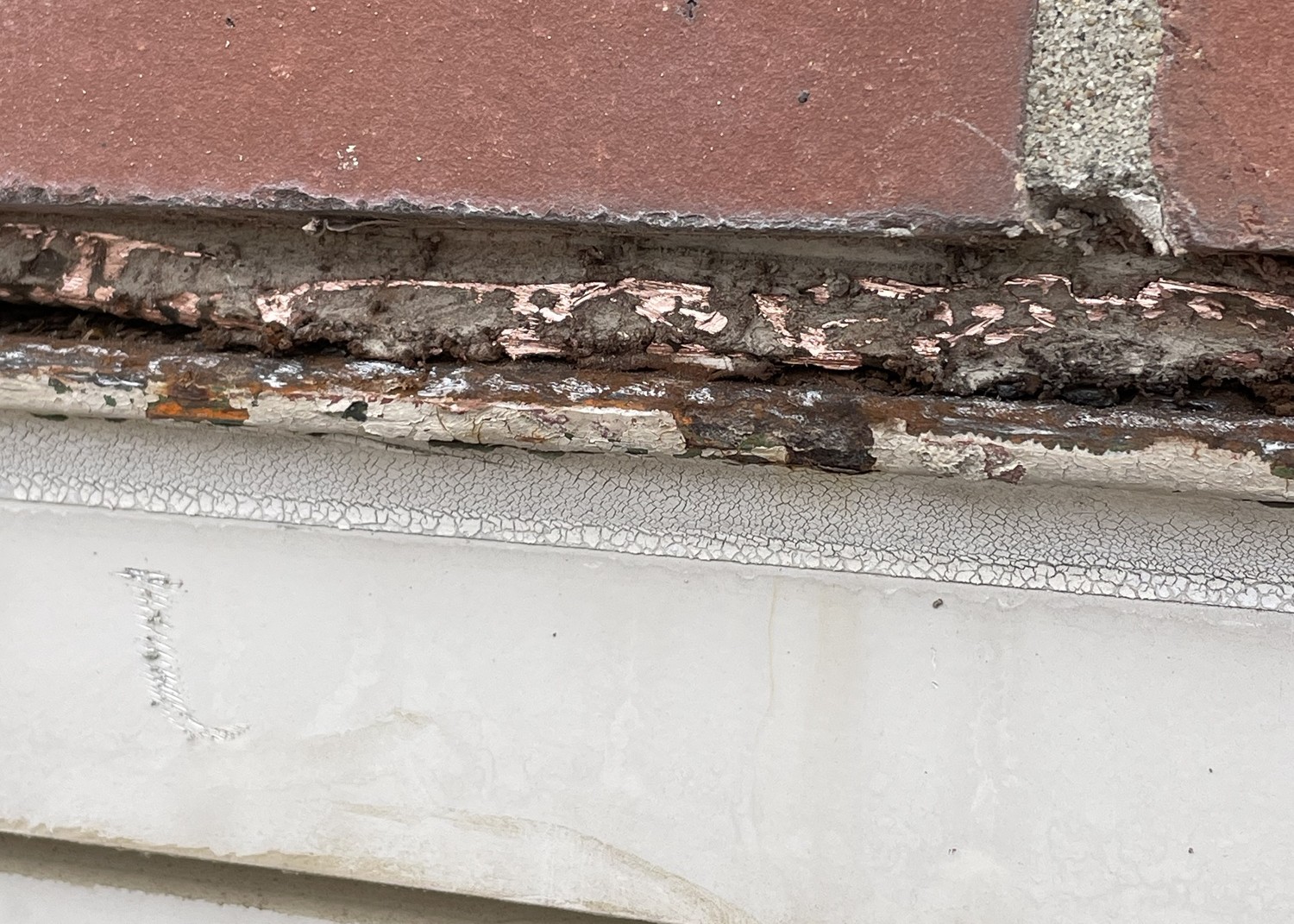
What it looks like: Reddish-brown rust streaks running down the brick or mortar below the lintel. In advanced cases, you’ll see rust flakes accumulating on the windowsill or ground below.
Why it happens: Steel lintels rust from the inside out. The visible staining you see on the brick is the surface evidence of corrosion that has already advanced inside the wall. Rust flaking off the beam means the steel has lost a measurable percentage of its original thickness.
Urgency: High. By the time rust is visible on the masonry below, the lintel has been actively corroding for years. This is the failure mode that drives most of our emergency calls.
Sign #4, Bulging or Displaced Brick Above the Opening
What it looks like: A section of brick above a window or door appears to bulge outward, sit slightly proud of the surrounding wall, or look offset from the rest of the masonry. Sometimes one or two individual bricks have visibly shifted.
Why it happens: Rust jacking. As the lintel corrodes, it expands and physically pushes the brick courses above it outward. The wall is no longer tied to itself the way it was designed to be.
Urgency: High to critical. Displaced brick is a life-safety concern in pedestrian areas. Bricks at this stage can and do fall.

Sign #5, Cracked Mortar at the Window or Door Frame
What it looks like: The vertical mortar joint where the window or door frame meets the brick is suddenly splitting, separating, or showing daylight. Often paired with the caulk joint failing or pulling away.
Why it happens: As the lintel deflects, the entire frame above shifts position. The mortar and sealant between the frame and the masonry can’t accommodate the movement and they crack.
Urgency: Moderate. This often goes hand-in-hand with one of the other signs above, and is sometimes the first symptom a building occupant notices because it lets in air and water.
The Sign Most Owners Notice First (But Don’t Connect)
Windows and doors that suddenly stick, don’t open smoothly, or won’t latch properly are almost always the first symptom of lintel deflection. The frame is no longer square because the wall above it has shifted. Maintenance teams often spend months adjusting hinges and strike plates when the real problem is structural, and getting worse.
If you’ve had to plane down a door or shim a window in the last twelve months on an older brick building, look up. The lintel is probably telling you something.
Facility Manager’s Annual Inspection Checklist
Walk the building once a year, ideally in spring after the freeze-thaw cycle. For every window and door on every elevation, check the following:
- Step cracks at the upper corners of the opening (mortar joints)
- Sagging or bowing in the brick line directly above the opening
- Rust streaks on the brick or mortar below the lintel
- Flaking rust accumulating on windowsills or the ground below
- Bulging or displaced brick above or beside the opening
- Cracked mortar at the window or door frame
- Doors or windows that have started sticking or won’t latch
- Visible deflection in the beam itself (look up from underneath if accessible)
- Failed caulk at the frame perimeter
- Daylight visible through any of the above
When to Repair, When to Replace
| Condition | Likely Approach | Ballpark Timeline |
|---|---|---|
| Hairline step cracks, no sag, no rust | Tuckpointing, sealant renewal, monitor | Days |
| Step cracks plus light rust staining | Localized tuckpointing, rust treatment, protective coating | 1–2 weeks |
| Visible sag, rust flaking, or displaced brick | Lintel replacement, brick rebuild around the opening | 2–6 weeks per elevation |
| Multiple openings affected, systemic failure | Full facade lintel survey, phased replacement | Project basis |
The right call depends on the building, the budget, and the level of access required. We’ve seen owners try to spot-repair their way out of a systemic problem and end up paying twice. We’ve also seen owners replace lintels that had years of life left because nobody looked at them properly. A good masonry restoration contractor will tell you the difference.
How TNT Approaches Lintel Repair
At TNT Tuckpointing & Building Restoration, lintel work is one of our most common, and most important, restoration services. Our standard process:
- Visual survey from the ground at every opening on every elevation
- Close-up inspection at suspect openings (lift access if needed)
- Probe and selective masonry removal to assess actual lintel condition
- Engineered repair recommendation, repair, replace, or monitor
- Proper shoring before any masonry is removed
- New lintel installation with appropriate flashing, end dams, and weeps to protect the new beam
- Brick rebuild matching the existing pattern and mortar profile
- Protective coating where warranted to extend service life
We’ve performed lintel replacements on historic buildings, schools, courthouses, industrial facilities, and commercial properties across Iowa and the upper Midwest. If you’ve seen any of the signs above on your building, the next step is a no-cost site visit.
Frequently Asked Questions
What masonry problems are most common on manufacturing and warehouse buildings?
Can masonry deterioration affect a facility's fire rating or building envelope?
Learn More and See What’s Going On
Contact Us
Our skilled team is here to bring your building to life. Contact us today to discuss your project!