


Tuckpointing vs. Repointing: What Midwest Property Owners Actually Need to Know
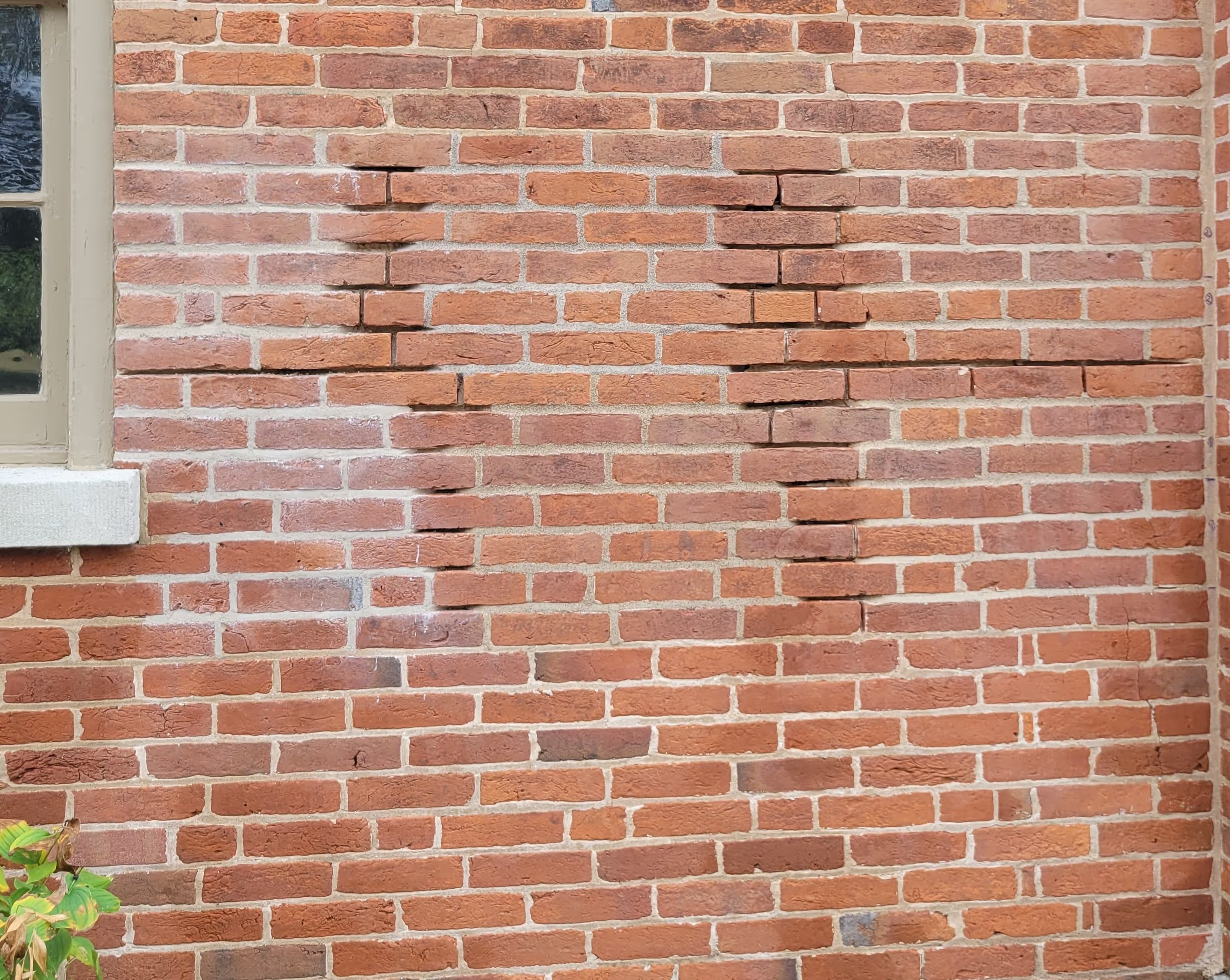
Your building's mortar joints are failing. Maybe you're seeing cracks, soft spots, or water getting inside where it shouldn't. You search for answers and immediately hit a terminology wall: Is it tuckpointing? Repointing? Are they different? Does it matter?
Here's the short answer for anyone managing a commercial building in Iowa or the Midwest: tuckpointing and repointing mean the same thing here. The real question isn't what to call it — it's whether the work is being done right.
Quick Reference: Tuckpointing vs. Repointing vs. Historic Tuckpointing
Bottom line: In Iowa and the Midwest, "tuckpointing" and "repointing" refer to the same structural repair. True historic tuckpointing is an entirely different craft — impressive, but not what 99% of commercial buildings need.
What the Work Actually Involves
Commercial tuckpointing (repointing) is the process of cutting out deteriorated mortar and replacing it with new mortar that's compatible with the existing structure. It sounds simple, but proper execution requires precision at every step:
- Cut — Remove deteriorated mortar to a depth of at least twice the joint width
- Analyze — Assess the original mortar composition — sand aggregate, lime, and/or Portland cement binders — to ensure the replacement is compatible in strength, permeability, and color
- Clean — Prepare joints so new mortar bonds properly
- Install — Place new mortar matched to the original in composition and appearance
- Tool — Finish each joint to match the building's original profile
When it's done right: weatherproofing restored, structural integrity preserved, decades of service life added.
When it's done wrong: water infiltration, freeze-thaw damage, spalling brick, and repair costs that multiply fast.
⚠️ The Mortar Question That Actually Matters
Mortar matching samples showing six test panels — three different mortar compositions, each with two joint tooling profiles. Matching the original mortar in color, texture, aggregate, and joint profile is critical to both appearance and long-term performance. Photo: TNT Tuckpointing & Building Restoration.
If there's one thing commercial property owners should understand about masonry restoration, it's this:
The mortar must be softer than the masonry units it sits between.
This is where real damage to the building occurs — and where costly errors compound.
Portland cement didn't become common in mortar mixes across Iowa and the Midwest until the early 1900s. That means any building constructed before then was built with lime-based mortar — softer, more flexible, and more breathable than modern Portland cement mixes. Even many early 20th-century buildings used mortar with only modest Portland content.
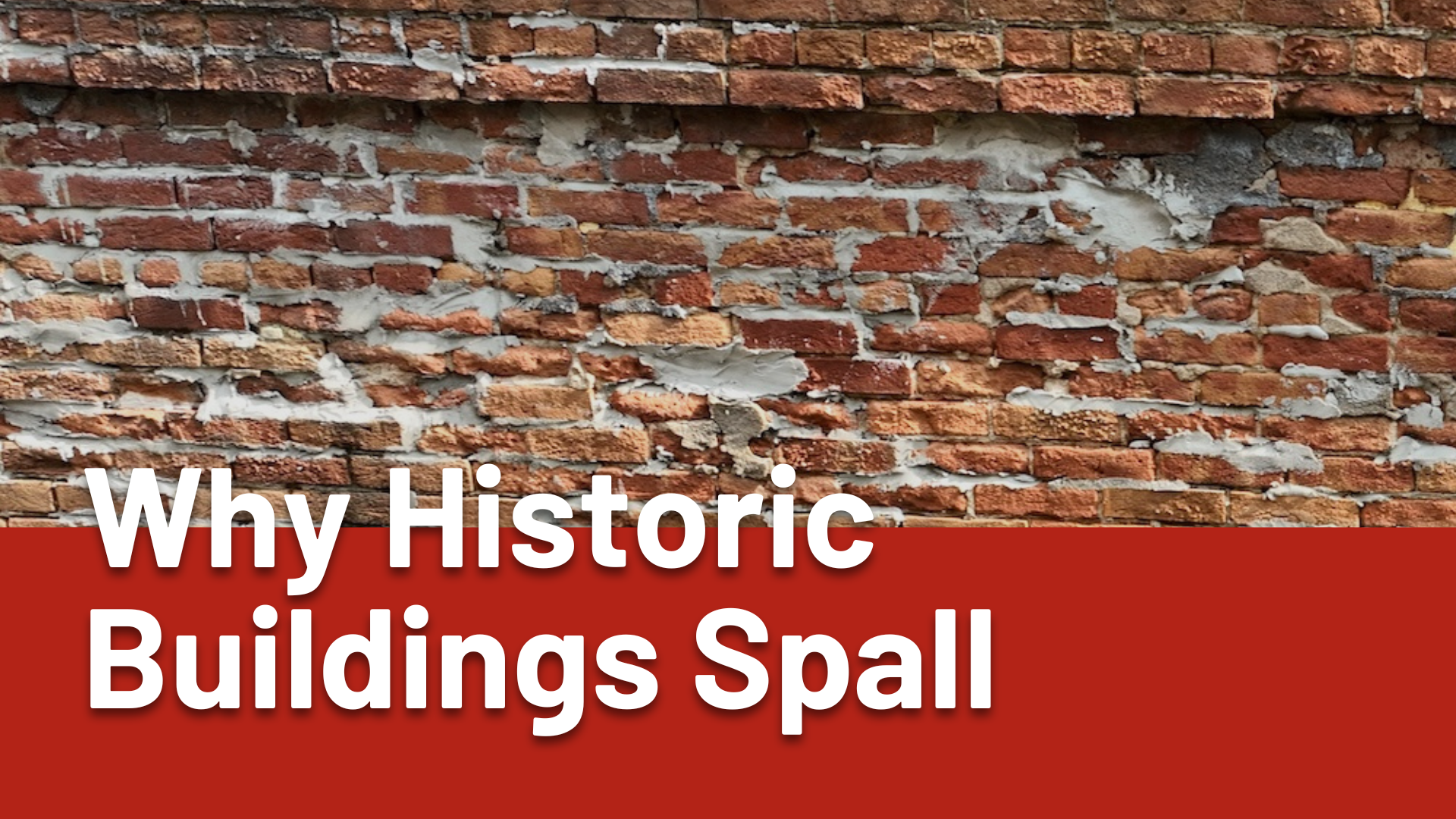
The problem: older buildings also used softer brick. When a contractor replaces original lime mortar with a hard, high-strength Portland cement mix, that harder mortar doesn't absorb stress — it transfers it directly into the surrounding masonry units. Soft, historic brick can't take that punishment. The result is cracking, spalling, and deterioration of the brick itself — damage that's far more expensive to repair than the mortar joints ever were.
The right mortar depends on the building. It needs to match the original in:
- Compressive strength — softer than the brick or stone
- Vapor permeability — allows the wall to breathe
- Composition — compatible with original materials
- Freeze-thaw resilience — formulated for Midwest climate cycles
Improper mortar selection is a leading cause of premature masonry failure in the Midwest.
Why the Midwest Is Harder on Buildings
Throughout the Upper Midwest, the climate doesn't give masonry a break. The combination of environmental stressors is uniquely punishing:
- Freeze-thaw cycles — Moisture enters joints, expands as ice, and cracks mortar from within
- Wind-driven rain — Forces water deeper into the wall assembly than gravity alone
- Summer humidity — Keeps masonry saturated longer, slowing drying cycles
- Temperature swings — Constant expansion and contraction stresses every joint
What Deferred Maintenance Actually Costs
Putting off mortar joint repairs doesn't save money — it compounds the problem:
Proactive tuckpointing isn't just maintenance — it's risk management.
Signs Your Building Needs Tuckpointing
Not sure if your building is due? Here's what to look for:
Exterior warning signs:
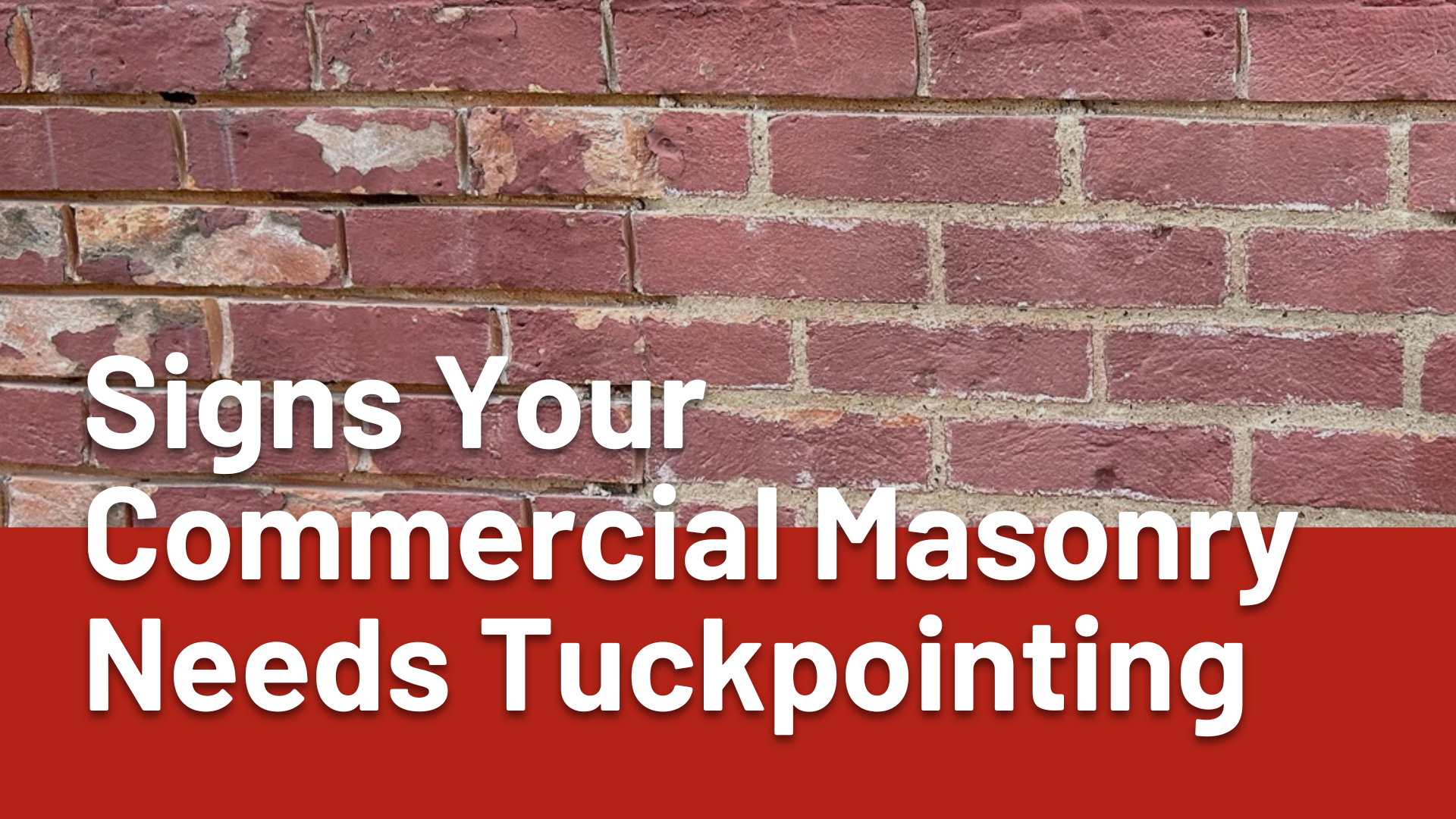
- Mortar joints that are cracked, recessed, or missing
- Soft or powdering mortar (test with a key — if it scrapes out easily, it's failing)
- Spalling or loose brick faces
- White salt deposits (efflorescence) on the masonry surface
Interior warning signs:
- Water staining on walls near the building envelope
- Damp or musty conditions in rooms along exterior walls
- Paint peeling or plaster damage on interior surfaces adjacent to masonry
Pro tip: If you can push a key or screwdriver into a mortar joint more than ¼ inch with light pressure, that joint is compromised.
Choosing the Right Contractor Matters
Commercial tuckpointing isn't a handyman job. The difference between a qualified masonry restoration contractor and a general contractor or unqualified crew often shows up years later — in failed mortar, damaged brick, and repairs that have to be redone.
Before hiring, ask:
- Do they analyze existing mortar before specifying a replacement? If the answer is "we use Type N on everything," walk away.
- Can they match the original joint profile and mortar color? Cosmetic mismatches signal deeper compatibility issues.
- Do they have commercial masonry restoration experience? Residential pointing and commercial restoration are different trades with different stakes.
- Are they familiar with historic preservation standards? If your building is on or eligible for a historic register, uninformed repairs can disqualify it from tax credit programs.
A low bid from the wrong contractor is the most expensive option on the table.
About TNT Tuckpointing & Building Restoration
Since 1993, TNT Tuckpointing & Building Restoration has served commercial, institutional, and historic properties across Iowa and the Midwest. We specialize in masonry restoration, building maintenance, and preservation-grade work — no residential projects, no shortcuts.
TNT is an active member of the Mason Contractors Association of America (MCAA), the International Concrete Repair Institute (ICRI), the SWR Institute, The Masonry Society (TMS), Master Builders of Iowa, and Preservation Iowa — reflecting our commitment to industry standards, continuing education, and historic preservation best practices.
If your building's mortar joints need attention, we can help you assess the scope and develop a plan. We also work directly with architects and engineers on historic and complex restoration projects, and can provide referrals to design professionals experienced in masonry and preservation if your project requires it.
Explore our services:
Frequently Asked Questions
Is tuckpointing the same as repointing?
How much does commercial tuckpointing cost?
How often should commercial buildings be tuckpointed?
Can tuckpointing be done in winter?
What's the risk of using the wrong mortar?
Does tuckpointing increase property value?
Are there tax credits for masonry restoration on historic buildings?
Learn More and See What’s Going On
Contact Us
Our skilled team is here to bring your building to life. Contact us today to discuss your project!