


5 Warning Signs of Lintel Failure
May 6, 2026
•
Time
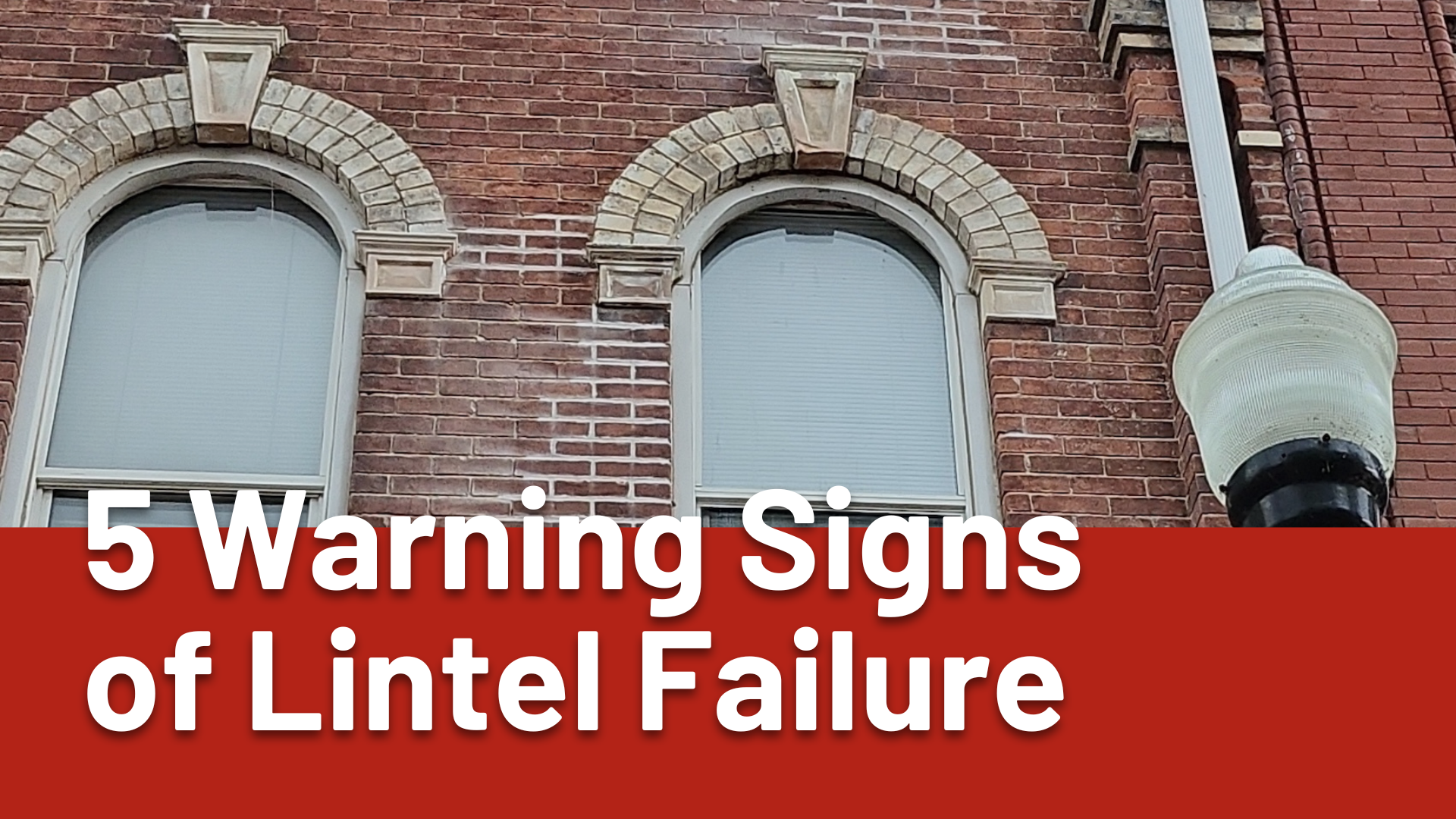
The Quick Answer: Lintel failure occurs when the steel or stone beam above a window or door begins to fail. The top 5 signs are "step" cracks emanating from the corners of the opening, sagging or bowing of the beam, bricks pulling away from the wall (bulging), rusted steel lintels (rust jacking), and windows that are suddenly difficult to open or close.
Lintels carry the immense weight of the masonry above windows and doors. At TNT Tuckpointing & Building Restoration, we often see "rust jacking"—where a steel lintel oxidizes, expands, and physically lifts the bricks above it—causing severe structural damage.
- Step Cracking: Look for cracks that follow the mortar joints in a staircase pattern starting at the upper corners of a window or door frame. This indicates the weight of the wall is no longer being supported by the lintel.
- The "Smile" Sag: If the horizontal line above your door or window looks like it is bowing downward, the lintel has reached its load limit.
- Rust and Flaking: If you see rust flakes falling from the steel beam above a window, the steel is losing its structural thickness. As it expands, it creates pressure that can crack even the strongest bricks.
- Bulging Masonry: When a lintel fails, the bricks may begin to "belly" or bulge outward. This is a critical sign that the masonry is no longer tied to the building frame.
- Cracked Mortar at the Frame: Check the seal between the window frame and the masonry. If the mortar or caulking is suddenly splitting, the lintel may be shifting.
Frequently Asked Questions
What masonry problems are most common on manufacturing and warehouse buildings?
Can masonry deterioration affect a facility's fire rating or building envelope?
/ news
Learn More and See What’s Going On
/ Start a Project
Contact Us
Our skilled team is here to bring your building to life. Contact us today to discuss your project!